Shipping and handling operations may need to weigh anything from envelopes and small parcels to cartons, mail tubs, pallets and bulk containers. No single scale type is ideal for every load.
The appropriate shipping scale depends on the load’s weight and dimensions, how it reaches the weighing station, the smallest increment that matters, and where the resulting data must go. Bench and platform scales serve packages and containers, floor scales support palletized freight, and counting scales help verify quantities before goods leave the facility.
Why Accurate Shipping Weights Matter
An incorrect shipment weight can affect more than the carrier charge. It may create:
- Carrier adjustments and billing corrections
- Returned or delayed packages
- Inaccurate freight estimates
- Incorrect bills of lading or shipping documents
- Inventory discrepancies
- Overloaded packages, pallets or handling equipment
- Manual reweighing and data-entry work
- Customer-service problems
The scale should produce a repeatable measurement that is appropriate for the package or freight class being processed. It should also fit the physical workflow so employees can load, read and unload it safely and efficiently.
Which Type of Scale Is Best for Shipping and Handling?
| Scale type | Best suited for | Important selection factors | Explore models |
|---|---|---|---|
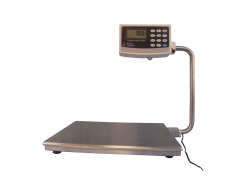
| Bench scale | Small parcels, cartons, mail tubs and packed components | Capacity, displayed increment, platform dimensions and indicator visibility | View bench scales |
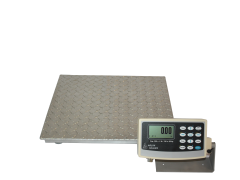
| Platform scale | Large boxes, containers, luggage, carts and oversized parcels | Platform size, capacity, low-profile loading, construction and data output | View platform scales |
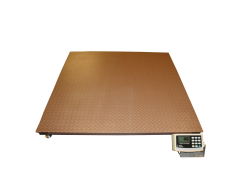
| Floor scale | Pallets, bulk containers and high-capacity freight | Pallet footprint, gross load, forklift or pallet-jack handling, ramps and installation space | View floor scales |
| Counting scale | Piece-count verification, kitting, fasteners and bulk components | Piece weight, sample size, total capacity, resolution and stored item data | View counting scales |
| Combined system | Facilities processing parcels, parts and pallets at different stations | Common data format, operator workflow, network integration and centralized records | Request an application review |
Bench Scales for Parcels and Shipping Cartons
Bench scales are practical when most shipments can be lifted safely onto a table-height or countertop weighing station.
Typical applications include:
- Individual parcels
- Small cartons
- Mail trays and tubs
- Packaged replacement parts
- Samples and product kits
- Small return shipments
Choose a platform that supports the package without allowing it to rest against the indicator, wall or surrounding work surface. If large cartons obscure the display, use an indicator that can be positioned remotely or mounted where the operator can read it clearly.
The bench scale’s capacity must include the package, contents and any tray or fixture used during weighing. Its resolution should be fine enough for the shipping or inventory decision being made without adding unnecessary sensitivity.
Platform Scales for Large Boxes and Containers
A platform scale is useful when packages are too large or awkward for a countertop scale but do not require the size or capacity of a pallet-scale installation.
Common loads include:
- Oversized cartons
- Reusable shipping containers
- Mail sacks
- Luggage
- Wheeled carts
- Multiple packages weighed together
Low-profile platforms can reduce lifting distance and make it easier to move suitable wheeled containers onto the scale. Platform dimensions should be chosen from the load’s contact points and stability requirements rather than the outside dimensions alone.
Read the platform-scale selection guide for a complete comparison of capacity, size, construction and connectivity.
Floor Scales for Pallets and Heavy Freight
Floor scales are designed for larger platforms and higher-capacity loads. They are commonly used for:
- Loaded pallets
- Bulk shipping containers
- Large finished assemblies
- Crated equipment
- Consolidated freight
- Materials handled by pallet jack or forklift
When specifying a floor scale, calculate the entire gross load. Include the pallet, crate, container or fixture in addition to the product.
Also consider:
- Pallet dimensions and runner orientation
- Location of load contact points
- Approach and turning clearance
- Forklift or pallet-jack access
- Whether a ramp is needed
- Protection from vehicle impacts
- Indicator mounting and cable routing
- Floor strength and levelness
A pallet should not bridge between the scale and the surrounding floor. Pipes, straps or nearby equipment must not transfer part of the load away from the weighing platform.
Counting Scales for Shipment Quantity Verification
A counting scale estimates the number of substantially identical parts by dividing their total net weight by an established average piece weight.
This can help verify shipments containing:
- Fasteners
- Electronic components
- Machined parts
- Hardware kits
- Packaging components
- Printed pieces
The quality of the count depends on:
- Variation between individual pieces
- Sample size used to establish average piece weight
- The relationship between piece weight and scale resolution
- Stable packaging and tare values
- The number of pieces in the final batch
Light or variable parts may require finer resolution and a larger representative sample. For demanding applications, compare standard and Ultra Precision counting configurations.
Counting by weight is an efficient verification method, but it does not prove that every part is identical, undamaged or correctly packaged.
Processing parcels, parts and pallets in the same facility? Arlyn Scales can help select compatible scale types and plan how each station will send data to the shipping or warehouse system.
Scale Weight Versus Dimensional Weight
A scale measures actual weight. It does not measure the outside dimensions of a package unless it is part of a separate dimensioning system.
Carriers may compare actual package weight with a dimensional or volumetric weight calculated from package length, width and height. The applicable formula, divisor, rounding method and billing rules depend on the carrier, service and current agreement.
A complete parcel-shipping process may therefore need:
- An industrial scale for actual weight
- A manual or automated method of capturing dimensions
- Carrier or transportation-management software
- A printer for labels and documents
- Barcode scanning for package identification
The scale should provide the actual weight to the receiving system. The shipping application should combine that weight with dimensions, destination, service level and carrier rules.
How to Choose Shipping-Scale Capacity
Select capacity from the heaviest complete load expected at that station.
For a parcel station, include:
- Product
- Packaging
- Protective material
- Shipping container
- Any tray or fixture resting on the scale
For pallet freight, include:
- All products
- Pallet or skid
- Crate or bulk container
- Banding, wrapping and protective materials
- Any reusable fixture weighed with the shipment
Choose a reasonable capacity margin for normal operating variation. Excessive unused capacity may result in coarser displayed increments and greater equipment cost.
How Much Resolution Does a Shipping Scale Need?
There is no universal resolution that every shipping scale must provide.
The appropriate displayed increment depends on:
- The load range
- Carrier or internal documentation requirements
- The value of the goods
- Whether the scale is used for parts counting
- Whether weight determines a commercial charge
- The acceptable uncertainty in the process
A parcel station processing light packages may need finer increments than a floor scale weighing multi-thousand-pound pallets. Compare the scale’s model-specific capacity, resolution and accuracy with the actual shipping requirement.
If weight is used to determine a transaction price, confirm whether legal-for-trade approval and local weights-and-measures requirements apply. A highly readable scale is not automatically approved for commercial transactions.
Platform Size and Package Overhang
The scale platform should support the load securely.
A package may extend beyond the platform if:
- It remains stable
- Its support points rest appropriately on the scale
- It does not touch a wall, table, floor or indicator
- Its center of gravity remains safely supported
If the load routinely creates unstable placement or hides the display, choose a larger platform or remote indicator. A platform larger than necessary may consume valuable packing-station space, so measure the actual packages and contact points before ordering.
Durability in Shipping and Warehouse Environments
Shipping scales may experience:
- Repeated package placement
- Dropped cartons
- Pallet and forklift impacts
- Dust and packaging debris
- Temperature changes near loading docks
- Moisture and condensation
- Frequent relocation
The platform, frame, load cells, feet, cables and indicator must all be considered. A heavy-looking top plate does not by itself guarantee that the weighing components are protected from overload and shock.
Arlyn industrial scales use stainless steel load cells in rugged mechanical structures. Select the scale family and construction according to the load and environment rather than relying on a general “heavy duty” description.
Connect Shipping Scales to Computers and Warehouse Systems
Manual entry may be acceptable for occasional shipments. High-volume operations often benefit from sending weight data directly to another system.
Depending on the scale and indicator configuration, available pathways may include:
- RS-232
- RS-422 or RS-485
- USB communication
- Ethernet TCP/IP
- Wireless TCP/IP
- Industrial protocols with compatible systems
- USB data logging
- Keyboard-wedge data entry
- Cloud or spreadsheet integration
Before selecting an interface, identify:
- The receiving computer, PLC, shipping application or warehouse system
- The physical connection and communication protocol
- The required data format
- Whether the transfer is automatic or operator-triggered
- Whether a stable-weight condition is required
- Which package, order or pallet identifier accompanies the weight
Review current scale communication and data options when planning the workflow.
Barcode, Label and Printing Workflows
A shipping station may need to associate each weight with an order, carton, pallet or tracking identifier.
A possible sequence is:
- The operator scans or selects the order.
- The package is placed on the scale.
- The system waits for a stable weight.
- The measurement is transferred to the shipping or warehouse application.
- The application applies dimensions, destination and carrier rules.
- A compatible printer produces the required label or document.
- The transaction is stored with its identifying information.
The scale, scanner, printer and software must be compatible. Define which device controls each step before purchasing interfaces or peripherals.
Remote Displays and Indicator Placement
Large packages may hide a display mounted close to the platform. Pallet scales may be located where the operator cannot safely stand beside the load.
Indicator placement should allow the operator to:
- Read the weight without leaning over the load
- Reach required controls safely
- Avoid forklift and pallet traffic
- Keep cables protected
- View status or stability information
Depending on the system, the indicator may be mounted on a stand, wall, bench or remote location. Computer or network access may also reduce the need to interact with the display at the platform.
Should Shipping Scales Be Portable?
Portability can be useful for occasional weighing or changing warehouse layouts, but moving a scale introduces additional considerations.
Confirm:
- The scale can be moved without lifting it by cables or the indicator
- The new surface is stable and level
- The platform is clear of obstructions
- Power and data connections remain appropriate
- A performance check is completed after relocation
A permanently installed station may be more efficient when weighing occurs frequently or when the scale connects to fixed equipment.
Shipping-Scale Configuration Checklist
| Requirement | What to document | Why it matters |
|---|---|---|
| Load range | Lightest and heaviest complete shipment | Determines capacity and appropriate scale family |
| Dimensions | Package, pallet and contact-point measurements | Determines platform size and stability |
| Handling | Manual placement, carts, pallet jacks or forklifts | Determines platform height, ramps and installation clearance |
| Measurement | Required increment, tolerance and commercial-use requirements | Determines suitable resolution and compliance pathway |
| Environment | Dock temperature, moisture, impacts and cleaning | Determines construction and protection |
| Data destination | Shipping software, WMS, ERP, PLC or spreadsheet | Determines communication interface and format |
| Workflow | Scanning, stable-weight capture, labeling and record retention | Ensures the scale supports the complete shipping process |
Common Shipping-Scale Selection Mistakes
Avoid:
- Choosing capacity without including pallets or containers
- Using a platform too small for stable load placement
- Allowing boxes to touch the indicator or surrounding surfaces
- Assuming the scale calculates dimensional weight or postage
- Selecting a connection before identifying the receiving system
- Ignoring forklift and pallet-jack approach space
- Using parts counting without confirming piece-weight consistency
- Assuming additional decimal places guarantee legal-for-trade compliance
- Positioning the indicator where it is hidden or exposed to vehicle traffic
- Failing to test the complete scan, weigh, record and print workflow
Choose an Industrial Shipping Scale for the Complete Workflow
The best shipping scale is the one that supports the load, provides the required measurement, fits the handling process and delivers its data to the correct system.
Arlyn Scales offers bench, platform, floor and counting scales for shipping and warehouse operations, along with indicator, connectivity, logging and custom integration options.
Build a reliable shipping-weighing station. Provide Arlyn Scales with your package or pallet range, platform requirements, handling method and software connection.
Frequently Asked Questions
What type of scale should I use for shipping packages?
Use a bench scale for smaller parcels and cartons, or a platform scale for larger and more awkward packages. Select capacity and platform dimensions from the complete packaged load and required workflow.
What scale should I use for pallet shipping?
A floor scale is generally appropriate for pallets and heavy freight. Confirm the complete gross load, pallet dimensions, loading equipment, ramp requirements and installation clearance.
Can an industrial scale calculate postage?
A scale measures actual weight. Carrier or shipping software normally calculates the charge using weight, dimensions, destination, service and current carrier rules. The scale may provide weight data to that system through a compatible interface.
What is the difference between actual and dimensional weight?
Actual weight is measured by the scale. Dimensional weight is calculated from package dimensions according to a carrier’s rules. A carrier may use one or compare both when determining a billable weight.
Can a shipping scale connect to warehouse software?
Potentially. Available interfaces may include serial communication, USB, Ethernet, Wi-Fi and other options. Compatibility depends on the receiving software, protocol, data format and selected scale indicator.
Can I use a counting scale to verify shipment quantities?
Yes, when the pieces are sufficiently consistent and the scale can resolve their average piece weight. Use a representative sample and confirm that packaging tare has been removed correctly.
Does a shipping scale need to be legal for trade?
It may when the measured weight determines a commercial charge or transaction. Requirements vary by jurisdiction and application. Confirm the applicable weights-and-measures rules before selecting equipment.
Can a package extend beyond the scale platform?
Potentially, if it remains stable, all weight is transmitted through the scale and the package does not touch another surface. Select a larger platform when overhang creates unstable placement or hides the display.
Related Logistics & Warehouse Scale Solutions
Explore weighing solutions for inventory management, shipping, warehouse automation, aviation, pallet handling, harsh environments, and other logistics applications:
- Inventory Scales for Warehouse Management & Control
- Airport Baggage & Luggage Scales
- Platform Scales with Printers for Warehouse Automation
- Specialty Scales for Logistics Companies
- Parcel & Postal Scales
- Outdoor Pallet Scales for Harsh Environments
- Aircraft Scales for Passengers & Luggage
- Crane Scales for Ship Loading
- Pallet Scales for Warehouse & Inventory Management