Custom Industrial Scales: When a Standard Scale Is Not Enough


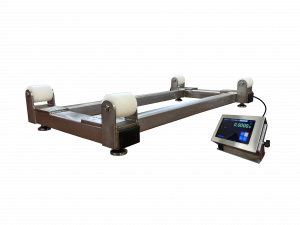
Custom Arlyn stainless steel chlorine ton cylinder scale with UpScale touchscreen indicator
An Arlyn chlorine ton scale demonstrates how a weighing system can be designed around an unusual load, environment and monitoring process.

A standard industrial scale can meet many common weighing requirements. Bench scales, platform scales, drum scales, and floor scales are available in established capacities and sizes that work well for most applications.

However, a standard model may not work when the product has an unusual shape, the platform must fit into existing equipment, the environment is highly corrosive, or the weight data must communicate with a specific control system.

In these situations, a custom industrial scale can adapt the weighing system to the process instead of forcing the process to adapt to the scale.


When do you need a custom industrial scale?
A custom scale may be necessary when a standard model cannot provide the required capacity, readability, platform dimensions, construction material, mounting arrangement, environmental protection, data output, or process-control functions.

What Is a Custom Industrial Scale?

A custom industrial scale is a weighing system modified or engineered to meet requirements that are not fully addressed by a standard product.

Customization does not always mean designing an entirely new scale. In many cases, Arlyn can begin with an existing bench, platform, floor, cylinder, crane, or Ultra Precision scale and modify the parts that affect the application.

A custom system may involve changes to:

  • Maximum weighing capacity
  • Displayed readability or resolution
  • Platform length, width, height, or shape
  • Frame and platform materials
  • Load-cell quantity, position, or configuration
  • Indicator enclosure and mounting location
  • Power supply
  • Computer, PLC, or network communication
  • Setpoints, relays, alarms, or process controls
  • Data logging, printing, and reporting

Standard, Modified, or Fully Custom Scale?

The most economical solution is normally the least complicated design that fully satisfies the application. Some customers need only a standard scale, while others require a modified platform or a completely integrated weighing system.

Standard vs. Modified vs. Fully Custom Industrial Scales
Comparison Point Standard Scale

Established model and options
Modified Standard Scale

Existing design with selected changes
Fully Custom System

Engineered around the process
Platform Uses an established platform size and shape. May use a different platform size, material, or mounting arrangement. Designed around an unusual product, vessel, machine, or installation space.
Capacity and readability Selected from standard listed specifications. Adjusted using a compatible load cell or alternate calibration range. Engineered for a specialized capacity, sensitivity, or load distribution.
Materials Uses the standard steel, aluminum, or stainless-steel construction. May substitute stainless steel or add environmental protection. Material and construction are selected around corrosion, washdown, sanitation, or structural requirements.
Data and control Uses standard indicator and communication options. Adds a specific output, PLC protocol, printer, or data-logging option. May include custom software, automated controls, multiple platforms, or integration with existing machinery.
Engineering effort Minimal Moderate Application-specific design, review, testing, and documentation
Best suited for Common weighing applications Applications that nearly fit a standard model Processes with unique mechanical or integration requirements
Practical guidance: Begin with the closest standard product. Modify only the features that prevent it from meeting the application. A completely new design is appropriate when the load, environment, installation, or control process cannot be accommodated by an existing platform.

Customize the Scale Around the Load

A rectangular platform works well for boxes, containers, and pallets. It may not safely support a cylinder, suspended product, irregular machine component, or vessel with a curved base.

The weighing structure can be designed to:

  • Support a horizontal or vertical cylinder
  • Fit beneath a tank, hopper, silo, or vessel
  • Attach to an existing frame or piece of machinery
  • Measure a suspended load
  • Fit into a recessed floor opening
  • Surround pipes, legs, brackets, or structural supports
  • Weigh several containers using one indicator

The platform should support the complete load without allowing the product to touch surrounding structures. Any mechanical contact that bypasses the load cells can produce an incorrect weight reading.

Customize Capacity and Readability

Capacity and readability must be selected together. Increasing maximum capacity without considering the required increment can result in a scale that supports the product but cannot detect the weight changes that matter to the process.

For example, a large vessel may weigh several hundred pounds when empty, while the process may need to measure a much smaller ingredient added to it. This type of requirement may call for an Ultra Precision SAW scale or a custom load-cell configuration.

Before requesting a capacity, identify:

  • The maximum expected gross load
  • The empty container or fixture weight
  • The smallest change that must be displayed
  • The required measurement tolerance
  • Whether dynamic, impact, or off-center loading will occur

Customize Materials for the Environment

A scale used in a dry warehouse does not require the same construction as one installed near chlorine, saltwater, cleaning chemicals, food ingredients, or outdoor moisture.

Depending on the application, a custom scale may use:

  • Stainless-steel load cells
  • A stainless-steel frame and platform
  • Aluminum construction where lower weight is important
  • Protective industrial coatings
  • A sealed stainless-steel indicator enclosure
  • Special cable routing and protected junctions
  • Approved intrinsically safe equipment for classified locations

Material selection should be based on actual chemical exposure, cleaning procedures, temperature, humidity, and area classification—not appearance alone.

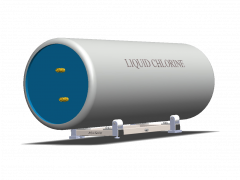
A Chlorine Ton Scale as a Custom-Weighing Example

A chlorine ton cylinder is a useful example because it cannot be weighed safely and conveniently on a conventional flat bench scale.

The cylinder is large, horizontal, curved, and used in a corrosive, safety-sensitive process. The weighing system must support the cylinder securely while allowing it to be loaded and removed.

The Arlyn A-TON scale addresses these requirements with:

  • A purpose-built frame for horizontal ton cylinders
  • Stainless-steel frame and load-cell construction
  • Four direct-sensing load cells without mechanical pivots
  • A 5,000 lb capacity with 1 lb readability
  • Standard and optional outputs for indicators, computers, PLCs, and monitoring systems
  • An intrinsically safe ArlynGuard T option for specified classified environments

This is the principle behind effective customization: the mechanical design, materials, capacity, and electronics are selected around the actual weighing process.


Have an unusually shaped product or container?
Send Arlyn Scales the product dimensions, maximum weight, photographs, loading method, and required platform location. Our team can determine whether an existing specialty scale can be adapted or whether a custom structure is required.

Customize Scale Connectivity and Process Control

For many businesses, displaying the weight is only the first step. The measurement may also need to be recorded, transmitted, printed, or used to control equipment.

A custom weighing system can be configured to communicate through:

  • USB
  • RS-232
  • RS-422 or RS-485
  • Ethernet TCP/IP
  • Wi-Fi
  • Analog 4–20 mA or voltage output
  • Modbus
  • EtherNet/IP
  • PROFINET
  • A REST Web API

The scale may also operate relays, valves, pumps, feeders, alarms, lights, or other equipment according to programmed weight conditions.

Communication requirements should be defined before ordering. Provide the PLC or software platform, required protocol, network method, desired data format, and the commands the external system must send or receive.

Examples of Custom Industrial Weighing Systems

Custom scale projects may include:

  • Oversized floor scales: Platforms designed around large pallets, machinery, carts, or containers
  • Tank and vessel weighing: Load cells installed beneath tanks, hoppers, silos, or ingredient vessels
  • Cylinder monitoring: Platforms that continuously monitor gas or liquid remaining in a cylinder
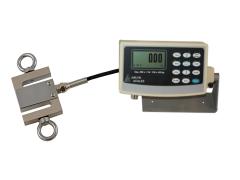
  • Hanging and force measurement: Sensors installed in tension for suspended products or lifting applications
  • Multi-platform systems: Several weighing platforms connected to one indicator or monitoring system
  • OEM weighing components: Load cells, electronics, and software incorporated into another manufacturer’s equipment
  • Automated batching: Scales connected to pumps, valves, feeders, or mixers
  • High-resolution platforms: Larger industrial platforms designed to detect relatively small weight changes

What Information Does Arlyn Need for a Custom Scale?

A clear application description helps determine whether the project needs a standard scale, a modification, or a completely custom design.

Provide as much of the following information as possible:

  1. Maximum gross weight: Include the product, container, fixture, and any permanent structure resting on the scale.
  2. Required readability: State the smallest weight change that must be displayed.
  3. Required accuracy: Identify the acceptable measurement tolerance.
  4. Product dimensions: Include length, width, height, diameter, and support points.
  5. Available installation space: Provide drawings, photographs, or dimensional sketches.
  6. Loading method: Explain whether the product is placed by hand, forklift, crane, pallet jack, conveyor, or another method.
  7. Operating environment: Describe moisture, chemicals, temperature, washdown, vibration, and hazardous-location classifications.
  8. Power requirements: Identify available AC, DC, battery, or facility power.
  9. Communication requirements: Name the computer, PLC, printer, network, or software that must receive the data.
  10. Control requirements: Explain whether the scale must activate alarms, relays, valves, pumps, or other equipment.
  11. Quantity: State whether the project is a single specialized scale or an OEM production requirement.

Why Work Directly with a Scale Manufacturer?

Custom scale projects often require coordination between mechanical design, load-cell selection, electronics, calibration, software, and process integration.

Working directly with the manufacturer allows technical requirements to reach the engineers and technicians responsible for the weighing system. It also reduces the risk that important details will be lost through several layers of distributors or resellers.

Arlyn Scales designs, manufactures, assembles, and supports industrial weighing equipment from its facility in Long Island, New York. Existing platforms, load cells, indicators, and software can often be adapted to reduce the cost and development time of a custom project.


Start Your Custom Scale Project
Describe what must be weighed, the maximum load, the smallest required weight change, the available installation space, and where the weight data must go. Arlyn Scales can determine whether a standard product, modified platform, or fully custom weighing system provides the best solution.

Call 800-645-4301 to discuss your custom weighing application.
Frequently Asked Questions

What is a custom industrial scale?
A custom industrial scale is a weighing system modified or engineered to meet requirements that are not fully satisfied by a standard product. Customization may include the capacity, readability, platform size, shape, materials, load cells, indicator, communication interfaces, software, or process controls.
Do I need a completely new scale design?
Not necessarily. Many custom projects can begin with an existing Arlyn bench, platform, floor, cylinder, crane, or Ultra Precision scale. The platform, capacity, materials, indicator, or communication options may then be modified to meet the application.
Can Arlyn build a custom-size scale platform?
Yes. Arlyn can provide nonstandard platform dimensions and structures for large, irregular, cylindrical, suspended, or machine-mounted loads. The platform must be designed around the product dimensions, support points, loading method, and maximum gross weight.
Can a custom scale provide higher capacity?
Yes. Capacity can often be increased by selecting an appropriate platform, frame, and load-cell system. The requested readability and accuracy must also be considered because increasing capacity can affect the smallest practical displayed increment.
Can a custom scale provide finer readability?
Yes. Depending on the capacity and platform requirements, Arlyn may use a higher-performance strain-gage system or Ultra Precision Surface Acoustic Wave technology. Provide the smallest weight change and measurement tolerance required by the process.
Can Arlyn customize a scale for an unusual product shape?
Yes. Custom structures can support cylinders, tanks, vessels, machinery, suspended products, oversized containers, and loads with unusual support points. Photographs and dimensional drawings help determine the correct design.
Can a custom scale be made from stainless steel?
Yes. Stainless-steel frames, platforms, load cells, indicator enclosures, and hardware are available for many applications involving moisture, corrosion, cleaning, food ingredients, chemicals, or outdoor exposure.
Can a custom scale connect to a PLC?
Yes. Depending on the selected indicator and options, Arlyn scales can support serial communication, Ethernet, analog output, Modbus, EtherNet/IP, PROFINET, and other integration methods. Provide the PLC manufacturer, model, required protocol, and expected data exchange.
Can several weighing platforms use one indicator?
Yes. Multi-platform systems can be configured so that one indicator or monitoring system receives measurements from several weighing platforms. The number and type of platforms depend on the indicator, load-cell technology, and required workflow.
Can a custom scale control pumps, valves, or alarms?
Yes. Setpoints, relays, analog outputs, and industrial communication protocols can allow a scale to activate compatible pumps, valves, feeders, lights, alarms, and other process equipment according to programmed weight conditions.
Can Arlyn provide custom load cells for OEM equipment?
Yes. Arlyn can provide load cells, weighing electronics, indicators, communication interfaces, and software for incorporation into OEM equipment. The required capacity, dimensions, mechanical mounting, output format, production quantity, and environmental conditions should be provided during the design review.
How much does a custom industrial scale cost?
Cost depends on the amount of engineering, platform construction, load-cell configuration, materials, capacity, readability, electronics, software, testing, documentation, and order quantity. Modifying an existing scale is generally more economical than developing an entirely new system.
What information should I provide for a custom-scale quote?
Provide the maximum gross load, required readability and accuracy, product dimensions, installation space, loading method, environment, platform material, power source, communication requirements, control functions, photographs or drawings, and expected order quantity.