High Resolution Scales with Super Sensitivity
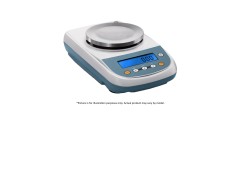
Starting at $669
Milligram and sub-milligram weighing
For small samples, lightweight materials and controlled weighing environments where fine displayed increments matter. Compare High Resolution Balance configurations by the complete load, required readability and operating conditions.
A high resolution balance is a lower-capacity weighing instrument that shows very small changes in weight. Choose the capacity for the sample, container and any fixture, then compare the available readability and performance specifications for that load.
Arlyn also supplies 0.01 mg semi-micro and 0.001 mg microbalance configurations for procedures that require a finer displayed increment. Readability describes the smallest displayed increment. It does not by itself establish accuracy.
High Resolution or Ultra Precision?
Choose a High Resolution Balance when the priority is milligram or sub-milligram readability at lower capacity in a stable environment. Choose an Ultra Precision Scale when you need fine measurement at higher capacities, on larger platforms or as part of an industrial process. High Resolution Balances are also available from Arlyn with UpScale when the application needs advanced connectivity and data workflows.
Choose this family when the total load is relatively small and the process needs milligram or sub-milligram displayed increments. It is especially useful for controlled laboratory weighing, formulation, water and environmental samples, quality-control checks and lightweight component inspection.
If the load, platform size or installation is beyond the balance’s practical range, compare Arlyn’s Ultra Precision Scales.
These families address different combinations of capacity, displayed increment, platform size and work environment. Use the model capacity and readability together: a smaller displayed increment is not a guarantee of higher accuracy.
| Selection factor | High Resolution Balances | Ultra Precision Scales |
|---|---|---|
| Best suited for | Small laboratory samples and lightweight materials measured in milligram or sub-milligram increments | Fine industrial weighing at higher capacities or on larger and custom platforms |
| Typical environment | Stable indoor bench or laboratory setting | Laboratories, production areas and industrial installations, according to the selected model |
| Platform choices | Compact balance formats for small items and containers | Bench, floor, large-platform and custom configurations |
| Typical load | Small samples and lightweight materials within the selected balance’s capacity | Ingredients, containers, components and heavier industrial loads, according to the model |
| Displayed increment | Compare the available displayed increments for the capacity and model under consideration | Fine readability at higher loads. The exact increment depends on the chosen SAW model |
| Native data output | Check the selected balance’s RS-232, printer and Windows-interface options | Communication and workflow options vary by selected indicator and configuration |
| UpScale option | Arlyn can supply a compatible balance with UpScale as one configured system | UpScale may be chosen as the indicator on compatible Ultra Precision systems |
| Automation and customization | UpScale can add selected data, operator and workflow functions. The compact weighing platform remains the selected balance | Selected systems can support setpoints, relays and other process options, as well as custom platforms |
| Next step | Choose a High Resolution model | Compare Ultra Precision models |
Compare the complete load with the model’s capacity, then choose the smallest useful displayed increment and install the balance in a stable work area.
Determine whether the process needs 10 mg, 1 mg, 0.1 mg or a finer displayed increment. Base readability on the process requirement instead of the number of decimal places alone.
Include the container, fixtures and the sample when choosing capacity. A model with very fine readability may not have enough capacity for the complete load.
Air movement, vibration, temperature changes, static charge and an unstable work surface can affect sensitive measurements. The installation matters as much as the displayed increment.
Readability is the smallest increment shown by the balance. Accuracy describes how closely a measured result agrees with the correct value under stated conditions. A 0.1 mg display step does not guarantee 0.1 mg accuracy. Compare the selected model’s accuracy and repeatability specifications with the process tolerance.
Complete connected weighing system
Arlyn can provide a High Resolution Balance with the UpScale touchscreen and the connectivity options selected for the application. The balance supplies the weighing performance. UpScale adds the operator interface, communications and workflow tools.
Already have a scale? See Scale Integration with Arlyn UpScale.
Compare current High Resolution models.
High Resolution Balances are used when small materials, samples or components must be measured with fine displayed increments under controlled conditions.
Weigh samples, reagents and formulation ingredients during research and routine laboratory work.
Support development and testing procedures that fall within the selected model’s capacity and performance specifications.
Compare small parts, products and material samples where minor weight differences are significant.
Measure filters, residues, treatment materials and other small samples in a controlled work area.
Detect weight differences in lightweight manufactured parts, electronics and assemblies.
Support chemistry, physics and material-science measurements in teaching laboratories.
Balance terminology varies by manufacturer. Arlyn uses High Resolution Balances as the broader product family, while the terms below describe common readability ranges and balance formats used in laboratories, quality control, formulation, manufacturing and inspection.
| Common term | Typical market usage | Relationship to the Arlyn range |
|---|---|---|
| High Resolution Balance | A broad description for lower-capacity balances that display very small weight increments | Arlyn’s umbrella family for standard and application-specific configurations |
| Precision balance | Often used for milligram readability with more capacity than a typical analytical balance | Generally overlaps configurations with milligram-level readability |
| Analytical balance | Commonly a lower-capacity balance with 0.1 mg readability and a draft shield | Overlaps configurations with 0.1 mg readability |
| Semi-micro balance | Commonly used for balances with 0.01 mg readability | Available through additional application-specific configurations |
| Microbalance | Commonly used for balances with 0.001 mg readability | Available through additional application-specific configurations |
| Milligram or sub-milligram balance | Describes the displayed increment rather than a fixed product class | Useful when comparing the complete High Resolution range by readability |
Compare current models and specifications on the High Resolution Balance product page. Ask Arlyn about UpScale when the system requires touchscreen operation, connected records, barcode tools, printing, network communication or PLC integration.
Today, there is a specialized scale or balance for every job. One of the most useful is the analytical balance. These specialized scales are known for their precision. Their unique design allows for accurate measurements down to a hundredth of a milligram. The design also allows these balances to be used to weigh a number … Continued
Copyright © 2007-2026 Circuits & Systems Inc. Arlyn Scales. All Rights Reserved.