Choosing the right industrial scale can save a business money long after the original purchase. The savings do not necessarily come from buying the least expensive scale. They come from selecting equipment that fits the load, environment, required accuracy, operator workflow and data requirements of the application.
A properly specified scale can reduce weighing errors, unnecessary material usage, manual data entry, employee handling time, unplanned downtime and premature equipment replacement. A poorly matched scale may have a lower purchase price but create substantially higher operating costs throughout its service life.
What Is the Total Cost of an Industrial Scale?
The total cost of ownership includes the purchase price and the expenses or savings created while the scale is in service. Depending on the application, these may include:
- Installation and employee training
- Time required to place, weigh and remove each load
- Product giveaway caused by overfilling
- Rejected batches, shipping corrections or inventory discrepancies
- Manual recording and transcription of weight results
- Calibration, inspection and maintenance
- Production downtime
- Repairs caused by overloads, impacts, moisture or corrosive materials
- Premature replacement of an underspecified scale
- Integration with computers, printers, networks or process equipment
This is why comparing scales solely by their initial prices can be misleading. A scale that reduces one recurring task by only a few seconds may produce meaningful savings when that task is repeated hundreds of times per shift.
| Selection factor | Potential operating benefit | Cost of choosing incorrectly |
|---|---|---|
| Capacity and platform size | Loads fit securely and can be handled efficiently. | Overloading, unstable loads, inefficient handling or another scale purchase. |
| Resolution and accuracy | Measurements support the actual production, inventory or quality requirement. | Product giveaway, incorrect counts, rejected work or unnecessary spending on excessive precision. |
| Construction and protection | The scale withstands expected impacts, moisture, chemicals and cleaning practices. | Corrosion, load-cell damage, unreliable operation and shortened equipment life. |
| Data connectivity | Weight results move directly into the required system or record. | Manual entry, transcription errors and disconnected records. |
| Automation options | Weight can control filling, batching, alarms or other equipment. | Additional labor, inconsistent processes and avoidable material loss. |
| Serviceability | Operators and maintenance personnel can resolve routine needs efficiently. | Longer outages, repeated service calls and dependence on multiple intermediaries. |
Start With the Weighing Application, Not the Scale
An economical scale is one that performs the required job without being underspecified or unnecessarily complex. Before comparing models, define what the weighing system must accomplish.
At minimum, document:
- The lightest and heaviest expected loads
- The smallest weight change that must be displayed
- The required measurement accuracy or process tolerance
- The dimensions and shape of the objects being weighed
- Whether loads will be placed manually, rolled onto the platform or suspended
- The frequency and speed of weighing
- Exposure to water, washdown procedures, chemicals, dust or hazardous materials
- Who must see, store or act on the weight result
- Whether weight must control another device or process
This application-first approach helps prevent two expensive mistakes: buying a scale that cannot reliably perform the job and paying for capabilities that the operation will never use.
Match Capacity and Platform Size to the Load
Maximum capacity must provide sufficient room for the heaviest expected load, including containers, carts, fixtures or other equipment placed on the platform. However, selecting a dramatically higher capacity than necessary may result in coarser displayed increments than the application requires.
Platform dimensions matter as well. An undersized platform can make loads difficult to position and may encourage unsafe or inconsistent handling. An unnecessarily large platform occupies valuable floor space and may complicate installation.
The best configuration provides enough capacity and physical support for normal loads while maintaining the required resolution. Arlyn offers standard configurations as well as custom weighing solutions for applications that do not fit a standard platform or system.
Use the Right Level of Resolution and Accuracy
Resolution, readability and accuracy are related, but they are not interchangeable.
- Resolution is the smallest weight increment shown by the display.
- Readability describes the number of displayed increments across the scale’s capacity.
- Accuracy describes how closely a measurement agrees with the accepted value under specified conditions.
A shipping department, a parts-counting operation and a formulation process may all use scales, but they do not necessarily need the same measurement performance.
Too little resolution can conceal changes that matter. Excessive resolution may add cost without improving the business decision being made. Highly sensitive measurements can also require greater control of drafts, vibration, temperature and operating technique.
For industrial applications that need substantially finer measurements at useful capacities, an Arlyn Ultra Precision Scale may be appropriate. Standard industrial scales remain the more economical choice when their resolution and accuracy already satisfy the process.
| Application need | Likely direction | Why it may save money |
|---|---|---|
| Routine shipping, receiving or general industrial weighing | Properly sized standard industrial scale | Provides suitable performance without paying for unnecessary sensitivity. |
| Small parts counting or tight production tolerances | Evaluate finer resolution or Ultra Precision technology | Better differentiation of small weight changes may reduce count or formulation errors. |
| High-capacity work requiring unusually fine increments | Compare Ultra Precision capacities with the required tolerance | May avoid splitting the process between separate high-capacity and precision instruments. |
| Best-value rule | Specify the measurement performance the process can justify | Avoids both costly measurement errors and unnecessary over-specification. |
Reduce Product Giveaway and Process Errors
Small weight differences can become large financial differences when repeated across thousands of containers, packages or batches.
If a filling process consistently places more material in a container than required, the excess may not be billed to the customer. This is commonly called product giveaway. If the process underfills, the business may face rejected products, rework or customer complaints.
A scale with suitable accuracy, resolution and response behavior helps operators or automated equipment stop closer to the intended target. The financial effect depends on the value of the material, the average deviation and the number of cycles performed.
For example, a small reduction in excess material per container may appear insignificant in isolation. Multiplied by daily production volume, operating days and material cost, it can become an important annual saving.
Choose Construction for the Operating Environment
A scale intended for a dry warehouse does not face the same conditions as one used around corrosive chemicals, outdoor moisture, washdown procedures or repeated impacts.
Construction should be chosen according to actual exposure:
- Aluminum can provide a practical balance of strength, lower weight and economy for many general applications.
- Steel may be appropriate for rugged industrial equipment when its coating and environment are considered.
- Stainless steel is often preferred when corrosion resistance, moisture exposure or cleaning requirements justify the additional investment.
- Special coatings or protected components may be appropriate when chemicals or harsh substances are present.
Durability is not just the material visible on top of the scale. The design and protection of the load cells, frame, wiring, indicator and connections also influence service life.
Choosing construction that matches the environment can reduce corrosion, intermittent readings, repair costs and premature replacement. Conversely, buying the most expensive construction for a clean, dry application may offer little financial return.
Improve Material Handling and Operator Efficiency
Scale height, platform dimensions, ramps and indicator placement can affect every weighing cycle.
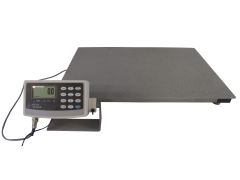
A low-profile platform can reduce the lifting needed to place boxes, containers or ingredients onto a scale. When wheeled loads are involved, a properly matched ramp can allow carts or pallet-handling equipment to move onto the platform more efficiently.
An indicator should also be positioned where the operator can read and use it without awkward movement. The appropriate mounting arrangement may be on the scale, a column, a wall or a nearby work surface.
These choices may save only seconds during an individual measurement, but their effect accumulates across repeated operations. Better handling can also reduce the likelihood of dropped materials, damaged products and avoidable strain.
Explore available industrial platform scales and configurations for different load-handling requirements.
Eliminate Repetitive Manual Data Entry
A scale can display the correct weight and still create an inefficient process if an employee must copy every result onto paper and then enter it into another system.
Manual transcription adds labor and introduces opportunities for:
- Reversed or omitted digits
- Incorrect units of measurement
- Results assigned to the wrong product or batch
- Missing timestamps or operator information
- Delayed inventory and production updates
Depending on the scale and indicator configuration, weight data may be transferred through interfaces such as USB, RS-232, Ethernet, Wi-Fi or other available options. The correct method depends on where the data must go, how often it is collected and whether communication must be local or networked.
The goal is not to purchase every communication option. It is to create the shortest reliable path between the measurement and the system that needs it.
Review Arlyn’s current scale options and communication capabilities when planning a connected weighing system.
Use Weight Data to Control a Process
For some operations, recording weight is only part of the task. The measurement must also trigger an action.
A properly configured set-point or control system may use target weights to:
- Start or stop a pump, feeder or conveyor
- Open or close a valve
- Signal an acceptable, underweight or overweight result
- Control filling or dispensing
- Support repeatable batching and mixing
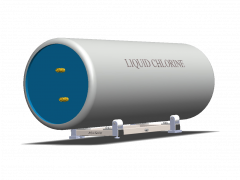
- Alert personnel when the contents of a vessel or cylinder reach a defined level
Automation can reduce operator intervention and improve consistency, but it must be evaluated carefully. Output type, control logic, response time, fail-safe behavior and compatibility with connected equipment should be defined before ordering the system.
A simple manual process may not justify automation. A frequent, repetitive or material-intensive process may recover the added investment much more quickly.
Select an Indicator That Fits the Workflow
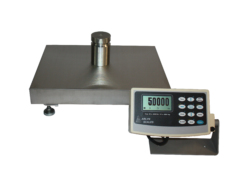
The indicator is the operator’s primary connection to the weighing system. A straightforward digital indicator may be the most economical and efficient choice for basic weighing, tare, counting or set-point functions.
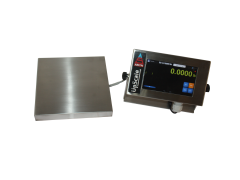
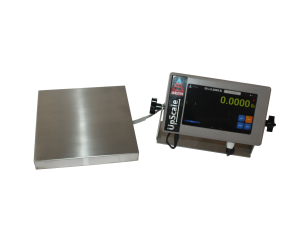
More advanced applications may benefit from the Arlyn UpScale touchscreen indicator. A touchscreen interface can provide a more visual workflow, configurable functions and additional integration possibilities when the process requires them.
The important question is not whether a touchscreen has more features. It is whether those features reduce training, simplify operation, improve data handling or support a required process. If they do, the indicator can provide measurable value. If they do not, a simpler configuration may remain the better investment.
Plan for Calibration, Verification and Maintenance
All weighing equipment should be evaluated periodically according to the importance of its measurements, the operating environment and the organization’s quality procedures.
The required schedule may vary considerably. A scale used for internal material estimates may not require the same controls as one supporting a regulated process, commercial transaction or critical formulation.
Businesses should distinguish between:
- Routine checks: confirming acceptable operation with suitable known weights
- Calibration: comparing indicated values with recognized standards and making adjustments when required
- Legal-for-trade requirements: complying with applicable commercial weighing regulations when weight determines price
- Preventive maintenance: inspecting platforms, cables, connectors, load cells and surrounding obstructions
Accessible calibration functions may reduce service inconvenience, but calibration should still follow the organization’s procedures and any applicable regulatory or traceability requirements.
Consider the Value of Factory-Direct Support
Support costs can increase when product selection, customization and troubleshooting must pass through several organizations.
Working directly with the manufacturer can make it easier to:
- Confirm whether a standard model meets the application
- Discuss custom dimensions or unusual loads
- Select compatible outputs and accessories
- Resolve technical questions with people familiar with the equipment
- Coordinate repeat orders or modifications
Arlyn Scales designs and manufactures weighing equipment in the United States and works directly with customers on standard and custom applications. This structure can reduce communication delays and help prevent the cost of ordering equipment that does not match the intended process.
How to Estimate the Return on a Better Scale
A precise return-on-investment calculation will differ by application, but a practical estimate can begin with five questions:
- How many weighing cycles occur per day?
- How much operator time could be removed from each cycle?
- What is the cost of the material lost through overfilling, spills or inaccurate batching?
- How often do data-entry errors, repairs or production interruptions occur?
- How many years is the scale expected to remain in service?
A simplified annual benefit estimate can include:
Compare that value with the difference in purchase and implementation cost between the proposed system and the least expensive acceptable alternative. This provides a more useful business comparison than purchase price alone.
When Should You Avoid Paying for an Upgrade?
An upgrade is economical only when it addresses a real requirement or produces a defensible operational benefit.
You may not need an upgrade when:
- The standard resolution already exceeds the process tolerance
- Weight results are viewed but never stored or transferred
- The scale operates in a clean, dry environment that does not require specialized construction
- The weighing task occurs too infrequently to justify automation
- A feature would add complexity without improving the operator’s workflow
You should investigate an upgrade when it can reduce a recurring cost, protect the scale from a known hazard, meet a required specification or connect the weighing system to an existing process.
| Operational problem | Option to evaluate | Business result to verify |
|---|---|---|
| Operators repeatedly copy readings by hand | Appropriate data communication interface | Reduced labor and fewer transcription errors |
| Material is routinely overfilled | Finer measurement performance or set-point control | Reduced product giveaway and improved consistency |
| Scale components deteriorate in the environment | Stainless construction, protective coating or application-specific design | Longer service life and fewer repairs |
| Operators struggle with a complicated sequence | UpScale touchscreen or customized workflow | Shorter training and more consistent operation |
| No recurring problem or measurable requirement | Keep the standard configuration | Avoid paying for features that do not create operational value |
Questions to Ask Before Purchasing an Industrial Scale
Before requesting a quote, ask:
- What capacity do we need after including containers, carts and fixtures?
- What is the smallest weight difference that affects a business decision?
- What platform dimensions will support the load and handling method?
- What environmental hazards will the scale encounter?
- How will operators place and remove each load?
- Where must the weight data go?
- Does weight need to control another device?
- Which options will measurably reduce labor, waste, errors or downtime?
- What verification, calibration or regulatory requirements apply?
- Can the supplier support modifications if the process changes?
Clear answers allow the manufacturer to recommend a system based on the application rather than a generic feature list.
Choose a Scale for Long-Term Value
The least expensive industrial scale is not always the most economical, and the most extensively equipped scale is not automatically the best. Long-term value comes from matching the weighing system to the work it must perform.
Arlyn Scales can help evaluate capacity, resolution, construction, platform dimensions, indicator functions, connectivity and automation as one complete system. Standard products may satisfy many operations, while custom configuration is available when the application demands something different.
Frequently Asked Questions
Does buying the cheapest industrial scale save money?
Not necessarily. A lower purchase price may be offset by inaccurate measurements, inefficient handling, manual data entry, downtime, repairs or early replacement. Compare the total cost of owning and operating each suitable option.
How can an industrial scale reduce labor costs?
A properly configured scale can shorten load handling, recall stored values, transfer results electronically and use weight to control other equipment. The value depends on how frequently the task is repeated and how much manual work is removed.
Can a more accurate scale reduce material costs?
It can when the current measurement system contributes to overfilling, incorrect batching, inventory discrepancies or rejected work. The scale’s resolution and accuracy must be appropriate for the process tolerance and operating conditions.
When is an Ultra Precision Scale worth considering?
Ultra Precision technology should be evaluated when a standard industrial scale cannot provide the required resolution or accuracy at the needed capacity. Applications may include small-parts counting, formulation, research, quality control and other processes with tight tolerances.
Which scale connectivity option is best?
The best option depends on the destination of the weight data and the existing system. USB or serial communication may suit a nearby computer or controller, while Ethernet or Wi-Fi may be more appropriate for networked workflows. Compatibility should be confirmed before ordering.
Should every industrial scale be automated?
No. Automation is most valuable when weighing is frequent, repetitive, material-intensive or connected to equipment such as pumps, valves, feeders or conveyors. A simple manual scale may remain more economical for occasional basic weighing.
How do I calculate whether a scale upgrade will pay for itself?
Estimate the annual labor, material loss, errors, downtime and service costs the upgrade could reduce. Compare those savings with the upgrade’s purchase and implementation cost over the expected service life of the scale.