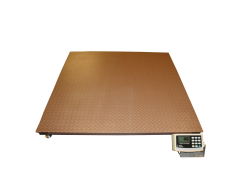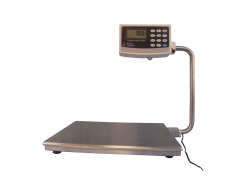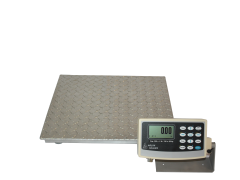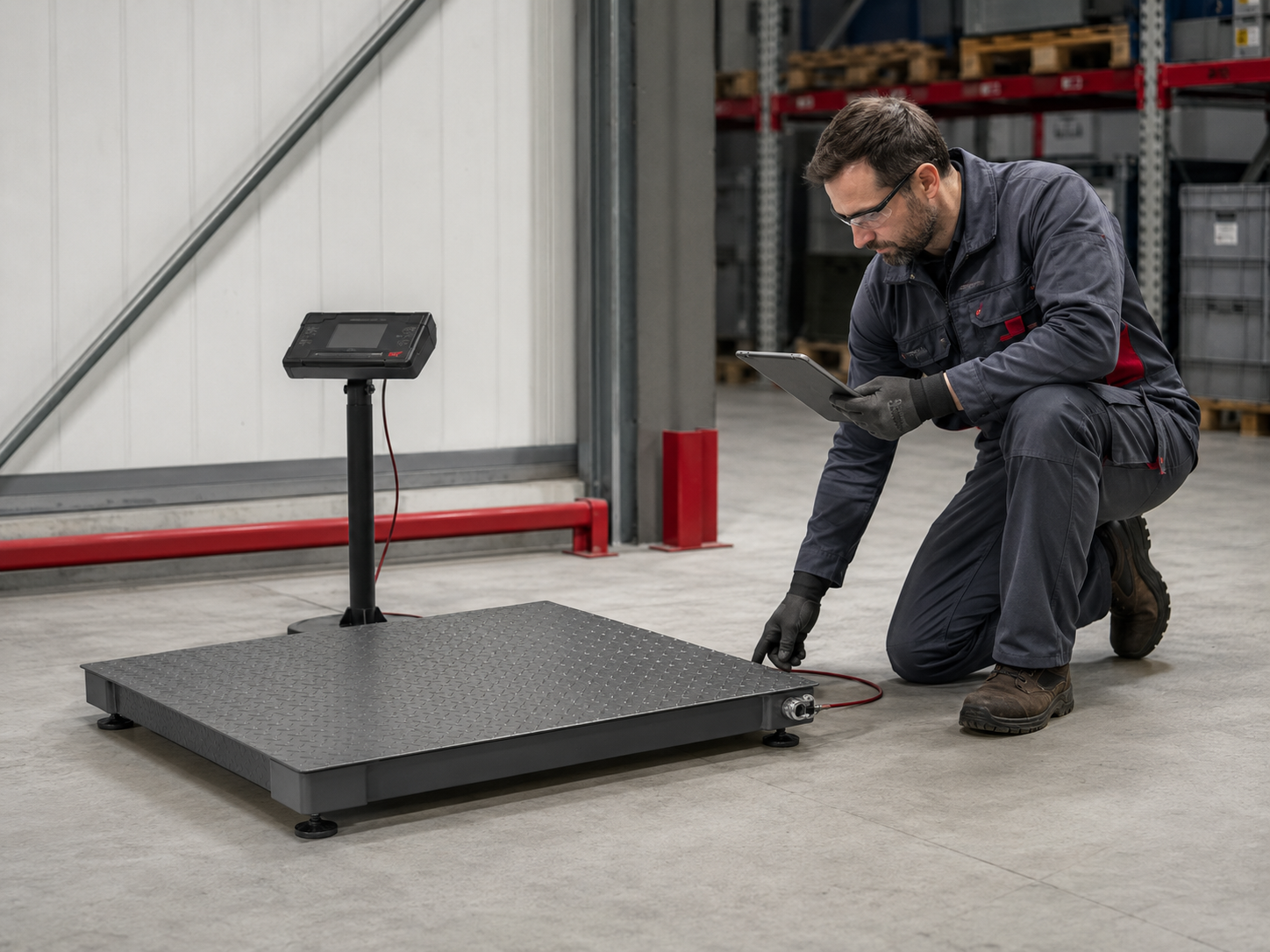
An industrial scale does not necessarily need to be replaced simply because it is old or requires occasional service. Replacement becomes appropriate when the scale can no longer produce trustworthy measurements, operate safely, support the current process or be restored economically.
Some problems can be corrected through cleaning, calibration, repair or an indicator upgrade. Others indicate that the scale is undersized, environmentally unsuitable, mechanically damaged or technologically incompatible with the operation it now serves.
Should You Repair, Upgrade or Replace an Industrial Scale?
The decision should begin with the cause of the problem. A drifting reading does not automatically mean the scale has reached the end of its useful life. Debris beneath a platform, contact with a ramp, a damaged cable, vibration, unstable mounting or an incorrect setting can all affect performance.
Likewise, an older scale may still have a mechanically sound platform and usable load cells even though its indicator no longer provides the communication or workflow features the business needs.
The three possible paths are:
- Repair or recalibrate when the scale still suits the application and the problem can be corrected reliably.
- Upgrade when the weighing hardware remains suitable but the indicator, data connection, controls or operator interface is inadequate.
- Replace when the scale is structurally compromised, repeatedly unreliable, fundamentally mismatched to the application or uneconomical to restore.
| Condition | Most likely path | What to verify |
|---|---|---|
| Readings changed after the scale was moved, cleaned or struck | Inspect and test first | Leveling, obstructions, cables, platform contact and calibration |
| The platform and load cells work, but data must be entered manually | Evaluate an indicator or connectivity upgrade | Compatibility with the existing scale and destination system |
| The scale is occasionally outside the required tolerance but adjusts correctly | Service or calibration may be sufficient | Calibration history, repeatability, environment and quality procedures |
| The frame, platform or load cells have suffered significant damage | Compare major repair with replacement | Repair scope, expected reliability, parts availability and replacement cost |
| Capacity, platform size or measurement performance no longer fits the process | Replacement is usually appropriate | Current and future loads, dimensions, tolerance and handling method |
| The scale remains reliable and meets every process requirement | Continue using and maintaining it | Documented checks confirm acceptable performance |
First Rule Out Installation and Environmental Problems
Before condemning a scale, inspect the conditions around it. Industrial scales measure force, so anything that interferes with the intended movement of the weighing structure can affect the result.
Check for:
- Debris, packaging material or hardened product beneath the platform
- A platform touching a wall, ramp, conveyor or nearby equipment
- An uneven, unstable or damaged floor
- Loose, crushed, cut or chemically damaged cables
- Water or chemical intrusion around connections and electronics
- Strong air movement affecting sensitive measurements
- Vibration from motors, mixers, forklifts or adjacent machinery
- Loads that extend beyond the platform or contact another surface
- Recently changed settings, filtering or units of measurement
A scale should be tested under controlled conditions after these problems are corrected. If the equipment then returns to repeatable and acceptable operation, replacement may not be necessary.
Warning Sign 1: Measurements Are No Longer Repeatable
Repeatability means that the scale produces sufficiently consistent results when the same load is applied repeatedly under the same conditions.
An occasional unexpected reading may come from load placement, vibration, an obstruction or operator technique. A persistent inability to reproduce a result is more serious.
Possible warning signs include:
- The displayed weight changes substantially while the load remains still
- The same test weight produces materially different results across repeated trials
- The scale does not return to zero after the load is removed
- Measurements vary depending on where the load is positioned
- Frequent recalibration provides only temporary improvement
These symptoms require inspection. Potential causes can include mechanical interference, environmental instability, wiring faults, damaged load cells or electronic problems. Replacement should be considered when the cause cannot be corrected reliably or when the repair cost is disproportionate to the value of the remaining equipment.
Warning Sign 2: The Scale No Longer Meets the Required Tolerance
A scale can still display a weight and yet no longer be suitable for its application. The relevant question is whether its performance supports the decision being made.
A shipping scale, parts-counting scale, formulation scale and quality-control scale may require very different levels of resolution and accuracy. Business requirements can also become tighter over time as products, materials or customer specifications change.
Review:
- The smallest weight difference that matters to the process
- The acceptable process or product tolerance
- The scale’s displayed increment at its selected capacity
- Repeatability across the platform
- Applicable quality, traceability or legal-for-trade requirements
If the existing scale operates correctly but cannot display or measure the changes the process now requires, calibration will not transform it into a higher-performance instrument. A different weighing technology or capacity may be needed.
For applications requiring much finer measurements at industrial capacities, compare the existing equipment with Arlyn Ultra Precision Scales. Standard industrial scales remain appropriate when their measurement performance already satisfies the application.
Warning Sign 3: Capacity or Platform Size Is No Longer Suitable
A business process may change even when the scale has not. Larger containers, heavier ingredients, different pallets or new fixtures can make an existing scale unsuitable.
Do not use a scale routinely at or beyond its rated maximum capacity. The complete load must be considered, including:
- The product or material
- Containers, cylinders or drums
- Pallets and carts
- Fixtures, supports or handling equipment resting on the scale
The platform must also support the load safely without allowing it to touch the floor or surrounding structures. A load that hangs over the platform is not automatically a problem, but its weight must be transmitted entirely through the scale and remain mechanically stable.
If the current scale is undersized, replacing it with an appropriate capacity and platform is generally safer and more reliable than attempting to work around the limitation.
Not sure whether your current scale still fits the application? Provide Arlyn Scales with the load dimensions, minimum and maximum weights, required tolerance, handling method and operating environment.
Warning Sign 4: Overload or Shock Loading Has Caused Damage
Maximum capacity describes a static load applied appropriately to the scale. It does not mean the scale can absorb unlimited impact.
Shock loading occurs when an object is dropped or placed forcefully onto the platform. The instantaneous force can be much greater than the object’s resting weight. Forklifts, pallet jacks, drums, cylinders and heavy containers can also strike the platform or frame during loading.
After a serious overload or impact, look for:
- A bent or distorted platform
- A platform that rocks or no longer sits evenly
- Permanent zero shift
- Poor corner-to-corner agreement
- Unstable readings
- Visible damage to load cells, feet, cables or stops
Minor components may be repairable. Significant structural or load-cell damage may justify replacement, especially when restoring the system would still leave older components with uncertain remaining life.
The replacement should address the cause of the failure. This could mean choosing greater capacity, stronger construction, mechanical protection or a better material-handling procedure.
Warning Sign 5: Corrosion or Moisture Is Affecting Reliability
Corrosion is more than a cosmetic issue. It can affect structural components, fasteners, cables, connectors, load cells and electronics.
A general-purpose scale may perform well in a clean, dry area but deteriorate quickly around:
- Acids, bases and chemical solutions
- Salt and saline materials
- Frequent washdown procedures
- Outdoor moisture or condensation
- Food ingredients and cleaning agents
- Corrosive vapors or repeated spills
If environmental exposure caused the current scale to fail, replacing it with the same construction is likely to repeat the problem. Evaluate stainless steel, suitable coatings, protected electronics and application-specific corrosion-resistant scales.
The necessary protection should be based on the actual chemical, concentration, temperature, cleaning procedure and exposure pattern. No single material or coating is ideal for every corrosive environment.
Warning Sign 6: Repairs and Downtime Are Becoming Routine
A repairable scale is not always an economical scale to keep.
Track the complete effect of each failure:
- Replacement parts and outside service charges
- Employee time spent diagnosing the problem
- Production or shipping delays
- Temporary weighing methods
- Lost or questionable weight records
- Reinspection, rework or repeated batches
One repair may be far less expensive than replacement. A recurring pattern of failures can reverse that conclusion.
| Cost factor | Question to ask | Replacement becomes more compelling when… |
|---|---|---|
| Repair frequency | How often has the scale failed during the last several operating periods? | Failures recur and the underlying cause remains unresolved. |
| Downtime | What does one unavailable hour or shift cost the operation? | Lost operating time costs more than the repair invoice itself. |
| Parts availability | Are compatible components and technical information still available? | Repairs depend on obsolete, unavailable or improvised components. |
| Remaining capability | Will the repaired scale satisfy current requirements? | The scale would remain undersized, disconnected or environmentally unsuitable. |
| Decision rule | Compare future cost, not money already spent | A replacement provides a more dependable and suitable path forward. |
Money previously spent on repairs is a sunk cost. The decision should compare the expected future cost and performance of keeping the scale with the expected cost and benefits of replacing it.
For a broader calculation, review how the right industrial scale can reduce operating costs.
Warning Sign 7: The Scale Cannot Support Current Data Requirements
An older scale may weigh correctly but create unnecessary work because its results cannot reach a computer, network, printer, database or control system.
Common signs of a workflow limitation include:
- Operators record every weight manually
- The same result is entered into multiple systems
- Weight records lack consistent timestamps or identifiers
- The scale cannot communicate with a replacement computer or controller
- Production requires set points, alarms or automated equipment control
- Remote monitoring has become an operational requirement
This does not automatically require a complete scale replacement. If the platform, sensors and signal are compatible, an indicator or communication upgrade may provide the needed capability.
Arlyn offers options involving USB, serial communication, Ethernet, Wi-Fi, industrial interfaces, printing, data logging, set-point control and the Arlyn UpScale touchscreen indicator. Availability and compatibility depend on the scale and proposed configuration.
When an Indicator Upgrade May Be Better Than Replacement
The weighing platform and the digital indicator perform different jobs. The platform and load cells produce the measurement signal; the indicator converts, displays, processes and communicates the result.
If the weighing hardware remains reliable, upgrading the indicator may add:
- A clearer or more configurable operator interface
- Additional stored values and process functions
- Electronic data collection
- Network or industrial communication
- Printing and barcode workflows
- Set-point control for filling or batching
- Integration with other compatible weighing devices
Before choosing this path, confirm electrical compatibility, calibration requirements, available functions and the condition of the existing load cells. An upgraded indicator cannot correct a damaged platform or unstable sensor.
Review the broader industrial scale upgrade guide for available pathways.
Do not replace sound weighing hardware unnecessarily. Ask whether your existing platform and load cells can be paired with a modern indicator or communication system.
When a Complete Replacement Is the Better Choice
Complete replacement is generally the stronger choice when one or more of the following applies:
- The frame or platform has substantial structural damage
- Multiple load cells or major components require replacement
- The scale repeatedly fails performance checks after service
- Required replacement parts are unavailable
- The maximum capacity is inadequate
- The platform does not support the current load safely
- The scale lacks the necessary resolution or accuracy
- Its construction is inappropriate for the environment
- The existing system cannot accept required upgrades economically
- Downtime and process disruption have become unacceptable
Replacement is also an opportunity to correct the specification that caused the original problem instead of simply purchasing a newer version of the same unsuitable configuration.
How to Specify the Replacement Scale
Before requesting a replacement, document what has changed since the current scale was selected.
1. Define the complete weight range
Record the lightest item, the heaviest expected load and the tare weight of every container, cart, pallet or fixture that may rest on the scale.
2. Define the required measurement performance
Identify the smallest weight difference that changes a production, inventory, shipping or quality decision. Do not select resolution solely by the number of decimal places that appears attractive.
3. Measure the load and installation space
Provide the load dimensions, platform clearance, approach direction and any restrictions involving ramps, forklifts, carts or surrounding machinery.
4. Describe the environment
Identify moisture, chemicals, dust, temperature, vibration, washdown practices and any hazardous-location classification.
5. Map the operator’s workflow
Explain how the load reaches the scale, which functions the operator uses and what must happen after the weight is captured.
6. Identify every data destination
Specify the computer, PLC, printer, database, cloud system or other equipment that must receive or act on the measurement.
7. Consider likely future requirements
Reasonable capacity or integration planning can extend useful life. Excessive speculative features can add cost and complexity. Separate probable requirements from possibilities that have no defined use.
How to Replace a Scale Without Disrupting Operations
Replacement planning should include more than the delivery date.
A practical transition may involve:
- Documenting the existing scale’s functions, settings and connections
- Confirming the replacement’s capacity, platform and outputs in writing
- Preparing power, network, mounting and floor requirements
- Testing communication with connected systems
- Creating or updating operator instructions
- Verifying performance with suitable test weights
- Running the old and new process in parallel when appropriate
- Retaining required calibration and quality records
- Removing the previous scale only after acceptance is complete
This reduces the risk of discovering after installation that a connector, data format, mounting arrangement or process function was overlooked.
Do Not Replace a Scale Solely Because of Age
Calendar age alone is not a reliable replacement criterion.
A well-specified scale in a controlled environment may provide useful service for many years. A newer scale can fail quickly when it is routinely overloaded or exposed to conditions for which it was not designed.
Continue using an older scale when:
- It remains repeatable and within the required tolerance
- Its capacity and platform still fit the application
- It operates safely in the environment
- Necessary parts and support remain available
- Its workflow does not create an unacceptable burden
- Maintenance and downtime remain reasonable
The goal is not to replace equipment as soon as newer technology appears. It is to recognize when the existing scale has stopped being a dependable and economical part of the process.
Get a Repair, Upgrade or Replacement Recommendation
Arlyn Scales designs and manufactures industrial weighing equipment and can help determine whether an application calls for service, an indicator upgrade, a standard replacement or a custom weighing solution.
Prepare the scale model, capacity, platform dimensions, symptoms, operating environment and required outputs before contacting the team. Photographs of the installation and damaged components may also help clarify the application.
Make the decision from evidence, not age alone. Describe what the existing scale does, where it is failing and what the replacement process must accomplish.
Frequently Asked Questions
How do I know when an industrial scale needs to be replaced?
Replacement should be considered when the scale remains unreliable after proper inspection and service, has significant structural or load-cell damage, no longer meets the required capacity or tolerance, cannot survive the operating environment or cannot support necessary process functions economically.
Can an inaccurate industrial scale be repaired?
Sometimes. Inaccurate or unstable readings can result from obstructions, poor installation, damaged cables, calibration problems, environmental conditions, electronics or load-cell damage. The scale should be inspected and tested before replacement is selected.
Is recalibration the same as repairing a scale?
No. Calibration compares and, when appropriate, adjusts the indicated result against recognized values. It does not repair structural damage, defective load cells, damaged wiring or environmental problems. A scale that will not hold calibration requires further diagnosis.
Can I replace the indicator without replacing the platform?
Potentially. If the platform and load cells remain sound and electrically compatible, a replacement indicator may add modern display, data, printing or control functions. Compatibility and calibration requirements must be confirmed for the specific system.
Should a scale be replaced after it is overloaded?
Not automatically. It should be removed from critical use and inspected for structural damage, zero shift, instability and poor corner performance. Replacement may be warranted when the platform, frame or load cells cannot be restored reliably.
Is an older industrial scale automatically less accurate?
No. Age alone does not determine measurement performance. Condition, installation, calibration, loading history, environment and maintenance are more relevant. An older scale may remain suitable if documented checks confirm that it meets the application’s requirements.
How should I choose a replacement industrial scale?
Define the complete weight range, required tolerance, load dimensions, loading method, environment, workflow and data connections. The replacement should correct the limitation that caused the current scale to become unsuitable.