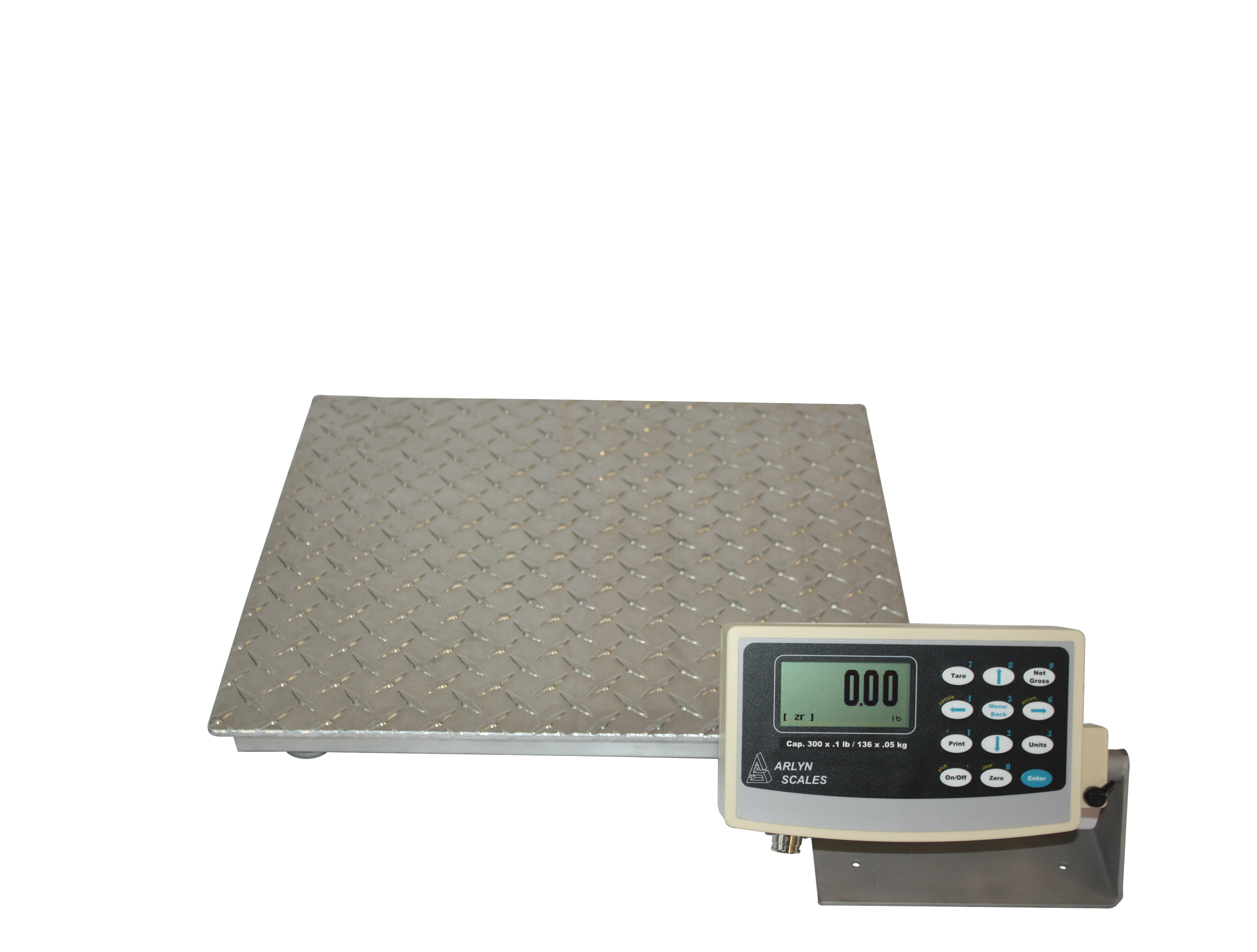
Before buying an industrial platform scale, define what will be weighed, how the load will reach the platform, and what the surrounding environment requires. Capacity is important, but it is only one part of selecting the correct scale.
A suitable platform scale must combine the required capacity, readability, platform dimensions, construction, indicator, and communication options. Choosing these factors carefully can prevent inaccurate expectations, inefficient loading, premature equipment damage, and unnecessary expense.
Quick answer: Before purchasing an industrial platform scale, confirm six things: capacity and readability, platform dimensions, loading method, construction material, environmental protection, and data or control requirements.
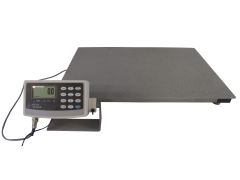
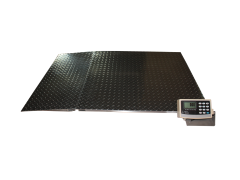
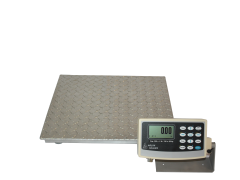
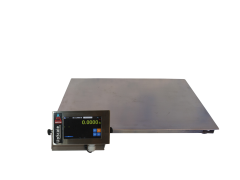
For general industrial weighing, the Arlyn Series 3200 provides 500 and 1,000 lb configurations, multiple platform sizes, aluminum or stainless-steel construction, and a range of optional communication and automation features.
1. Determine the Required Capacity, Readability, and Accuracy
Start with the heaviest total load that will be placed on the platform. Include the product as well as any container, cart, fixture, pallet, or support that will rest on the scale.
Arlyn’s standard Series 3200 platform scales provide two primary capacity and readability combinations:
| Model Family | Maximum Capacity | Displayed Readability | Best Suited For |
|---|---|---|---|
| 320D | 500 lb | 0.1 lb | Applications requiring finer displayed increments at moderate capacity |
| 320M | 1,000 lb | 0.2 lb | Heavier loads where the additional capacity is more important than 0.1 lb increments |
Readability and accuracy are not the same specification. Readability is the smallest increment shown on the display. Accuracy describes how closely the measured result agrees with the actual applied weight under specified conditions.
The 1,000 lb model has coarser displayed readability than the 500 lb model, but that does not mean it is inherently a less accurate scale. Current standard Series 3200 specifications list accuracy as a percentage of full scale. Select the combination that provides enough capacity while still showing weight changes small enough for the process.
Buying tip: Avoid choosing capacity based only on the average load. Account for the heaviest expected product, container weight, loading equipment, and a reasonable operating margin. At the same time, avoid buying substantially more capacity than needed if doing so produces coarser readability than the process can accept.
2. Match the Platform Dimensions to the Load
The weighing surface must safely support the load’s footprint. A platform that is too small may allow the load to overhang, become unstable, interfere with surrounding equipment, or create an awkward loading process. An unnecessarily large platform may occupy more floor space and increase cost without improving the measurement.
Current standard Series 3200 platform sizes include:
- 16 by 18 inches
- 20 by 27 inches
- 22 by 44 inches
- 27 by 60 inches
- 30 by 30 inches
- 36 by 36 inches
- 48 by 48 inches
Custom sizes may also be available. When evaluating platform dimensions, consider more than the product itself. Include the container, wheels, legs, support frame, center of gravity, and how an employee or material-handling device will approach the scale.
3. Consider Platform Height and Loading Method
Most standard Series 3200 models have a low 1 7/8-inch platform height. The 48-by-48-inch configurations have a height of 2 7/8 inches. This distinction matters when planning ramps, surrounding equipment, or a recessed installation.
A low-profile scale reduces the vertical distance through which a load must be lifted. It can also use a shorter ramp than a taller platform, helping conserve floor space and making it easier to roll carts, drums, bins, and other wheeled loads onto the scale.
If a ramp is used, it must be secured without touching the live weighing platform. Contact between the ramp and platform can apply an external force and affect the displayed weight. Plan sufficient room for the ramp, operator, cart, and turning path before choosing the final platform location.
Also consider whether the load will be:
- Placed manually
- Rolled onto the scale with a cart or dolly
- Loaded using a pallet jack or other equipment
- Lowered from above
- Left on the platform for continuous inventory monitoring
The most efficient scale is one that fits naturally into the existing material-handling process.
4. Choose the Correct Construction and Environmental Protection
Standard Series 3200 scales are available with aluminum or stainless-steel platforms. Both use four stainless-steel load cells embedded in a welded frame.
Aluminum offers an economical solution for many dry, general industrial environments. Stainless steel may provide better long-term value where the scale encounters moisture, sanitation procedures, abrasive conditions, or corrosive exposure.
However, stainless steel alone does not make a scale corrosion resistant, washdown-rated, or intrinsically safe. These are separate requirements that must be specified when selecting the system.
| Selection Factor | Standard Series 3200 | Corrosion-Resistant Configuration | ArlynGuard P |
|---|---|---|---|
| Primary purpose | General industrial weighing | Resistance to corrosive chemicals, fumes, and spills | Weighing in approved classified hazardous locations |
| Construction | Aluminum or stainless-steel platform with stainless-steel load cells | Welded stainless steel with a three-part epoxy coating containing garnet particles | Approved load cells, indicator, power, and installation configuration |
| Typical environment | Manufacturing, shipping, warehousing, and general production | Chemical processing, water treatment, and corrosive-material handling | Areas with specified flammable gases, vapors, combustible dusts, or ignitable fibers |
| Best suited for | Routine industrial use without special environmental approval | Applications where chemical resistance is required | Applications requiring a matching hazardous-location approval |
For corrosive exposure, review Arlyn’s corrosion-resistant scales. For classified hazardous locations, review the ArlynGuard P intrinsically safe platform scales.
Corrosion resistance and intrinsic safety solve different problems. Some applications require both, so provide the full environmental requirements when requesting a configuration.
5. Decide Which Indicator and Connectivity Features You Need
A standard platform scale can operate as a standalone weighing system, but many industrial applications need to record, transmit, print, or act on the weight.
The standard MKE-5 indicator provides a large graphical display and functions such as:
- Zero and tare
- Net and gross weight
- Multiple units of measurement
- Stored tare values
- Parts counting
- Optional time and date output
Available communication and automation options vary by indicator and configuration. Options can include:
- RS-232 or RS-422/RS-485 serial communication
- USB virtual serial communication
- Ethernet TCP/IP
- Wi-Fi TCP/IP with the UpScale indicator
- 4–20 mA or 0–5 VDC analog output
- MODBUS, EtherNet/IP, or PROFINET with UpScale
- USB data logging
- Google Sheets or AxChange monitoring
- Setpoints, relays, alarms, and light towers
- Printer and barcode-related functions
Do not select an interface simply because it is familiar. Identify where the weight must go, how quickly it must arrive, what data format the receiving system expects, and whether the scale must only report weight or also control a process.
Connectivity tip: USB communication to a computer is different from USB flash-drive data logging. Wi-Fi requires an appropriate UpScale configuration, while Bluetooth is used for supported accessories rather than serving as a universal scale-to-computer connection.
6. Evaluate the Complete Cost of the Weighing System
The scale price is only one part of the purchase. The complete system may also require a ramp, battery pack, protective enclosure, communication interface, printer, relay hardware, calibration documentation, custom platform, or installation work.
At the same time, buying every available option can make a straightforward application unnecessarily expensive. An economical platform scale is the least costly complete configuration that reliably satisfies the process.
Before requesting a quote, gather:
- Maximum total load
- Required readability and process tolerance
- Load dimensions and center of gravity
- Required platform dimensions
- Loading method and ramp requirements
- Exposure to moisture, chemicals, cleaning, or abrasive materials
- Hazardous-location classification, if applicable
- Required indicator functions
- Computer, printer, PLC, or network connection requirements
- Power availability and battery requirements
- Calibration or documentation requirements
Arlyn Scales designs and manufactures its platform scales in Long Island, New York. Factory-direct engineering support can help match the scale to the application without routing the selection through multiple reseller layers.
Frequently Asked Questions
What capacity industrial platform scale should I buy?
What is the difference between readability and accuracy?
Should I choose a 500 lb or 1,000 lb platform scale?
How large should the platform be?
Is aluminum or stainless steel better?
Are standard Series 3200 platform scales washdown-rated?
Is a corrosion-resistant scale also intrinsically safe?
Can an industrial platform scale connect to a computer or PLC?
Can Arlyn manufacture a custom platform size?
Choose an industrial platform scale around your actual process.
Arlyn Scales can help identify the appropriate capacity, readability, platform, construction, indicator, and communication options for your application.