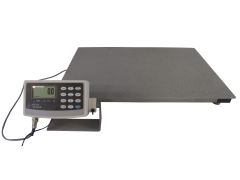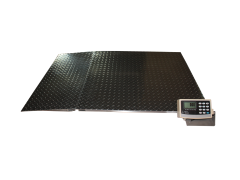
A 55-gallon drum scale requires more floor space than the platform dimensions alone suggest. The complete installation must accommodate the platform, loading ramp, drum or cart, operator access and enough approach clearance to move the load safely.
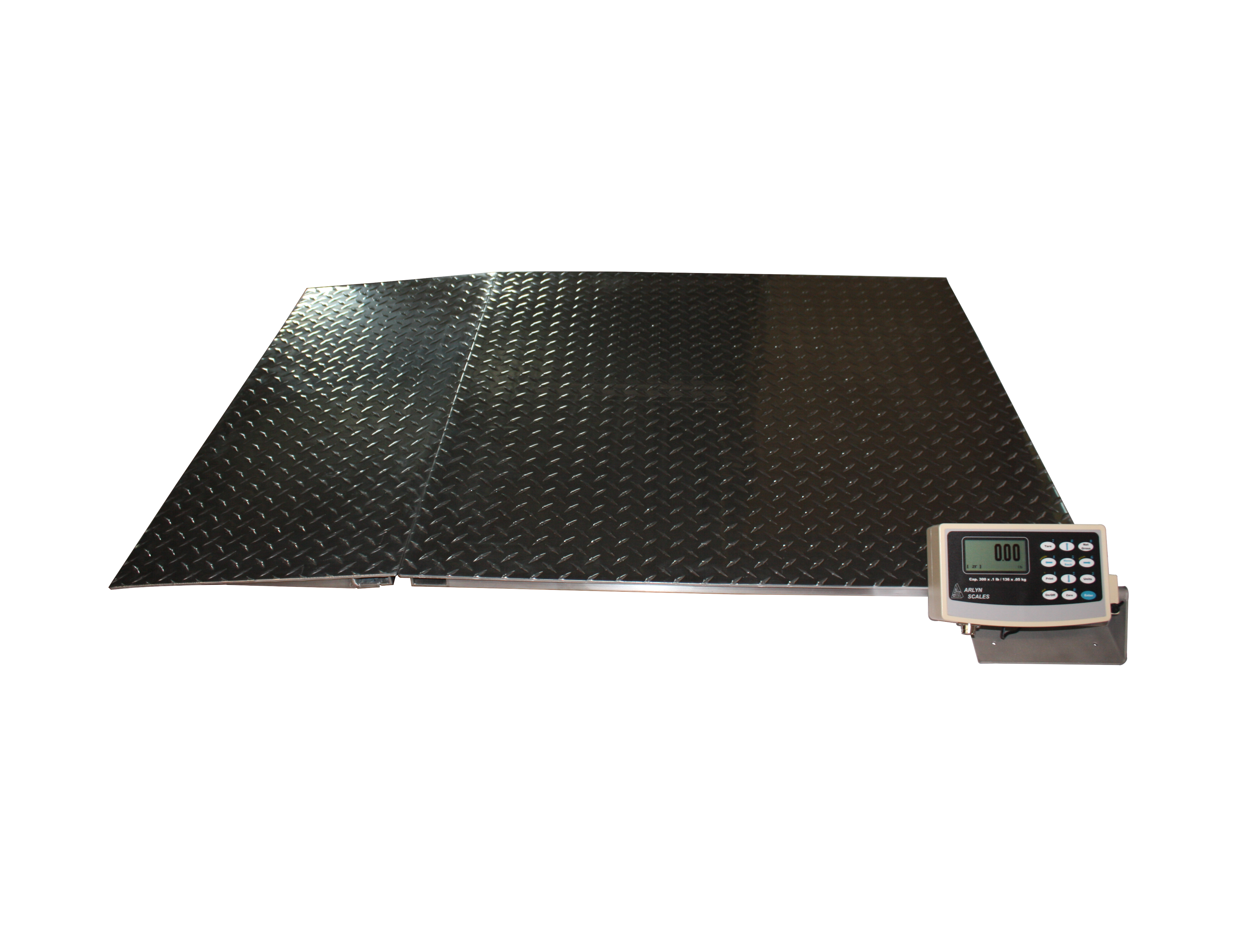
Arlyn Series 3250 industrial drum scales address this challenge with a platform height of only 1 7/8 inches and an included 15-inch-long ramp. The low platform allows the ramp to remain relatively short, helping facilities create an accessible drum-weighing station without consuming unnecessary production or storage space.
How much floor space does a 55-gallon drum scale require?
A 30-inch platform with its included ramp occupies a basic equipment footprint of approximately 30 by 45 inches. A 36-inch platform and ramp occupy approximately 36 by 51 inches. Additional approach, turning and operator clearance must be added according to the drum-handling method.
Why Low-Profile Drum Scales Require Shorter Ramps
A loading ramp must rise from the facility floor to the active weighing platform. As platform height increases, the ramp generally must become longer or steeper. A long ramp consumes valuable workspace, while a ramp that is too steep can make it more difficult to move a heavy drum or loaded cart onto the scale.
The Series 3250 platform is 1 7/8 inches high. Its included ramp is 15 inches long and matches the width of the selected platform. This design keeps the equipment footprint relatively compact while providing a gradual transition onto the weighing surface.
A lower loading height can reduce the amount of lifting required, but it does not eliminate material-handling risks. The drum, cart, ramp and surrounding workspace must still be evaluated according to facility procedures and applicable workplace-safety requirements.
Compare 30-Inch and 36-Inch Drum-Scale Footprints
Arlyn’s standard Series 3250 drum scales are available with 30-inch-square and 36-inch-square platforms. Each platform size can be configured with a 500-pound or 1,000-pound maximum capacity.
| Model | Capacity and Displayed Increment | Platform | Included Ramp | Approximate Platform-Plus-Ramp Footprint |
|---|---|---|---|---|
| 325D-30 | 500 lb × 0.1 lb | 30 × 30 × 1 7/8 in | 30 × 15 in | Approximately 30 × 45 in |
| 325M-30 | 1,000 lb × 0.2 lb | 30 × 30 × 1 7/8 in | 30 × 15 in | Approximately 30 × 45 in |
| 325D-36 | 500 lb × 0.1 lb | 36 × 36 × 1 7/8 in | 36 × 15 in | Approximately 36 × 51 in |
| 325M-36 | 1,000 lb × 0.2 lb | 36 × 36 × 1 7/8 in | 36 × 15 in | Approximately 36 × 51 in |
| Custom | Application dependent | Best suited for: unusual container dimensions, carts, capacities or workspaces that do not fit a standard configuration. | ||
The approximate footprints above include one ramp installed along one platform edge. They do not include operator space, approach clearance, cart handles, turning radius or facility safety clearances.
Should You Choose a 30-Inch or 36-Inch Platform?
Many common 55-gallon drums are approximately 24 inches in diameter, but the drum diameter alone should not determine platform size. The correct platform depends on the complete way the drum will be loaded and supported.
Choose the 30-Inch Platform When:
- The drum base fits completely and stably on the platform.
- The drum is handled without a wide cart or dolly remaining on the scale.
- Available floor space is limited.
- The total gross weight remains within the selected capacity.
Choose the 36-Inch Platform When:
- A drum cart, dolly or other wheeled carrier will remain on the platform.
- The load has a wider footprint or supporting frame.
- Additional positioning room is needed during routine loading.
- The facility handles more than one drum or container style.
Measure the widest and longest points of the actual loaded cart—not only the drum. Also account for wheels, handles, supports and any part of the load that could contact the ramp or surrounding floor.
A Rail-Free Platform Accommodates More Load Shapes
Series 3250 drum scales do not use raised rails around the platform perimeter. A rail-free platform provides access from multiple sides and allows some loads to extend beyond the platform edge when the application has been properly evaluated.
This can be useful when a facility weighs drums, pails, canisters or carts with slightly different shapes. It also avoids the need to maneuver a container between fixed side rails.
Overhang must not make the load unstable or allow it to touch the floor, ramp or another structure. Any contact with a surface outside the active weighing platform can support part of the load and produce an incorrect reading.
Select Capacity Using the Complete Gross Weight
The scale must accommodate the drum, its contents and any cart or fixture that remains on the platform. This combined value is the gross weight.
A nominally 55-gallon drum can vary significantly in total weight depending on its construction and contents. Determine the heaviest expected gross load before choosing between the 500-pound and 1,000-pound models.
- 500-pound models display weight in 0.1-pound increments.
- 1,000-pound models display weight in 0.2-pound increments.
- Series 3250 accuracy is specified separately as 0.1% of full scale.
The displayed increment is not the same as accuracy. A scale should be selected by considering its capacity, displayed increment, accuracy and the tolerance required by the application.
Durability for Repeated Drum Loading
Moving a full drum onto and off a platform can expose the scale to shock and side loading. Arlyn places four stainless steel load sensors near the platform corners. The sensors are protected within the scale structure and support loads across the platform.
The platform uses welded construction to provide a rigid weighing surface. Standard models are available in aluminum, while full stainless steel construction can be selected for more demanding environments.
Durable construction reduces vulnerability to ordinary industrial use, but no drum scale is immune to forklift impact, severe shock loading or loads beyond its rated capacity. Operators should move drums onto the platform under control rather than dropping or striking them against the scale.
Aluminum or Stainless Steel Drum-Scale Construction?
| Selection Factor | Aluminum Construction | Optional Stainless Steel Construction |
|---|---|---|
| Typical environment | General indoor industrial weighing | Applications with more frequent moisture or corrosive exposure |
| Primary advantage | Lower weight and economical construction | Greater corrosion resistance for demanding operating conditions |
| Load sensors | Four stainless steel load sensors | Four stainless steel load sensors |
| Important limitation | Not the preferred choice for repeated aggressive chemical exposure | Stainless construction alone does not establish a washdown or hazardous-location rating |
| Best suited for | Routine drum weighing in general factories, warehouses and shipping operations | Wet or corrosive operations after the complete configuration is confirmed for the environment |
Aggressive chemicals may require a dedicated corrosion-resistant scale. If flammable vapors, gases or combustible dust create a classified hazardous location, use weighing equipment approved for that specific classification. Stainless steel construction does not make a standard drum scale intrinsically safe.
Plan Indicator Placement Without Blocking the Work Area
The digital indicator does not have to consume space immediately beside the platform. Its mounting location should allow the operator to read and use it without interfering with drum movement, cart handles or normal traffic.
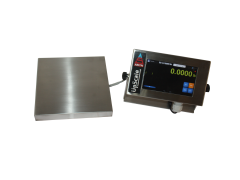
The standard MKE-5 indicator provides common weighing and tare functions. The optional Arlyn UpScale touchscreen indicator can add guided workflows and compatible data or automation functions.
Depending on configuration, available connections can include USB, serial, Ethernet, Wi-Fi and compatible industrial interfaces. These options can improve recordkeeping or process integration, but they do not change the platform’s inherent capacity, readability or accuracy.
Measure the complete drum-weighing station before ordering.
Document the drum diameter, cart footprint, maximum gross weight, available floor space, loading direction and operating environment. Arlyn can then help determine whether a 30-inch, 36-inch or custom platform is appropriate.
Frequently Asked Questions
How much floor space does an Arlyn 55-gallon drum scale require?
Is the loading ramp included with the drum scale?
Should I choose a 30-inch or 36-inch drum-scale platform?
Can a drum extend beyond the edge of the platform?
Can a standard drum scale weigh corrosive chemicals?
Can a standard drum scale be used around flammable material?
Choose a 55-Gallon Drum Scale That Fits the Workflow
A compact drum-weighing station begins with more than choosing the smallest available platform. The scale must accommodate the drum or cart, maximum gross weight, loading method and required approach clearance.
Arlyn’s low-profile Series 3250 drum scales combine 30-inch or 36-inch platforms with an included short ramp, rail-free access and four protected stainless steel load sensors. Custom sizes and capacities may also be available for specialized containers or restricted workspaces.