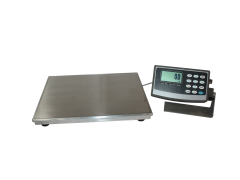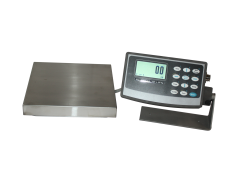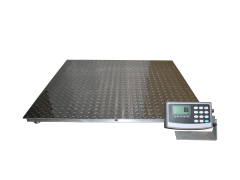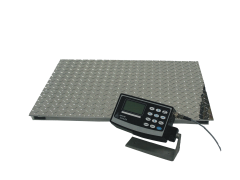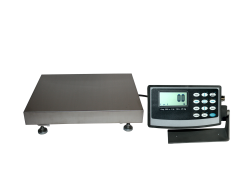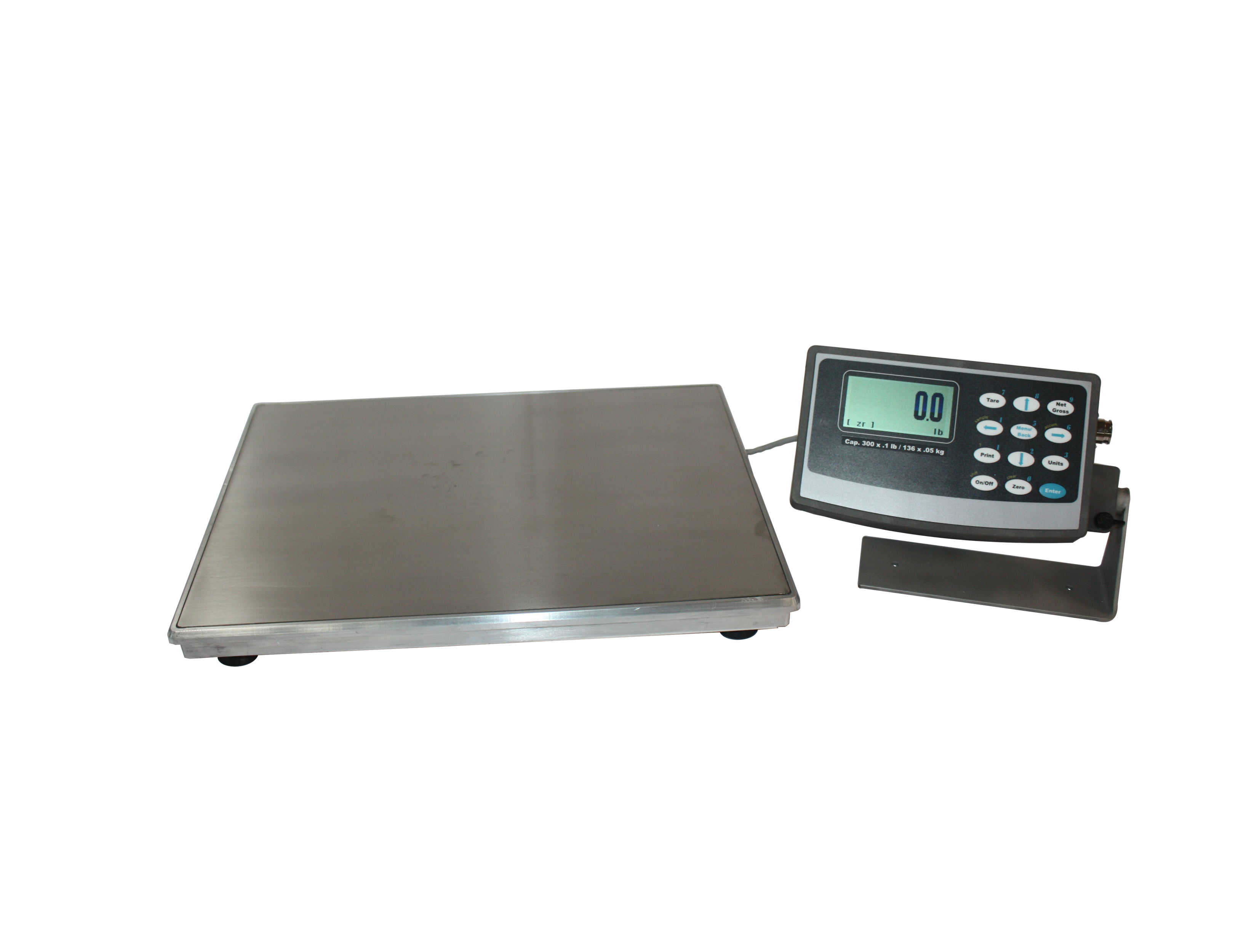
An intrinsically safe scale is designed for weighing inside a classified hazardous location where flammable gases, vapors, combustible dusts, or ignitable fibers may be present. Its approved electrical components limit available energy so the weighing system does not become a potential ignition source under the conditions covered by its approval.
Selecting the correct scale requires more than knowing that a facility handles a hazardous material. The scale’s approval, load capacity, platform, power arrangement, and connected accessories must match the classification and operating requirements of the installation.
Quick answer: Use an intrinsically safe scale when the weighing equipment will operate within a classified hazardous area and the facility’s safety documentation requires intrinsically safe or otherwise approved electrical equipment.
Before ordering, identify the required Class, Division or Zone, material Group, temperature code, capacity, readability, platform size, power source, and communication requirements. The exact scale configuration and accessories must be reviewed against the applicable approval documentation.
What Makes a Scale Intrinsically Safe?
Intrinsic safety is an electrical protection method. It limits the electrical and thermal energy available within a circuit so that the equipment cannot ignite a specified hazardous atmosphere under the conditions addressed by its approval.
This protection applies to the approved components and configuration—not merely to the material used to build the platform. Stainless steel can improve corrosion resistance, durability, and cleanability, but stainless steel construction by itself does not make a scale intrinsically safe.
An approved weighing system may include:
- An intrinsically safe digital indicator
- Approved load cells or weight sensors
- An approved battery or power arrangement
- Specified cables, barriers, and installation methods
- Safe-area equipment used outside the classified location
Substituting a power supply, indicator, load cell, cable, or accessory without reviewing the approval documentation can affect the suitability of the system. That is why the complete configuration should be evaluated rather than selecting components independently.
Intrinsically Safe and Explosion-Proof Are Not Identical
The terms intrinsically safe and explosion-proof are sometimes used interchangeably in general product searches, but they describe different protection methods.
- Intrinsic safety limits electrical and thermal energy so ignition does not occur under the specified operating and fault conditions.
- Explosion-proof protection generally uses an enclosure designed to contain an internal explosion and prevent it from igniting the surrounding atmosphere.
Both methods may be used in hazardous locations, but they are not automatically interchangeable. The facility’s classification, engineering requirements, applicable codes, and authority having jurisdiction determine what protection method is acceptable.
Start With the Hazardous-Location Classification
A hazardous-location classification describes the type of combustible material and how likely it is to be present. A scale should not be selected from an industry name or material name alone. Obtain the facility’s documented classification before choosing the equipment.
| Designation | What It Identifies | Why It Matters When Selecting a Scale |
|---|---|---|
| Class I | Flammable gases or vapors | The scale must be approved for the applicable gas or vapor group and temperature requirements. |
| Class II | Combustible dust | The approval must cover the applicable dust group and installation conditions. |
| Class III | Ignitable fibers or flyings | Equipment must be suitable for locations where these materials are handled or stored. |
| Division 1 | The hazardous material may be present during normal operation or frequently enough to create an ignition risk. | Division 1 generally requires a more restrictive protection level than Division 2. |
| Division 2 | The hazardous material is normally contained and is generally present only under abnormal conditions. | Equipment still needs the appropriate Division 2 or nonincendive approval. |
| Zone | A zone-based classification describing the frequency and duration of a hazardous atmosphere. | A Division approval should not automatically be treated as a Zone approval. Confirm the exact listing. |
| Group and temperature code | The specific material characteristics and maximum surface-temperature limitation | Both must be compatible with the material and ambient conditions at the installation. |
Important: The chemical being weighed does not necessarily establish the electrical classification. Classification depends on whether an ignitable concentration can be present in the surrounding atmosphere, how frequently it may occur, and the applicable facility and electrical codes.
ArlynGuard Approval Coverage
Current ArlynGuard product documentation lists supported configurations using FM Approved components under Approval Standards 3600, 3610, 3611, and 3810. Depending on the exact model and configuration, listed coverage includes:
- Class I, II, and III, Division 1, Groups A through G
- Class I, Zone 0, AEx ia IIC, T3, at the stated ambient-temperature conditions
- Nonincendive use in Class I, Division 2, Groups A through D
- Suitability for Class II, Division 2, Groups F and G
- Suitability for Class III, Division 2
These statements should be verified against the current approval documentation for the exact scale, indicator, load cells, power configuration, options, and installation. An accessory does not automatically inherit the approval of the scale to which it is connected.
Choose the ArlynGuard Scale That Fits the Load
After confirming the hazardous-location requirements, select the physical scale according to what will be weighed. The scale should provide sufficient capacity without sacrificing the readability needed for the process.
| ArlynGuard Series | Scale Format | Representative Range | Best Suited For |
|---|---|---|---|
| ArlynGuard B | Bench scale | Standard models from 5 to 150 lb | Compact batching, formulation, and general bench weighing |
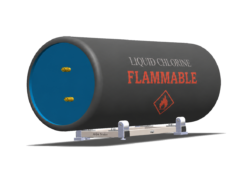
| ArlynGuard C | Low-profile cylinder scale | Standard models from 60 to 400 lb | Gas cylinders, pressurized tanks, and chemical containers |
| ArlynGuard P | Low-profile platform scale | 500 and 1,000 lb standard capacities in multiple platform sizes | Drums, containers, batching vessels, and material handling |
| ArlynGuard F | Heavy-duty floor scale | Standard capacities from 2,500 to 20,000 lb | Pallets, totes, bulk containers, and high-capacity floor weighing |
| ArlynGuard S | Ultra Precision SAW scale | Multiple capacities and platform configurations | Applications requiring finer industrial readability inside hazardous locations |
| ArlynGuard T | Chlorine ton scale | Purpose-built for chlorine ton containers | Water treatment and chemical operations monitoring chlorine ton cylinders |
Standard capacities and dimensions cover many applications, while custom sizes and multi-platform arrangements may be available. Customization must preserve the required hazardous-location approval and should be reviewed before the system is ordered.
Need help selecting a configuration? Provide the hazardous-location classification, material being handled, maximum load, required readability, load dimensions, power preference, and communication requirements.
Power, Batteries, and Communication Require Special Attention
Battery operation can simplify hazardous-area installations, but battery type, replacement, and charging procedures must follow the instructions for the approved configuration. Current ArlynGuard battery systems use model-dependent rechargeable NiMH battery arrangements, and operating time varies by scale and configuration.
Unless the applicable product documentation explicitly states otherwise, remove or recharge batteries only in a designated safe area. Do not substitute a different battery type or charger simply because it fits the enclosure.
Optional continuous AC operation may be available through an approved configuration using an intrinsically safe barrier. Likewise, advanced communication options may require a safe-area display, safety barrier, or other approved interface arrangement.
Ethernet, Wi-Fi, USB, PLC protocols, cloud monitoring, and other standard industrial interfaces should not be assumed to be intrinsically safe merely because they are connected to an intrinsically safe scale. Their location and method of connection must be included in the system review.
Corrosion Resistance Is a Separate Requirement
Hazardous and corrosive conditions often occur together, but they create different equipment requirements. Intrinsic safety addresses ignition risk. Corrosion-resistant construction addresses deterioration caused by chemicals, moisture, cleaning processes, and environmental exposure.
Depending on the application, an intrinsically safe scale may also require:
- Stainless steel platform or frame construction
- Stainless steel load cells
- Protective coatings
- A sealed or protected indicator enclosure
- Compatibility with the chemicals and cleaning procedures used at the facility
Review both requirements independently. An intrinsically safe scale is not automatically corrosion resistant, and a corrosion-resistant scale is not automatically approved for a classified hazardous location.
Information to Gather Before Requesting a Quote
- Hazardous-location classification: Class, Division or Zone, Group, temperature code, and permitted ambient range.
- Approval requirement: FM Approval or any other listing required by the facility, customer, insurer, or authority having jurisdiction.
- Material and process: What is being weighed and what hazardous atmosphere may be present around the scale.
- Maximum applied load: Include the container, fixture, pallet, or support structure—not only the product inside it.
- Required readability and accuracy: State the smallest meaningful weight change and the process tolerance.
- Load dimensions: Include footprint, center-of-gravity concerns, loading direction, and whether a ramp is needed.
- Construction requirements: Aluminum, painted steel, stainless steel, coatings, washdown exposure, and chemical compatibility.
- Power arrangement: Battery operation, safe-area charging, or continuous AC operation through an approved configuration.
- Communication and control: Data output, PLC connection, setpoints, relays, remote displays, or safe-area networking.
Frequently Asked Questions
What is an intrinsically safe scale?
Is an intrinsically safe scale the same as an explosion-proof scale?
Does a stainless steel platform make a scale intrinsically safe?
Can an ArlynGuard scale be used in a Class I, Division 1 location?
Can the scale batteries be charged in the hazardous area?
Can an intrinsically safe scale connect to a PLC or network?
Which ArlynGuard series should I choose?
Configure an intrinsically safe scale for your classified area.
Arlyn Scales designs and manufactures ArlynGuard weighing systems in Long Island, New York. Contact us with your classification, load, capacity, platform, power, and integration requirements.