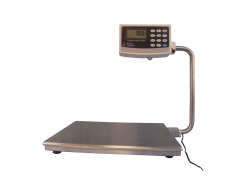
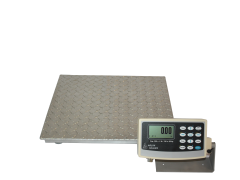
Industrial scale cost depends on much more than maximum capacity. Platform dimensions, measurement performance, construction materials, environmental protection, digital indicators, connectivity, automation and customization can all affect the final configuration.
The most economical scale is not always the one with the lowest purchase price. It is the least complex system that can reliably perform the required job throughout its expected service life.
How Much Does an Industrial Scale Cost?
There is no single price that applies to every industrial scale. A basic bench scale for routine weighing has very different requirements from a stainless steel floor scale, an Ultra Precision weighing system or equipment approved for a classified hazardous location.
The final cost is generally determined by:
- Scale type and intended application
- Maximum capacity
- Required resolution and accuracy
- Platform dimensions
- Platform, frame and load-cell construction
- Environmental and hazardous-location requirements
- Digital indicator selection
- Data communication and printing options
- Set-point, batching or automation functions
- Custom engineering, software or mechanical integration
- Accessories such as ramps, stands, enclosures and batteries
- Freight, installation, calibration and documentation requirements
Industrial Scale Product Families and Cost Drivers
The table below helps identify the appropriate starting point without reproducing prices maintained on individual product pages.
| Product family | Typical applications | Principal cost drivers | Current models |
|---|---|---|---|
| Bench scales | Ingredients, containers, packages and production checks | Capacity, resolution, platform, indicator and construction | View bench scales |
| Platform scales | Boxes, carts, drums, containers and larger items | Platform dimensions, capacity, construction and accessories | View platform scales |
| Floor scales | Pallets, bulk containers and high-capacity industrial loads | Capacity, platform size, steel or stainless construction, ramps and freight | View floor scales |
| Cylinder scales | Gas cylinders, pails, tanks and process containers | Capacity, platform size, material, monitoring and connectivity | View cylinder scales |
| Drum scales | Drums, barrels, wheeled containers and material handling | Platform, ramp, material, capacity and chemical exposure | View drum scales |
| Counting scales | Inventory, kitting, packaging and component verification | Part size, sample weight, capacity, resolution and data integration | View counting scales |
| Ultra Precision scales | Tight-tolerance formulation, research, counting and quality control | Required capacity, resolution, platform and process integration | View Ultra Precision scales |
| High-resolution balances | Small samples, laboratories and fine measurements at lower capacities | Capacity, readability, draft protection and integration requirements | View high-resolution balances |
| Corrosion-resistant scales | Chemical processing, harsh materials and repeated exposure | Stainless construction, protective coatings, capacity and platform size | View corrosion-resistant scales |
| Intrinsically safe scales | Classified locations containing potentially flammable gases, vapors, dusts or fibers | Area classification, approved components, platform, capacity and power arrangement | View intrinsically safe scales |
| Hanging scales | Suspended-load weighing and systems built around an S-type load cell | Capacity, load cell, mounting hardware, indicator and integration | View hanging scales |
| Custom weighing systems | Nonstandard loads, OEM equipment, tanks, conveyors, controls and specialized workflows | Engineering scope, sensors, fabrication, software, controls and testing | Explore custom solutions |
Start With the Application, Not the Budget Limit
A budget is necessary, but it should not be the first technical specification. Begin by defining the work the scale must perform. Otherwise, a low-cost purchase can become expensive when it requires manual workarounds, frequent repairs or premature replacement.
Before comparing equipment, document:
- The minimum and maximum loads
- The tare weight of containers, pallets, carts and fixtures
- The dimensions and shape of the load
- The smallest weight change that affects the process
- The acceptable measurement tolerance
- How often the scale will be used
- How the load reaches and leaves the scale
- Environmental exposure
- Where the weight result must go
- Whether weight must control another device
Once the minimum acceptable configuration has been established, the business can decide which optional capabilities provide sufficient value to justify their cost.
How Capacity Affects Industrial Scale Cost
Capacity is the greatest load the scale is designed to measure. The required capacity must include the material and everything else supported by the weighing platform.
For example, a scale used to weigh product inside a cart must support both the product and the empty cart. A floor scale used with pallets must account for the pallet as well as the goods.
Selecting insufficient capacity creates overload risk. Selecting far more capacity than necessary may increase equipment cost, platform construction requirements and shipping expense. It can also result in coarser displayed increments than the process requires.
Include a reasonable allowance for normal operating variation, but do not substitute an arbitrarily high capacity for proper load-handling procedures.
How Resolution and Accuracy Affect Cost
A display with more decimal places is not automatically a better value.
Three measurement terms should be separated:
- Resolution is the smallest increment displayed by the scale.
- Readability describes the number of displayed increments available across capacity.
- Accuracy describes how closely the measured value agrees with an accepted value under specified conditions.
A general shipping or receiving operation may be served economically by a standard industrial scale. Small-component counting, formulation or tight quality-control work may require finer measurement performance.
Paying for resolution that does not influence a business or process decision adds unnecessary cost. Buying too little measurement performance can create product giveaway, count errors, rejected batches or unreliable records.
| Measurement need | Starting direction | Budget consideration |
|---|---|---|
| Routine industrial weighing | Standard strain-gauge scale | Avoid purchasing specialized sensitivity when the normal process tolerance does not require it. |
| A modest improvement over standard resolution | Compare available higher-readability configurations | Confirm that the improvement is sufficient before moving to a more specialized technology. |
| Fine measurements at low capacities | High-resolution balance | Consider draft, vibration and environmental controls as part of the complete cost. |
| Fine measurements at industrial capacities | Ultra Precision scale | Evaluate whether improved measurement performance reduces material loss, counting errors or rework. |
| Best-value rule | Purchase the performance the application can justify | Prevent both operational errors and unnecessary over-specification. |
How Platform Size Affects Cost
Larger platforms require more material, fabrication and shipping space. High-capacity platforms may also need additional structural support.
The platform should be large enough to support the load safely and prevent it from contacting the floor or surrounding equipment. It does not always need to contain every inch of an overhanging object, provided the load is stable and its force is transmitted entirely through the scale.
Before selecting a platform, measure:
- Load length and width
- Container feet or contact points
- Center-of-gravity location
- Available installation space
- Clearance from walls, ramps and equipment
- Approach space for carts, pallet jacks or forklifts
If a standard platform supports the load and workflow, it will generally be more economical than a custom structure. A custom platform becomes appropriate when the load cannot be supported safely or efficiently by an available standard size.
How Construction Material Affects Cost
Industrial scales may use aluminum, coated steel, stainless steel or a combination of materials. The most expensive construction is not automatically necessary for every application.
Aluminum
Aluminum can provide a practical combination of strength, lower weight and economy for many general industrial applications. It may be especially useful when portability matters.
Coated steel
Coated steel is commonly used for heavy-duty structures. The type and condition of the coating matter when moisture or corrosive materials are present.
Stainless steel
Stainless steel is often selected for moisture, cleaning or corrosion resistance. Its additional cost may be justified when it prevents environmental damage and premature replacement.
Specialized corrosion protection
Some chemical applications require more than ordinary stainless construction. Protective coatings and application-specific components may be appropriate after reviewing the substance, concentration, temperature and exposure pattern.
The economical choice is the construction that can survive the actual environment. Selecting inadequate materials to reduce the initial price can create greater repair and replacement expense later.
Environmental and Hazardous-Location Costs
Environmental requirements should be identified before ordering because they can change the appropriate scale family and available options.
Consider:
- Water, condensation and washdown practices
- Acids, bases, salts and chemical spills
- Corrosive vapor or dust
- Temperature range
- Vibration and air movement
- Outdoor installation
- Sanitation and cleaning requirements
- Classified hazardous locations
A scale used in an area containing potentially flammable gases, vapors, dusts or fibers may require specifically approved intrinsically safe equipment. Ordinary electrical equipment must not be selected merely because it fits the desired budget.
The applicable class, division and group must be confirmed before a hazardous-location system is specified. The approved configuration, power arrangement and installation requirements must be evaluated as a complete system.
Standard, Configured or Fully Custom?
Not every departure from a base model requires a completely custom scale.
| Configuration level | Best fit | Typical additions | Budget effect |
|---|---|---|---|
| Standard scale | An existing model already fits the load and process. | Standard platform, capacity, indicator and ordinary operating environment | Usually the simplest and most economical path. |
| Configured standard scale | The mechanical scale fits, but the workflow needs additional functionality. | Connectivity, touchscreen, printer, battery, set points, data logging or enclosure | Adds only the options connected to a defined requirement. |
| Modified scale | An existing design needs mechanical or electrical adaptation. | Nonstandard platform, mounting, cable, power or sensor arrangement | May involve engineering and fabrication without requiring a new system design. |
| Fully custom system | The load, installation or process cannot be served effectively by a standard configuration. | Custom mechanics, software, controls, testing or OEM integration | Budget should account for engineering scope and acceptance criteria. |
Using a standard scale when it satisfies the application reduces engineering time and complexity. Customization is valuable when it resolves a real mechanical, measurement, environmental or integration requirement.
How Indicator Selection Affects the Budget
The digital indicator displays and processes the weight signal. It may also store information, communicate with other systems or control external equipment.
A standard MKE-5 indicator may be the economical choice for straightforward weighing, tare, counting, set-point and communication requirements.
The Arlyn UpScale touchscreen indicator should be considered when an application benefits from:
- A visual color touchscreen workflow
- More extensive customization
- Advanced data handling
- Barcode or printing processes
- Industrial communication protocols
- Cloud or network integration
- Compatible third-party scale integration
Do not select an indicator solely because it has more features. Select it when those features improve operation, reduce manual work or enable a required connection.
Review scale options and communication methods before finalizing the configuration.
Connectivity and Data-Collection Costs
Electronic data transfer can reduce labor and transcription errors, but every interface should have a destination and purpose.
Available configurations may include:
- RS-232 or other serial communication
- USB communication
- Ethernet TCP/IP
- Wireless TCP/IP
- Analog output
- USB data logging
- Printers and barcode workflows
- Cloud monitoring
- Industrial protocols for compatible systems
Before budgeting an interface, identify:
- The device or software receiving the data
- The required electrical interface
- The protocol and data format
- Whether communication is one-way or two-way
- How frequently data must be transferred
- Whether timestamps, IDs or additional fields are required
- Who is responsible for system integration
A connector alone does not guarantee compatibility. Integration requirements should be confirmed before the scale is ordered.
Automation and Set-Point Costs
A weighing system can do more than display a measurement. Weight may be used to control:
- Pumps
- Feeders
- Valves
- Mixers
- Conveyors
- Lights and alarms
- Filling and dispensing equipment
Automation can reduce manual labor, product giveaway and process variation. It can also increase the cost and complexity of the project.
Budgeting should include:
- Number and type of outputs
- Relays or interface hardware
- Control sequence and target weights
- Required response time
- Emergency and fail-safe behavior
- Electrical installation
- Programming and testing
- Acceptance criteria
A frequent or material-intensive process may justify automation quickly. Occasional basic weighing may remain more economical as a manual operation.
Costs Commonly Omitted From a Scale Budget
The quoted scale is only one part of an installed weighing system. Depending on the project, the budget may also need to include:
- Freight and delivery access
- Lift-gate, forklift or rigging requirements
- Ramps and approach space
- Floor preparation, pits or mounting
- Electrical power and wiring
- Network connections
- Indicator stands or wall mounts
- Protective barriers or guards
- Software configuration
- PLC or database integration
- Calibration weights
- Traceable calibration documentation
- Legal-for-trade evaluation when applicable
- Operator and maintenance training
- Spare parts or backup equipment
Ask what is included in the quoted configuration and what must be provided at the installation site.
Purchase Price Versus Total Cost of Ownership
This page helps develop the initial equipment budget. Purchase price, however, should not be evaluated in isolation.
A lower-cost scale may become more expensive if it creates:
- Frequent repairs
- Production downtime
- Manual data entry
- Material giveaway
- Counting or batching errors
- Unsafe or inefficient handling
- Premature replacement
A higher-cost option is not automatically better either. An upgrade provides value only when it satisfies a requirement or reduces a recurring operational cost.
For a full lifecycle analysis, read how the right industrial scale saves time and money.
How to Avoid Over-Specifying a Scale
Over-specification occurs when a buyer pays for capacity, sensitivity, construction or functions that the process does not use.
Avoid it by asking:
- Does the process genuinely require this resolution?
- Will the scale actually encounter corrosive or wet conditions?
- Does the data need to be transmitted, or only displayed?
- Will operators use the advanced indicator functions?
- Does the process occur frequently enough to justify automation?
- Is custom fabrication necessary, or will a standard platform work?
- Is additional capacity based on a probable future load or only speculation?
Request required and optional features as separate quote items when possible. This makes the cost of each decision visible.
How to Avoid Under-Specifying a Scale
A scale is underspecified when it cannot perform the job reliably or safely.
Common examples include:
- Capacity that excludes the tare weight of a container or cart
- A platform too small for the load’s contact points
- Resolution that cannot identify meaningful weight changes
- General-purpose construction in a corrosive environment
- Ordinary electrical equipment in a classified hazardous location
- No output for a process that requires electronic records
- No allowance for normal impact or material-handling conditions
Reducing the initial price by omitting a required capability does not create a saving. It moves the cost into workarounds, repairs, errors or replacement.
What Information Is Needed for an Accurate Quote?
The quality of a scale quote depends on the quality of the application information supplied.
Provide:
| Information | What to provide | Why it matters |
|---|---|---|
| Load | Minimum, maximum and tare weights | Determines capacity and measurement range. |
| Dimensions | Load size, contact points and available installation space | Determines the platform and mechanical arrangement. |
| Performance | Required displayed increment and acceptable tolerance | Identifies appropriate weighing technology. |
| Environment | Moisture, chemicals, temperature, vibration and classifications | Determines construction and protection requirements. |
| Handling | Manual lifting, carts, pallet jacks, forklifts or suspended loads | Identifies ramps, clearances and scale type. |
| Data | Receiving device, interface, protocol and data fields | Determines indicator and communication options. |
| Control | Equipment controlled and required sequence | Defines set points, outputs and automation scope. |
| Commercial requirements | Quantity, delivery location, timing and required documentation | Supports a complete and comparable quotation. |
Photographs, drawings and a short description of the current workflow can be especially useful for custom applications.
How to Compare Industrial Scale Quotes
Two quotes with different totals may not describe equivalent systems.
Compare:
- Exact model and maximum capacity
- Resolution and stated accuracy
- Platform dimensions and material
- Load-cell construction
- Indicator model and included functions
- Communication interfaces and protocols
- Ramps, stands, cables and accessories
- Power requirements
- Calibration and documentation
- Freight and delivery terms
- Lead time
- Warranty and technical support
- Custom engineering and testing scope
Do not assume that a feature described by the same general name is implemented identically by every manufacturer. Confirm what each quoted component actually does.
Plan an Industrial Scale Budget With Arlyn Scales
Arlyn Scales offers standard industrial equipment, configurable models and custom weighing systems. Working directly with the manufacturer allows the mechanical scale, measurement technology, indicator, communications and controls to be evaluated together.
Use the product-family links in this guide for current model information. For nonstandard platforms, unusual environments, data integration or automated processes, submit the application requirements for review.
Frequently Asked Questions
Why does this industrial scale pricing guide not list prices?
Prices and available configurations can change. Maintaining prices only on Arlyn’s product and category pages prevents this guide from presenting outdated or conflicting information. Follow the product-family links for current models and pricing.
What has the greatest effect on industrial scale cost?
The principal factors are scale type, capacity, resolution, platform size, construction, environmental protection, indicator, connectivity and customization. Large platforms, specialized measurement performance and approved hazardous-location equipment can materially change the configuration.
Is a custom scale always more expensive than a standard scale?
A custom system generally includes engineering or fabrication that a standard model does not require. However, customization may be economical when it eliminates manual workarounds, supports an unusual load or integrates weighing into an existing process. Some needs can be met by configuring a standard scale rather than designing a completely new system.
Should I buy more scale capacity than I currently need?
Include the full load and a reasonable allowance for normal operating variation. Excessive unused capacity may add cost and can result in coarser displayed increments. Discuss probable future loads separately from the present requirement.
Does higher resolution always make a scale better?
No. Higher resolution is valuable when the process must distinguish smaller weight changes. If the existing process tolerance is much larger than the scale’s displayed increment, additional resolution may not produce a useful return.
When is stainless steel worth the additional cost?
Stainless steel should be evaluated when moisture, cleaning practices or corrosive materials make ordinary construction unsuitable. The decision should be based on the actual substance and exposure rather than appearance alone.
What scale costs are often missing from an initial budget?
Frequently omitted costs include freight, ramps, stands, installation, electrical work, network connections, calibration documentation, software integration, training and site preparation. Ask what is included in every quote.
How can I get an accurate industrial scale quote?
Provide the minimum and maximum weights, load dimensions, required measurement tolerance, operating environment, handling method, data destination, control requirements, quantity and delivery location. Drawings and photographs can help with nonstandard applications.
Where can I find current Arlyn scale prices?
Use the product-family links in this guide to view current product pages and available configurations. Contact Arlyn Scales for custom equipment, quantity requirements or configurations that require application review.