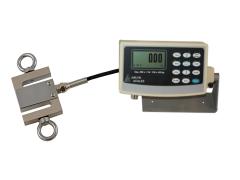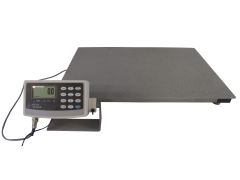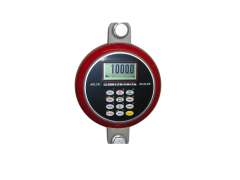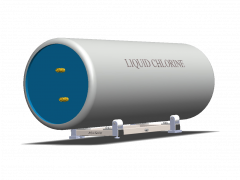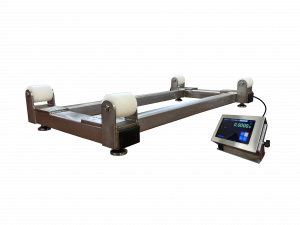
A custom industrial scale is specified around the load, measurement requirement, installation, environment, controls and data destination. When a standard model cannot meet one or more of these requirements, Arlyn can configure or engineer the platform, sensors, indicator, communications and software as a complete weighing system.
This guide explains how to define the technical requirements for a custom scale, including capacity, readability, platform design, construction, connectivity and process control.
Quick answer: Start by documenting the maximum load, required readability, physical fit, operating conditions and where the weight data must go. These requirements determine whether an existing industrial scale can be configured for the process or whether the application needs a fully custom weighing system.
Arlyn Scales develops factory-direct industrial weighing solutions from its Long Island, New York, operation. Use the standard, modified or fully custom scale decision guide to determine the appropriate customization level. This page focuses on specifying the resulting system. For industry and process examples, review custom scale applications and capabilities.
Start With the Weighing Requirement
A useful custom-scale specification begins with the load and the process. “We need a 500-pound scale” is not enough information to determine whether the system will perform as expected.
Document the following before requesting a quote:
- Minimum and maximum net load: The lightest and heaviest product that must be measured.
- Tare weight: The weight of containers, pallets, carts, tanks or other supporting equipment.
- Required readability: The smallest displayed increment needed for the process.
- Process tolerance: The acceptable variation in the final measurement or product.
- Load dimensions: Length, width, height and center-of-gravity information.
- Loading method: Manual placement, cart, forklift, pallet jack, conveyor or permanent installation.
- Operating environment: Temperature, vibration, air movement, moisture, dust and chemicals.
- Data destination: Indicator, printer, computer, PLC, database, spreadsheet or cloud system.
- Control sequence: Filling, batching, checkweighing, alarms, valves or motor control.
- Compliance requirements: Legal-for-trade, hazardous-location or other required approvals.
Measurement terminology matters: Capacity is the maximum load the scale is designed to measure. Readability is the smallest increment displayed. Accuracy describes how closely the result agrees with the actual value under specified conditions. A scale with finer displayed increments is not automatically more accurate in the customer’s environment.
Custom Platform Sizes and Mechanical Integration
A custom platform may be needed when the object being weighed is unusually long, wide or shaped differently from a conventional box or pallet. It may also be required when a scale must fit inside an existing frame, under a vessel or within a limited section of a production line.
Platform design should consider more than its top dimensions. The manufacturer may also need to evaluate:
- Maximum load and expected overloads
- Load distribution and off-center loading
- Point loads from legs, wheels or supports
- Platform deflection
- Required height and available clearance
- Access for cleaning, inspection and maintenance
- Ramps, guards, restraints or anchor points
- Cable routing and indicator placement
Custom platform dimensions can affect cost, capacity, readability and production time. Arlyn evaluates those factors as part of the proposed configuration.
Select Construction for the Operating Environment
Aluminum, painted or coated steel and stainless steel each offer different advantages. The most suitable material depends on exposure, mobility, load and cleaning requirements.
- Aluminum: Can reduce system weight where portability is important, but may not be the preferred material for every corrosive or high-impact environment.
- Coated steel: Can provide a durable, economical structure for many industrial areas when the coating is compatible with the environment and remains intact.
- Stainless steel: Provides useful corrosion resistance and may simplify surface cleaning, particularly where moisture or aggressive substances are present.
Stainless steel construction does not automatically make the complete scale washdown-rated, sanitary, intrinsically safe or immune to every chemical. The indicator, load cells, cables, connectors and seals must also be suitable for the environment. The proposed configuration should state the enclosure rating, cleaning method and verified chemical compatibility.
Choose the Appropriate Measurement Technology
Standard strain-gauge scales are suitable for many industrial weighing applications. They can provide an economical combination of capacity, durability and measurement performance for receiving, production, parts counting, container weighing and shipping.
When a process requires finer readability and accuracy at industrial capacities, an Arlyn Ultra Precision scale using Surface Acoustic Wave technology may be considered. Applications can include formulation, precise parts counting, small material additions and higher-tolerance production processes.
| Selection Factor | Standard Strain Gauge | Ultra Precision SAW |
|---|---|---|
| Typical need | General industrial weighing | Finer measurement performance at industrial capacities |
| Applications | Shipping, receiving, containers, production checks and basic counting | Formulation, finer parts counting and closely controlled additions |
| Selection basis | Capacity and readability meet the documented tolerance | The process demonstrably needs performance beyond the standard model |
| What to verify | Model-specific capacity, readability and accuracy | Model-specific performance, stability, environment and installation requirements |
Compare current model specifications rather than applying one performance ratio to every capacity and platform. Vibration, temperature changes, air movement, mounting and loading technique can influence real-world results.
Connect the Scale to Computers, PLCs and Networks
Custom industrial scales frequently need to send weight readings to another system. The correct interface depends on the receiving device, distance, network architecture, required update rate and data format.
Available options on selected Arlyn scales and indicators include:
- USB
- RS-232, RS-422 and RS-485
- Ethernet TCP/IP
- Wi-Fi
- Modbus
- Built-in web or REST API functions
- Analog output such as 4–20 mA or voltage output
- USB and network-based data logging
- Keyboard-wedge data entry
- Google Spreadsheet integration on compatible configurations
Not every interface is available on every model or indicator. Interface selection depends on the receiving device, physical connection, protocol, data format and desired operator workflow. Review current scale communication methods and options.
Automate Filling, Batching and Process Control
Weight data can be used to operate feeders, mixers, pumps, valves, alarms and other equipment. A setpoint controller can change an output when the measured weight reaches a defined target, supporting applications such as:
- Filling containers to a target weight
- Dispensing ingredients in sequence
- Starting or stopping a feeder
- Generating high- and low-weight alarms
- Changing between supply containers
- Accepting or rejecting packages on a conveyor
The complete control sequence should be documented before the system is configured. Useful details include the number of materials, target weights, acceptable tolerances, output types, timing, overshoot behavior and the equipment being controlled.
Scale outputs should be incorporated into an appropriately engineered control system. Safety interlocks, emergency stops and machine guarding should not depend solely on a standard weighing indicator. Explore batching and filling options for process-control applications.
Custom Software and Operator Interfaces
Some applications require more than a numeric weight display. Operators may need to select a recipe, scan a barcode, enter a product identifier, view target weights or record who completed each transaction.
A touchscreen indicator or custom software workflow may support:
- Application-specific screen layouts
- Product and operator identification
- Recipe or formula selection
- Tare and target-weight storage
- Data logging and time stamps
- Barcode scanning and label printing
- Network and cloud-based reporting
- Multiple scales or weighing stations
These functions can improve usability and traceability, but they do not automatically improve the inherent measurement accuracy of the scale. Measurement performance depends on the complete weighing platform, sensor system, calibration and operating conditions.
Special Environments and Compliance Requirements
Application specifications should identify wet, corrosive, sanitary or classified hazardous environments. Specialized construction or approvals may be required.
For a hazardous location, provide the documented class, division or zone, material group and temperature requirements. An intrinsically safe indicator or stainless steel platform alone does not make an entire weighing system approved for the location. The exact platform, sensors, indicator, barriers, power arrangement and accessories must be evaluated as a complete configuration.
Legal-for-trade applications should also be identified before ordering. A scale being sufficiently accurate for an internal process does not necessarily mean it is approved for commercial transactions.
Application Coverage and System Examples
Custom systems can support tank and vessel weighing, conveyor checkweighing, filling and dispensing, parts counting, cylinder monitoring, laundry carts, wastewater chemical feed, OEM equipment and remote monitoring. See custom scale applications and capabilities for expanded examples. The platform, measurement technology, controls and communications are then selected around the specific process.
What to Include in a Custom Scale Request
A detailed request helps the manufacturer evaluate the project efficiently. A useful specification includes:
- Maximum gross load and required measurement range
- Required readability, accuracy or process tolerance
- Load and platform dimensions
- Photos, drawings or diagrams of the installation
- Loading method and expected off-center loads
- Environmental and cleaning conditions
- Available electrical power
- Indicator and operator-interface requirements
- Computer, PLC, network and software details
- Control sequence and output requirements
- Required certifications or approvals
- Quantity, delivery location and desired schedule
Frequently Asked Questions
Can Arlyn manufacture a custom-size scale platform?
Arlyn can evaluate custom platform sizes and configurations. Feasibility, cost and production time depend on the dimensions, capacity, load distribution, required readability and installation.
Can a custom scale connect to a PLC or database and control equipment?
Yes. Depending on the selected scale and indicator, communication and setpoint options can support computers, PLCs, networks, databases, cloud workflows, filling, batching and dispensing. Selection depends on the physical connection, protocol, data format, control sequence and required outputs.
How long does a custom industrial scale take to manufacture?
Lead time depends on the engineering scope, components, quantity, testing and required approvals. Arlyn provides a current production estimate after the final configuration is defined.
Discuss Your Custom Weighing Application with Arlyn
The best custom scale begins with a clearly defined process. Capacity, readability, dimensions, construction, communications and control requirements should be evaluated together so the finished system fits the application.
Call Arlyn Scales at 800-645-4301 or use the online contact form. Include your load range, drawings, operating environment, required measurement performance and system-integration details so Arlyn can evaluate a standard, configured or custom weighing solution.