Industrial floor scales are routinely exposed to heavy pallets, containers, tanks, carts and production equipment. To provide dependable measurements under these conditions, a floor scale must combine appropriate capacity and readability with a rigid platform, durable load cells and proper installation.
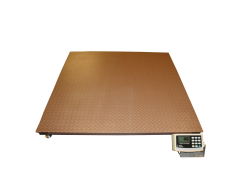
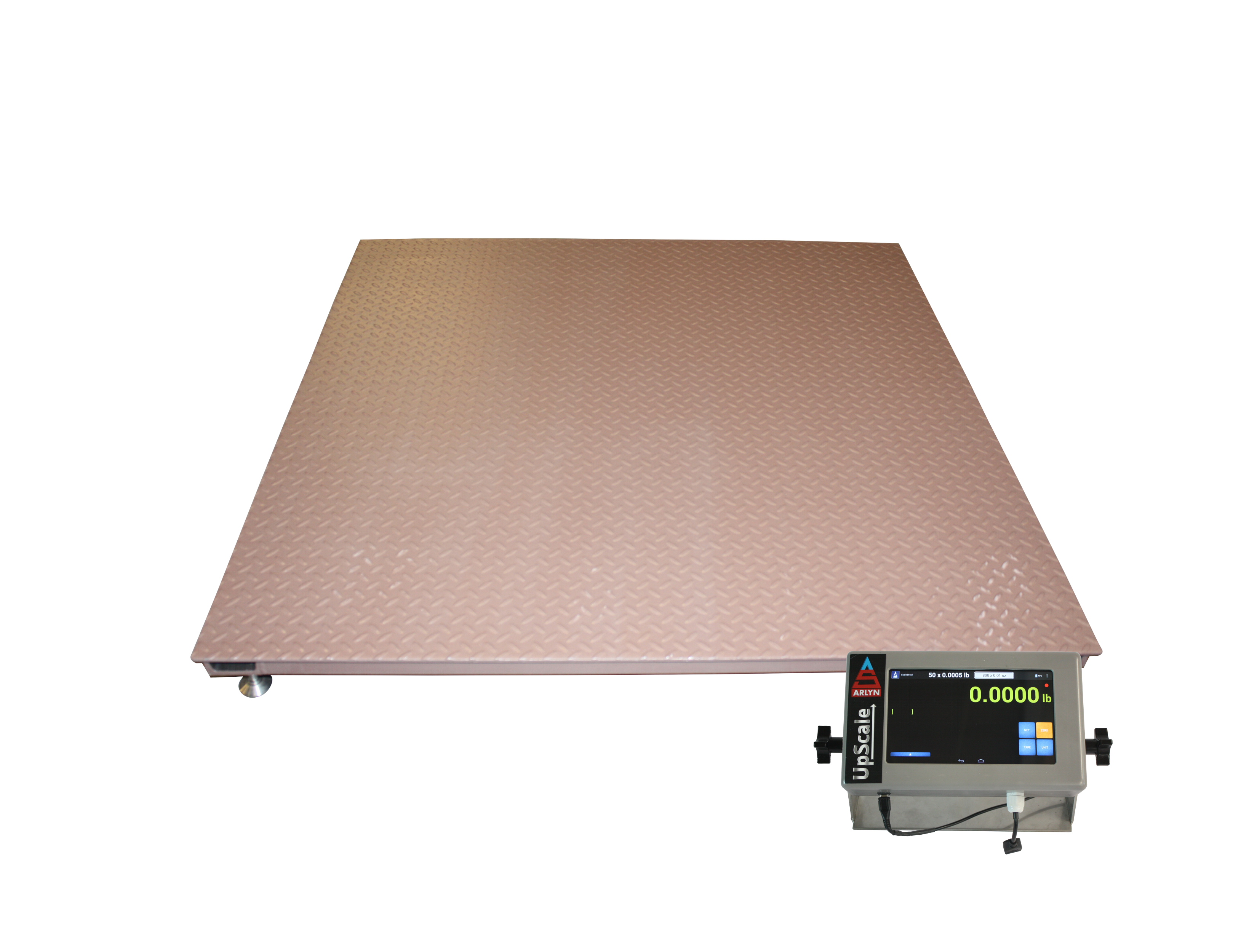
Arlyn Series 5200 floor scales are designed for these demanding applications. Standard models are available in steel or stainless steel construction with capacities from 2,500 to 20,000 pounds. Custom capacities and platform dimensions may also be available when a standard model does not fit the load or workspace.
What makes an industrial floor scale accurate and durable?
The scale must be correctly sized for the complete gross load, use stable and protected weighing sensors, support the load on a rigid platform and operate on a firm, level foundation. Durability depends on the complete weighing system—not simply the platform material or maximum capacity.
Accuracy Begins With the Right Capacity and Readability
A floor scale should be selected according to the greatest gross load that will be placed on its platform. Gross load includes the material being weighed as well as its pallet, tank, container, cart or process fixture.
A scale with insufficient capacity may be overloaded. However, choosing substantially more capacity than the application requires can result in a larger displayed increment than necessary. The objective is to select the capacity and readability that satisfy the process without unnecessarily oversizing the system.
Capacity, readability and accuracy describe different characteristics:
- Capacity is the maximum load the scale is designed to weigh during normal operation.
- Readability or displayed increment is the smallest weight change shown on the indicator.
- Accuracy describes how closely the indicated weight agrees with the applicable reference value under specified conditions.
- Repeatability describes how consistently the scale reports the same load when conditions remain unchanged.
A smaller displayed increment does not automatically mean that a scale has better accuracy. The current Series 5200 specifications list accuracy separately from each model’s capacity and displayed increment.
| Maximum Capacity | Displayed Increment | Representative Standard Platform Sizes |
|---|---|---|
| 2,500 lb | 0.5 lb | 3 ft × 3 ft or 4 ft × 4 ft |
| 5,000 lb | 1 lb | 3 ft × 3 ft, 4 ft × 4 ft, 5 ft × 5 ft or 4 ft × 6 ft |
| 10,000 lb | 2 lb | 4 ft × 4 ft, 5 ft × 7 ft or 6 ft × 8 ft |
| 20,000 lb | 5 lb | 4 ft × 4 ft, 5 ft × 7 ft or 7 ft × 9 ft |
| Custom configuration | Application dependent | Best suited for: unusual load dimensions, capacities or installation requirements that do not fit a standard model. |
Available combinations and specifications should be confirmed on the current product page when configuring a scale.
Four Protected Stainless Steel Load Cells
The load cells are the sensors that convert the force applied to the platform into a weight signal. Because floor scales handle large loads, their load cells may be exposed to shock loading, side forces, vibration and accidental contact with material-handling equipment.
Arlyn Series 5200 floor scales use four load cells manufactured from heat-treated stainless steel. The sensors are positioned within protected areas of the platform frame instead of being left exposed beneath the scale.
Placing one load cell near each corner supports the large platform and helps the scale measure loads that cannot always be positioned perfectly in the center. The four sensors are also matched during manufacturing to support consistent system performance.
Stainless steel load cells improve resistance to mechanical abuse and corrosion compared with less robust sensor materials. They do not make the scale immune to damage, however. A forklift impact, severe shock load or load above the rated capacity can still damage the weighing system.
A Rigid Welded Platform Supports Repeatable Weighing
A floor-scale platform must remain stable as weight is applied. Excessive platform movement or flex can interfere with repeatability and place unwanted forces on the load cells.
Series 5200 platforms use welded industrial construction to provide a rigid structure for pallets, containers and other heavy loads. The tread-pattern surface supplies added traction during loading, although appropriate workplace and material-handling procedures are still required.
The scale must also rest on a firm, stable and reasonably level foundation. Even a well-constructed floor scale may produce inconsistent readings if it rocks, rests on debris or is installed near machinery that produces significant vibration.
Steel or Stainless Steel Construction?
Platform material should be chosen according to the actual operating environment. Stainless steel is not automatically the best or most economical choice for every application.
| Selection Factor | Coated Steel Floor Scale | Stainless Steel Floor Scale |
|---|---|---|
| Typical environment | General warehouses, shipping areas and ordinary manufacturing operations | Facilities with more frequent moisture or corrosive exposure |
| Surface protection | Zinc-rich protective epoxy helps resist abrasion and corrosion | Stainless construction provides greater inherent corrosion resistance |
| Primary advantage | Economical construction for many routine industrial applications | Better suited to demanding environments where ordinary steel may deteriorate more quickly |
| Important limitation | Scratched or damaged coating should be inspected and maintained | Stainless steel construction alone does not establish a washdown or IP rating |
| Best suited for | Dry or moderately demanding applications where value and durability are both important | Wet or corrosive operations after the complete scale configuration has been confirmed for the environment |
Facilities handling aggressive chemicals may require a dedicated corrosion-resistant scale. Facilities with flammable gases, vapors or combustible dust must use equipment approved for the documented hazardous-location classification. Stainless steel construction does not make a standard scale intrinsically safe.
Loading Practices Affect Floor-Scale Durability
Even a rugged floor scale can be damaged by improper material handling. The loading method should therefore be considered when choosing the platform and planning its installation.
- Pallet jacks and carts: Select a ramp that accommodates the platform height, load and wheelbase of the handling equipment.
- Forklifts: Lower the load onto the platform carefully and avoid striking the scale from the side.
- Containers and tanks: Confirm that the complete footprint fits on the active weighing area without bridging onto another surface.
- Shock loading: Avoid dropping a load onto the platform. Dynamic impact can apply substantially more force than the object’s static weight.
- Overloading: Never use an overload rating as part of the scale’s normal working capacity.
A lower-profile platform can simplify loading and reduce the required ramp length, but the exact platform height varies by model and capacity. Current dimensional drawings should be reviewed before planning ramps, pits or surrounding equipment.
Digital Indicators and Data Options
The standard MKE-5 indicator provides a graphical LCD display, tare functions, unit conversion and configurable outputs. Operations that need a color touchscreen, guided workflows or more advanced data integration can select the Arlyn UpScale indicator.
Depending on the chosen indicator and options, a Series 5200 floor scale may support USB, RS-232, RS-485, Ethernet, Wi-Fi, analog output, data logging, setpoint control or compatible industrial protocols.
These options can improve recordkeeping, automation and operator workflow. They do not change the platform’s inherent capacity, readability or accuracy. The weighing performance must still be selected according to the application.
Need help selecting a floor-scale configuration?
Provide the maximum gross load, required readability, load dimensions, loading method, operating environment and any necessary data connection. Arlyn can then identify an appropriate standard model or determine whether a custom configuration is needed.
Frequently Asked Questions
How do I choose the correct capacity for an industrial floor scale?
Does a smaller displayed increment mean a floor scale is more accurate?
Why does an Arlyn floor scale use four load cells?
Should I choose a steel or stainless steel floor scale?
Is every stainless steel floor scale suitable for washdown?
Can a standard floor scale be used in a hazardous location?
Choose a Floor Scale for the Load and Environment
The most durable floor scale is not automatically the model with the greatest capacity or the most expensive construction. It is the system correctly matched to the load, required measurement performance, loading method and operating environment.
Arlyn Scales offers Series 5200 floor scales in multiple capacities, platform sizes and construction materials, with custom platforms and data options available for specialized applications.