Buying industrial platform scales in bulk requires more planning than multiplying the price of one scale by the desired quantity. A specification error repeated across dozens of scales can create problems with capacity, loading, data integration, installation, training, and maintenance.
A successful bulk purchase starts with a controlled scale specification. The buyer should define the weighing application, capacity, readability, platform dimensions, materials, indicator, outputs, power, documentation, and delivery plan before approving the full order.
Quick answer: Before ordering industrial platform scales in quantity, create an approved base configuration, test it in the real application, identify any controlled variations, and request a formal quote covering pricing, documentation, accessories, delivery, and support.
Why Bulk Scale Purchases Require a Different Process
A single scale can often be selected by one department for one location. A bulk order may affect purchasing, production, maintenance, information technology, quality control, safety, and employees at several facilities.
Standardization can simplify training, spare parts, calibration procedures, software integration, and technical support. However, forcing one configuration into every location can create unnecessary cost or leave some sites with the wrong platform, construction, or communication method.
A practical bulk program often uses:
- One approved base model for the common weighing requirement
- A small number of controlled variants for different capacities, environments, platform sizes, or data interfaces
- One documented naming system that identifies exactly which configuration belongs at each location
Bulk Industrial Platform Scale Procurement Checklist
| Procurement Area | What to Specify | Why It Matters in a Bulk Order | Information to Provide Arlyn |
|---|---|---|---|
| Application | What is being weighed and why | The same capacity may require different platforms, indicators, or outputs depending on the workflow. | Product, container, process, weighing frequency, and expected duty cycle |
| Capacity and readability | Maximum applied load and smallest required displayed increment | An oversized scale may provide coarser readability, while an undersized scale can be overloaded. | Maximum product, container, fixture, pallet, or cart weight and process tolerance |
| Platform dimensions | Required length, width, height, and loading access | A platform that is too small creates instability; one that is unnecessarily large adds cost and occupies more space. | Load footprint, center of gravity, approach direction, and ramp requirements |
| Platform construction | Aluminum, stainless steel, or specialized corrosion-resistant construction | The wrong material can either increase the order cost unnecessarily or reduce service life in a harsh environment. | Moisture, chemicals, cleaning methods, sanitation requirements, and abrasive exposure |
| Indicator | MKE-5 pushbutton indicator or UpScale touchscreen | Standardizing the interface simplifies training, while advanced workflows may require UpScale. | Required display functions, operator permissions, stored data, and application features |
| Communication | USB, RS-232, RS-485, Ethernet, Wi-Fi, analog output, or PLC protocol | Adding incompatible ports across many units can create a costly integration problem. | Receiving device, protocol, data format, cable distance, network requirements, and update method |
| Data and automation | Logging, printing, barcode functions, setpoints, relays, alerts, or cloud monitoring | Software and automation options should be consistent with the organization’s operating procedures. | What must happen after a weight is measured: store, send, print, alert, or control |
| Power and enclosure | AC, battery, 24 VDC, indicator mounting, and enclosure protection | Different facilities may have different outlets, mounting locations, mobility requirements, or exposure conditions. | Available power, desired runtime, mounting arrangement, and required enclosure rating |
| Hazardous-location requirements | Class, Division or Zone, Group, and temperature code | A standard scale or battery option does not become intrinsically safe merely because it operates at low voltage. | The documented classification and approval requirements for each installation |
| Documentation | Manuals, specification sheets, calibration records, certificates, wiring diagrams, and labeling | Missing documentation becomes a larger problem when equipment is deployed across many departments or facilities. | Required document type, format, traceability, and whether each serial number needs separate records |
| Delivery plan | Quantity, required dates, destinations, and phased or single delivery | A bulk order may require production scheduling, coordinated freight, and site-specific labeling. | Quantity by configuration, requested schedule, ship-to locations, and packaging instructions |
| Spares and support | Spare indicators, cables, power supplies, batteries, accessories, and service procedures | Common spares can reduce downtime and simplify maintenance across the installed fleet. | Critical spare quantities, support contacts, maintenance responsibilities, and service expectations |
| Final approved configuration | Model, capacity, platform, indicator, outputs, accessories, firmware, and documents | Prevents configuration drift between the quote, purchase order, production, and delivery | One approved configuration sheet for each controlled variant |
Choose a Base Platform-Scale Configuration
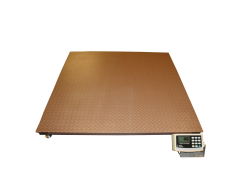
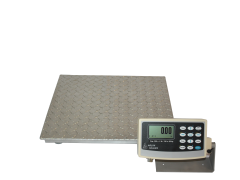
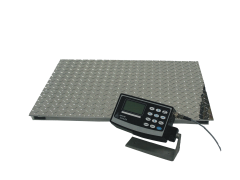
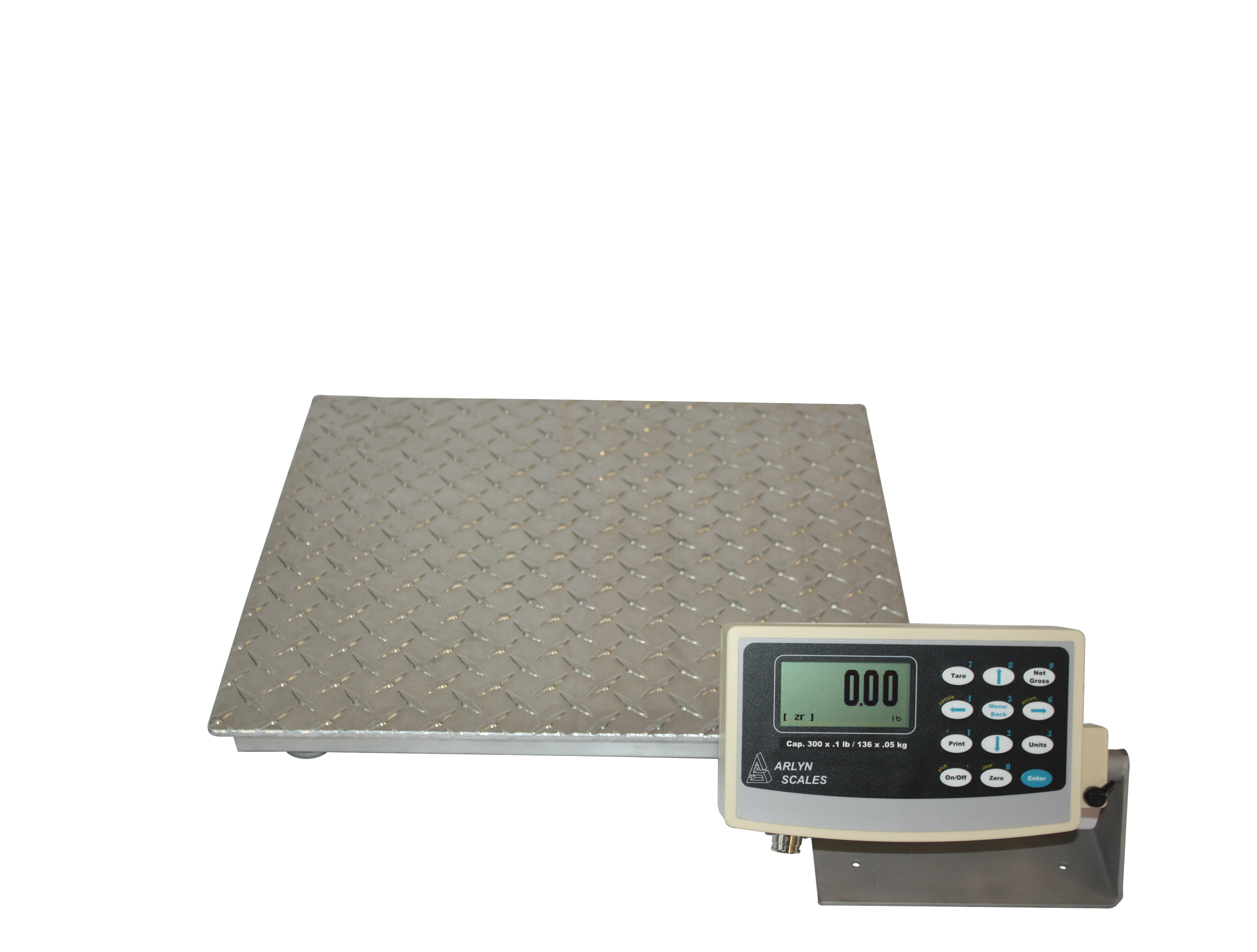
Arlyn’s standard Series 3200 provides a practical starting point for many bulk programs. Current standard configurations include:
- 320D: 500 lb capacity with 0.1 lb displayed readability
- 320M: 1,000 lb capacity with 0.2 lb displayed readability
- Platform sizes: From 16 by 18 inches through 48 by 48 inches, with additional standard and custom formats available
- Platform materials: Aluminum or stainless steel
- Load-cell construction: Four stainless-steel load cells embedded in a welded frame
- Indicator choices: MKE-5 graphical pushbutton indicator or optional UpScale touchscreen
- Available options: Computer, network, PLC, printing, data-logging, automation, battery, and enclosure upgrades
One model does not necessarily suit every department. For example, a shipping station may need a 1,000 lb platform with USB communication, while a production station may need a 500 lb platform with finer readability and setpoint outputs.
The goal is to minimize unnecessary variations without forcing every location to accept a configuration that does not meet its process.
Use a Pilot Scale Before Releasing the Full Order
For a significant quantity, consider evaluating one production-representative scale before approving the remaining units. The pilot should use the same platform, indicator, outputs, accessories, and software planned for the bulk order.
A useful pilot evaluation checks:
- Whether the load fits and remains stable
- Whether capacity and readability meet the process
- Whether employees can load and operate the scale efficiently
- Whether the indicator is visible from the normal working position
- Whether the scale communicates correctly with the intended computer, PLC, printer, or network
- Whether required data fields and formats are present
- Whether the platform and enclosure suit the environment
- Whether installation instructions and documentation are complete
Document any approved changes and incorporate them into the controlled configuration before authorizing full production.
Standardize Interfaces and Software
Communication requirements deserve special attention in a multi-scale deployment. Ordering a physical port does not guarantee that the scale will work with the receiving system. Both sides must use compatible electrical interfaces, protocols, settings, and data formats.
Common Arlyn options include:
- USB virtual serial communication
- RS-232, RS-422, or RS-485
- Ethernet TCP/IP
- Wi-Fi with UpScale
- 4–20 mA or voltage analog output
- MODBUS RTU/ASCII or MODBUS TCP
- EtherNet/IP
- PROFINET
- USB, Google Sheets, email, or PC-based data logging
- AxChange cloud monitoring
When multiple locations use the same software, define a standard data frame, unit of measurement, decimal format, network-addressing method, device name, and update behavior. This can make deployment and support much more predictable.
Compare Arlyn scale communication options before finalizing the bulk specification.
Select Materials According to Each Environment
Standard Series 3200 platform scales are available in aluminum and stainless steel. Aluminum is economical for many dry, general industrial applications. Stainless steel may provide better value when moisture, cleaning, sanitation, or corrosive exposure justifies the additional cost.
Highly corrosive applications may require an Arlyn corrosion-resistant configuration using stainless-steel construction and a specialized three-part epoxy coating.
Classified hazardous locations require a matching ArlynGuard P intrinsically safe platform scale. Corrosion resistance, stainless-steel construction, and intrinsic safety are separate requirements. Some locations may require more than one of these protections.
Request Volume Pricing for the Complete Configuration
Ask for quantity pricing only after the configuration has been defined. A low base scale price is not meaningful if the final system also needs ramps, indicators, communication electronics, battery packs, enclosures, printers, relays, calibration documents, or custom labeling.
A complete bulk quotation should identify:
- Price per scale at the requested quantity
- Price breaks for alternative quantities, when available
- Exact model and configuration
- Included indicator, outputs, cables, and accessories
- One-time engineering or customization charges, if applicable
- Documentation and calibration requirements
- Spare parts or additional accessories
- Packaging and freight terms
- Production and delivery schedule
- Payment terms and quotation validity
Arlyn designs, builds, and supports its scales in Long Island, New York. Working directly with the manufacturer allows purchasing and engineering teams to discuss volume, configuration, customization, and support requirements without routing every question through a distributor.
Preparing an RFQ? Send Arlyn the desired quantity, approved or proposed model, capacity, readability, platform size, construction, indicator, outputs, accessories, documentation, destination, and requested delivery schedule.
Plan Receiving and Deployment Before Delivery
Bulk purchasing does not end when the purchase order is issued. Decide how the scales will be received, identified, tested, distributed, and supported.
A receiving plan may include:
- Matching model and serial numbers to locations
- Inspecting platforms, indicators, cables, and accessories
- Confirming the approved configuration
- Performing a basic weight check
- Testing communication and software functions
- Recording calibration and configuration information
- Backing up indicator settings when applicable
- Assigning each scale to the correct department or facility
- Training operators and maintenance personnel
Using the same acceptance checklist for every scale helps identify shipping damage, missing accessories, or configuration differences before the equipment reaches production.
Frequently Asked Questions
Does Arlyn offer quantity pricing for platform scales?
Should every scale in a bulk order use the same configuration?
Should we test one scale before ordering the full quantity?
What platform-scale capacities are available?
Can different platform sizes be included in one bulk order?
Can the scales be configured for computers or PLCs?
Can calibration documents be supplied for every scale?
Can Arlyn label scales for different departments or facilities?
What information is needed for a bulk platform-scale quote?
Build a standardized platform-scale program around your operation.
Arlyn Scales can help define the base model, controlled variants, options, documentation, and delivery plan for your multi-unit requirement.