Customizing a high-resolution weighing system does not always mean building a new platform or load sensor. The right solution may be a standard balance selected for the required readability, a High Resolution Balance connected to the Arlyn UpScale Touchscreen for expanded data functions, or an Ultra Precision scale engineered for higher-capacity industrial work.
Choosing between these approaches begins with the measurement—not the list of available upgrades. Capacity, readability, accuracy, load dimensions, environment and workflow must be considered together.
Quick answer: Use an Arlyn High Resolution Balance when very fine milligram or sub-milligram readability at low capacity is the main requirement. Add UpScale Third-Party Integration when the balance is suitable but the workflow also needs a touchscreen, advanced records or networked data. Choose an Ultra Precision Scale when the application requires higher capacity, industrial platforms, mechanical customization, broader connectivity or process automation.
This three-path approach prevents two common mistakes: buying an industrial scale when a compact balance would provide better low-capacity readability, or buying a limited laboratory-style balance when the process actually requires an expandable industrial weighing system.
What Can Be Customized in a Weighing System?
Customization should address a specific process requirement. Depending on the selected product family, the configurable elements may include:
- Capacity and readability
- Platform dimensions and mechanical arrangement
- Indicator and operator interface
- Printing and data-recording functions
- Computer, network or PLC communication
- Product, operator and batch identification
- Checkweighing, alarms and target weights
- Filling, dispensing and batching controls
- Environmental or hazardous-location configurations
- Multi-scale and remote-monitoring workflows
Not every feature is available on every scale. High Resolution Balances offer very fine readability but limited native upgrades and physical customization. Ultra Precision systems offer a wider selection of capacities, platforms and industrial options. UpScale integration can expand the digital workflow of a compatible High Resolution Balance without changing its underlying weighing performance.
Three Ways to Configure High-Resolution Weighing
| Configuration | Choose It When | Main Advantages | Important Limitations |
|---|---|---|---|
| Standard High Resolution Balance | Small samples require milligram or sub-milligram readability in a stable environment | Fine low-capacity readability, compact design and included RS-232 output | Limited platform, connectivity, automation and upgrade choices |
| High Resolution Balance with UpScale | The balance provides the right measurement performance, but the workflow needs advanced digital functions | Touchscreen interface plus selected logging, user, barcode, network and data-management options | Does not change the balance’s capacity, sensor, platform, readability or accuracy |
| Ultra Precision Scale | The application requires industrial capacity, ruggedness, larger platforms or extensive integration | Broader capacities, platform options, customization, connectivity and automation | May not provide the same sub-milligram readability as the lowest-capacity High Resolution Balance |
Why Small Weights Can Disappear on an Ordinary Scale
Every scale has a capacity and a displayed increment. A scale designed to weigh hundreds of pounds may display weight only in increments of 0.1 or 0.2 lb. If an object weighs less than the scale’s displayed increment, the reading may remain at zero even though the object has measurable weight.
This does not necessarily mean that the scale is defective. It means that its capacity and readability were selected for a different purpose. A shipping or platform scale is designed for cartons, containers or pallets—not milligram-level laboratory samples.
High Resolution Balances solve the low-capacity side of this problem by displaying very small weight changes. Arlyn’s current models range from 200 g × 0.1 mg to 6,200 g × 10 mg. When the load is heavier or the process requires an industrial platform, broader connectivity or automation, an Ultra Precision configuration may be more appropriate.
The goal is not to purchase the scale with the greatest number of decimal places. It is to select enough capacity for the complete load while retaining the readability and accuracy required by the process.
Begin With Capacity, Readability and Process Tolerance
Capacity is the maximum load the instrument is designed to measure. The total includes the sample, container and any other tare weight placed on the weighing surface. Readability is the smallest displayed increment. Accuracy describes how closely a result agrees with the actual value under specified conditions.
These terms should not be used interchangeably. A display with more decimal places does not automatically produce a more accurate or useful result. Before selecting a system, document:
- The lightest and heaviest samples
- The weight of containers and fixtures
- The smallest weight change that matters
- The acceptable process tolerance
- The required measurement units
- The expected frequency of use
- The applicable calibration or quality procedure
Arlyn High Resolution models currently range from 200 g × 0.1 mg to 6,200 g × 10 mg. They are appropriate when the load fits this range and fine displayed increments are more important than industrial platform versatility.
Path 1: A Standard High Resolution Balance
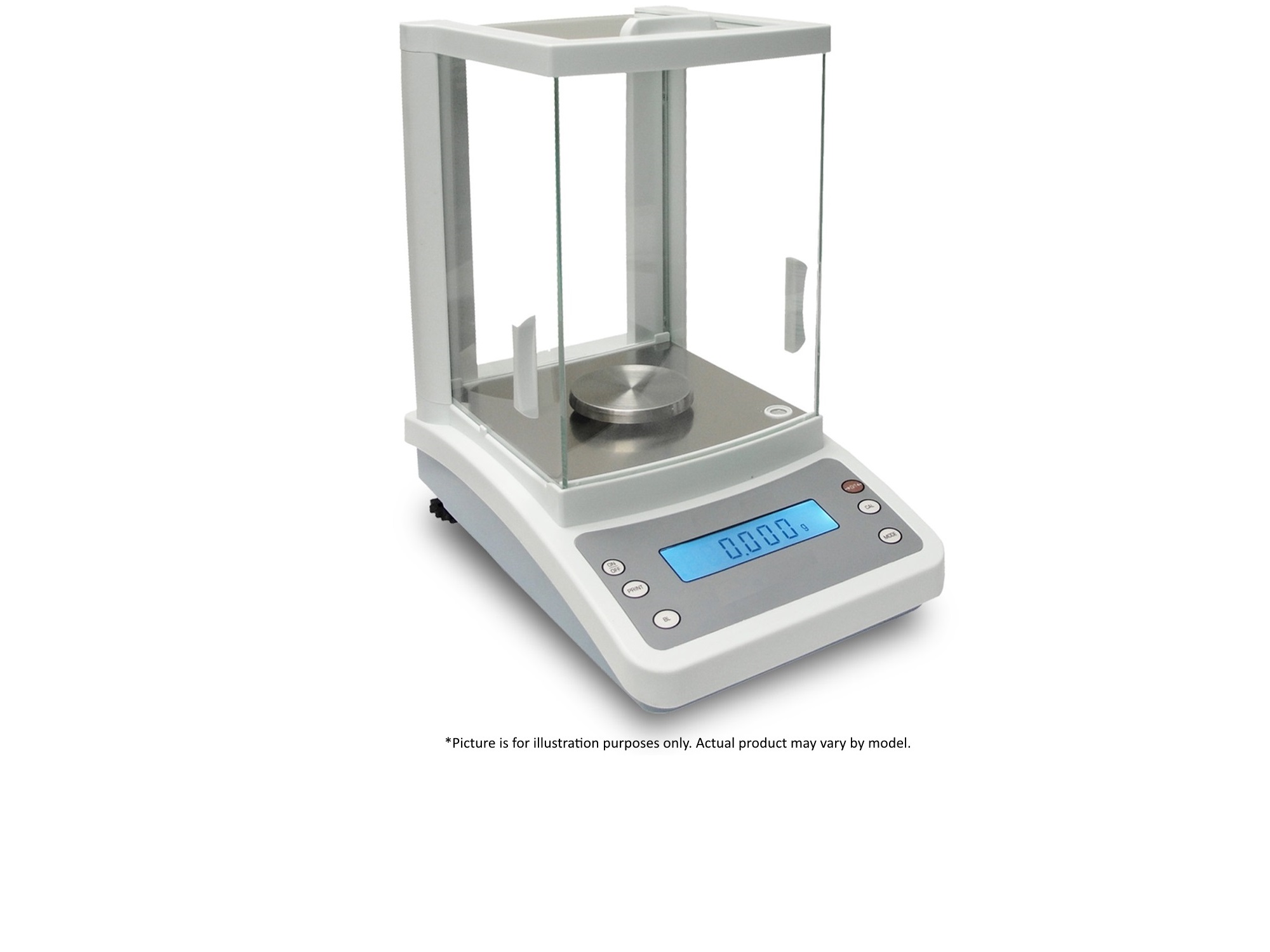
A standard High Resolution Balance is often the most direct solution for laboratory samples, small formulations, quality-control measurements and lightweight component inspection.
These balances include RS-232 communication and may support selected printer or Windows-interface options. A standard configuration can be appropriate when:
- The load fits an available balance model
- The balance will operate on a stable indoor work surface
- Milligram or sub-milligram readability is required
- RS-232 or basic printing satisfies the data requirement
- No custom platform or industrial control system is needed
High-resolution measurement is sensitive to vibration, air currents, temperature changes, static electricity, evaporation and sample handling. The balance should be installed on a rigid, level surface away from fans, vents, doors and vibration-producing equipment. A draft shield may be appropriate when air movement affects stability.
Path 2: Add Arlyn UpScale to a High Resolution Balance
A standard balance may provide exactly the required capacity and readability but lack the desired operator interface or data workflow. In this situation, the balance may not need to be replaced with a different weighing technology.
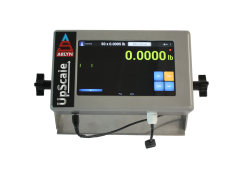
Through Third-Party Scale Integration, the Arlyn UpScale Touchscreen can connect to the data stream from a compatible balance display. UpScale displays the weight and can pass that weight through selected feature modules.
Depending on compatibility and the options purchased, an integrated system may support:
- A 7-inch color touchscreen interface
- Product, batch and operator information
- Custom data fields
- User management and time tracking
- Checkweighing definitions
- Barcode or QR-code scanning and printing
- USB or network-based data logging
- Google Spreadsheet data logging
- Ethernet or Wi-Fi communication
- Web API access
- Remote weight monitoring through compatible services
UpScale expands the workflow—not the metrology.
Connecting a High Resolution Balance to UpScale does not increase its capacity, improve its readability or accuracy, change its load sensor, enlarge its platform or make it suitable for a harsher environment. The original balance continues to determine the measurement performance.
The balance display and UpScale must be configured to communicate correctly. Feature availability depends on the selected modules and data-stream compatibility, so the complete configuration should be reviewed with Arlyn before purchase.
Path 3: Move to an Ultra Precision Industrial Scale
An Ultra Precision Scale is the better pathway when the required customization extends beyond the display and data workflow.
Consider Ultra Precision when the application requires:
- Higher capacities than the High Resolution Balance line
- Large or custom platform dimensions
- Industrial bench or floor-level weighing
- More rugged mechanical construction
- Multiple platforms or specialized sensor arrangements
- USB, Ethernet, Wi-Fi or industrial communication protocols
- Analog output or PLC integration
- Setpoints, relays, alarms or light towers
- Automated batching, filling or dispensing
- An approved configuration for a classified hazardous location
Ultra Precision scales use Arlyn’s Surface Acoustic Wave technology and are offered across a much broader range of industrial capacities and platform sizes. They should not be chosen merely because “Ultra Precision” sounds more accurate. Compare the exact model’s capacity, readability and accuracy with the process requirement.
How Customization Can Improve Business Performance
A correctly configured weighing system can improve a process in several ways:
- Reduce manual entry: Transfer weights and associated information electronically instead of copying results by hand.
- Improve traceability: Record product, batch, operator, time and other workflow information with the weight.
- Standardize decisions: Use checkweighing definitions or target ranges to provide consistent high, low or acceptable results.
- Support faster review: Make weight records available to compatible computers, networks or reporting systems.
- Reduce unnecessary complexity: Select only the measurement and workflow functions the application requires.
- Prepare for expansion: Choose an industrial platform and interface architecture that can support anticipated process changes.
These benefits depend on the quality of the system design and operating procedure. Adding a touchscreen or network connection does not correct an undersized platform, unsuitable environment or poorly defined measurement requirement.
Connectivity and Data-Output Options
The appropriate connection depends on the selected weighing path.
- High Resolution Balance: RS-232 is included for compatible computers, HMIs or printers.
- High Resolution with UpScale: Compatible UpScale options may add USB, Ethernet, Wi-Fi, logging, API and other workflow functions.
- Ultra Precision: A broader selection of native and optional communication interfaces is available across compatible configurations.
Before ordering, identify the receiving device, connection type, protocol, data format, update requirements and desired operator action. “Connect to our system” is not enough detail to configure an industrial interface reliably.
Automation, Setpoints and Process Control
Some Ultra Precision configurations can use weight targets to support filling, mixing and dispensing. Depending on the system, outputs may activate feeders, pumps, valves, mixers, alarms or other equipment.
Document the complete sequence, including:
- Target weights and acceptable tolerances
- Number of ingredients or process stages
- Fast-feed and slow-feed requirements
- Expected overshoot
- Output and relay types
- Operator confirmation steps
- Alarm and exception handling
Scale outputs should be incorporated into an appropriately engineered control system. Safety interlocks, emergency stops and machine guarding should not rely solely on an ordinary scale indicator.
Environmental and Construction Requirements
High Resolution Balances are best suited to controlled indoor environments. If the application involves moisture, corrosive chemicals, frequent cleaning, production-floor impact or classified hazardous materials, an industrial scale configuration may be more appropriate.
Stainless steel construction can improve corrosion resistance, but it does not automatically make a complete weighing system washdown-rated, sanitary or intrinsically safe. Confirm the indicator, platform, sensors, cables, connectors and enclosure ratings for the exact environment.
For a classified hazardous location, provide the documented class, division or zone, material group and temperature requirements. The complete weighing system must be suitable for that classification.
Example Configuration Pathways
- Laboratory sample measurement: A standard High Resolution Balance with RS-232 output may provide the necessary low-capacity readability and basic data transfer.
- Quality control with electronic records: A High Resolution Balance connected to UpScale may combine fine readability with operator identification, custom fields and networked logging.
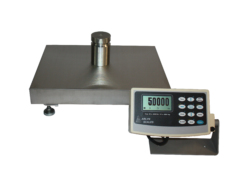
- Industrial formulation: An Ultra Precision bench or platform scale may provide the capacity, ruggedness and integration needed for ingredients and production containers.
- Automated filling: An Ultra Precision system with appropriate setpoints, outputs and communication options may support target-based dispensing.
- Unusually sized products: An Ultra Precision system with a custom platform may accommodate loads that will not fit a compact balance.
- Multi-station monitoring: A configured system may collect information from multiple compatible scales for centralized reporting.
Information to Provide When Requesting a Solution
To help determine the correct pathway, provide:
- Minimum and maximum gross load
- Required readability and process tolerance
- Container and load dimensions
- Photos or drawings of the installation
- Temperature, vibration, moisture and chemical exposure
- Required operator functions
- Computer, network, PLC or software details
- Data fields and reporting requirements
- Printing, barcode or labeling requirements
- Control sequence and output requirements
- Applicable approvals or certifications
Frequently Asked Questions
Can a High Resolution Balance be customized?
High Resolution Balances have limited native platform and upgrade choices. Their workflow can be expanded by connecting a compatible balance to Arlyn UpScale, but applications requiring mechanical customization, higher capacity or extensive industrial controls are usually better served by the Ultra Precision line.
Can a High Resolution Balance connect to Arlyn UpScale?
Yes. A compatible balance can send its weight-data stream to UpScale through Third-Party Scale Integration. UpScale can then display and process the weight through selected touchscreen, logging and workflow features.
Does UpScale make a High Resolution Balance more accurate?
No. UpScale expands the interface and data functions. The original balance still determines capacity, readability, accuracy and stability.
When should I choose Ultra Precision instead?
Choose Ultra Precision when you need higher capacity, larger or custom platforms, industrial durability, broader connectivity, automation or specialized configurations. Choose High Resolution when the finest low-capacity readability is the main requirement.
What is the difference between readability and accuracy?
Readability is the smallest increment shown on the display. Accuracy describes how closely a measured result agrees with the actual value under stated conditions. More displayed decimal places do not by themselves prove greater accuracy.
Can a customized scale send data to a computer or network?
Yes. Available methods depend on the chosen balance, indicator and options. They may include RS-232, USB, Ethernet, Wi-Fi, API access and industrial protocols. Compatibility should be confirmed for the complete configuration.
Can a custom scale automate filling or batching?
Compatible Ultra Precision configurations can support setpoints, relays and communication options for filling or batching. The complete sequence and safety requirements must be reviewed before the system is configured.
Choose the Right High-Resolution Weighing Path
The most productive solution is not necessarily the balance with the smallest displayed increment or the scale with the longest option list. It is the system that meets the measurement requirement and supports the actual workflow without unnecessary complexity.
Explore High Resolution Balances, review UpScale Third-Party Integration or compare Ultra Precision Scales.
For application assistance, call Arlyn Scales at 800-645-4301 or use the online contact form. Include your capacity, readability, dimensions, environment and data requirements so the team can recommend the appropriate pathway.