In modern society, many of the great leaps forward in healthcare, and overall quality of life, can be attributed to the biopharmaceutical industry. Many formerly debilitating or fatal diseases have been brought under control thanks to vaccines and therapies developed in biopharmaceutical labs.
Because these products are developed from organic materials, absolute precision in measuring is vital for ensuring a safe, effective, and consistent product. Until recently, digital scales and other laboratory equipment for measuring weights in biopharmaceutical labs and production facilities were only available from specialty metrology manufacturers, and at great expense.
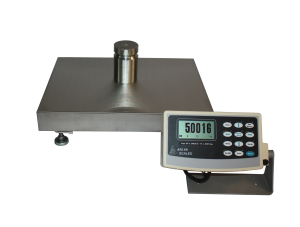
Fortunately, at Arlyn Scales, we’ve created a line of Ultra Precision Scales that are accessible to demanding industries, even while exceeding their exacting standards. Employing their expertise as industry leaders for over 30 years, our team harnessed Surface Acoustic Wave (SAW) technology to deliver optimal productivity for the biomedical sector.
Ultra Precision Scales: a Biopharmaceutical Necessity
The very first biopharmaceutical was made in the 1940s and surely you’ve heard of it — does Penicillin ring a bell? However, the biopharmaceutical industry didn’t really take off until the 1970s and 1980s.
Biopharmaceuticals include medicines produced using living systems, such as recombinant proteins, monoclonal antibodies, and many vaccines. If you are broadly unaware of how biopharmaceuticals are made, then you can only really imagine how challenging the process is to create them.
Also, they are often administered to patients by injection, not in pill form. The first thing to know about biopharmaceuticals is that they may be larger and more complex than other types of pharmaceuticals.
Biopharmaceuticals vs. Pharmaceuticals
The main difference between the two is that biopharmaceuticals are manufactured within living systems, like microorganisms or plant and animal cells. Alternatively, standard pharmaceuticals are created through a series of chemical synthesis steps.
Biologists create biopharmaceuticals using biotechnology processes and bioengineering. Some processes use genetically engineered cells to produce therapeutic proteins for conditions such as:
- Cancer
- Diabetes
- HIV/AIDS
- Rare blood disorders
Biopharmaceutical manufacturing requires extensive quality controls. The tests and checks depend on the product and manufacturing process.
Manufacturing Biopharmaceuticals
The manufacturing process for creating biopharmaceuticals is extremely complex and it demands time, knowledge, and attention. It involves sophisticated machinery and other equipment, and it requires constant monitoring from biologists and technical experts.
For many cell-based manufacturing processes, a characterized cell line is maintained in cell banks. Cells from these banks are expanded under controlled conditions to produce the required biological material.
Every step of the manufacturing process — from cell creation to distribution of prescribed medicine — is critical, so mistakes and inconsistencies must be avoided at all costs. High-quality weighing laboratory equipment is essential for ensuring accurate measurements and maintaining precision throughout the process.
Where Industrial Scales Come Into Play
If something goes wrong at any stage of the process, then it could mean thousands or even millions of dollars lost in research and production costs. Consequently, exceptionally accurate and reliable pieces of equipment are required for the biopharmaceutical manufacturing process, and this includes industrial scales.
Anywhere accuracy is a necessity, industrial scales can serve a purpose. In fact, many biopharmaceutical companies currently use industrial scales for biopharmaceutical manufacturing.
For example, Repligen (formerly Spectrum Labs), a supplier of bioprocessing technologies and a client of Arlyn Scales, incorporated our Ultra Precision Scales into their own operations. These use our own Surface Acoustic Wave (SAW) technology, which provides fine readability at useful industrial capacities.
Repligen and Ultra Precision Scales with Stainless Steel Weighing Pan
For example, a scale that displays weight in 0.02 lb increments may be suitable for general weighing, but a process that requires tracking smaller additions needs finer readability.
But what if your biopharmaceutical company needs to measure smaller changes in weight?
Arlyn’s Ultra Precision SAW-H model has a capacity of 200 lb and a readability of 0.002 lb. Its published metric specification is 90 kg × 1 g. Compared with a scale displaying 0.02 lb increments, the SAW-H provides ten times finer displayed increments, making smaller weight changes easier to follow. Readability describes the smallest increment shown on the display; measurement accuracy is a separate specification.
Repligen uses Ultra Precision Scales from Arlyn Scales with maximum capacities of 440,000 grams.
How Arlyn Scales’ Products Empower Biopharmaceutical Companies
As you can see, industrial scales are useful in the biopharmaceutical manufacturing process. They can be used to accurately measure materials, whether the materials are being added to or removed from mixtures.
This scale allows the company to measure high capacities of materials while simultaneously regulating small changes in weight. Consequently, the equipment is able to produce consistent and effective biopharmaceuticals.
Enhance Quality Control
Biopharmaceuticals must be manufactured consistently. Otherwise, undesirable health consequences could arise.
Therefore, biopharmaceutical manufacturing is a precision science, and consistent and reliable performance is the key to manufacturing success. Ultra Precision Scales makes it possible for biopharmaceutical manufacturing companies to create consistent and effective medications again and again.
Moreover, other Arlyn Scales’ products, like bench scales, can be incorporated into the manufacturing and distribution processes for biopharmaceuticals.
Improve Inventory Management
With increased accuracy comes enhanced inventory management, and inventory management goes hand in hand with a company’s checkbook.
So, if your business has a better grasp on inventory management, then you can more accurately price your products and bill customers accordingly.
Furthermore, Arlyn Scales can help biopharmaceutical manufacturing companies achieve advanced data acquisition, which can assist with inventory management.
Decrease Production Costs
Arlyn Scales understands the importance of accuracy in the biopharmaceutical industry. That’s why our extremely accurate scales improve every aspect of business for biopharmaceutical manufacturing companies.
In addition to enhanced quality control and improved inventory management, Arlyn Scales’ products can also help biopharmaceutical companies decrease production costs.
Increased accuracy means fewer mistakes! Fewer mistakes mean fewer do-overs, which means less money spent on overall production.
Set-Up System Automation
Our extremely accurate industrial scales save biopharmaceutical manufacturing companies time and money. Better still, Arlyn Scales can also help biopharmaceutical manufacturing companies create automated systems.
For example, we can set up programs that control filling or batching operations. System automation helps companies reduce human error, minimize complexity, improve productivity, and lower costs.
Surface Acoustic Wave Equals Unbeatable Precision in Precision Laboratory Measurement
The Surface Acoustic Wave (SAW) technology built into each of our Ultra Precision Scales is the “secret sauce” that delivers unmatched precision to biopharm labs and manufacturing plants.
The most commonly used scales employ strain gage load cells that are based on a spring element. Typically aluminum or steel, they include thin sections that are very fragile, and that are susceptible to temperature changes, which can lead to undesirable variations in results.
Another type of high-accuracy scales, the force restoration scale, has platforms directed by a flexure system. These take very precise measurements, but this flexure is very fragile and expensive.
SAW Measures Displacement, not Strain
Our scales use SAW technology to measure displacement instead of the strain on the spring or flexure element. A surface acoustic wave travels along the surface of a piezoelectric material, such as lithium niobate.
SAW scales combine fine readability with industrial load capacities. Arlyn’s published specifications list typical overall accuracy of 0.005%–0.01% of full scale, depending on the model and conditions. Select the model against the required capacity, readability, and accuracy, and account for the installation environment.
SAW load cells are designed for industrial use. Their overload protection helps protect against accidental loading, but the scale should always be operated within its rated capacity.
Protecting the Scale from Impact and Overload
To help protect the scale and maintain reliable performance, avoid:
- Shock Loading: dropping items on the scale from height
- Overloading: placing items that exceed the scale’s rated capacity on the platform
After a significant impact or overload, check the scale’s performance before returning it to use.
Resolution and Capacity in Precision Balances: No Longer a Tradeoff
Users of strain gauge scales grew accustomed to having to make a choice about which was more important to them in a scale: high resolution or high capacity. The conventional wisdom was that the higher the capacity of a strain gauge scale, the lower its resolution.
For bulk-material applications, the required capacity and measurement tolerance determine the appropriate scale.
Alternatively, many industries live or die by their ability to measure out the minutest weights. The biopharmaceuticals industry is prominent among these.
With Ultra Precision Scales, This is No Longer an Issue
Thanks to SAW technology, these scales’ resolution at greater capacities exceeds that of strain gauge scales. In fact, Ultra Precision Scales are more accurate than strain gauge scales, even when capacities increase exponentially.
For example, Arlyn Scales’ 620X strain gauge model has a 10-pound capacity and a resolution of two-thousandths of a pound (0.002). Arlyn’s Ultra Precision SAW-X model also has a 10-pound capacity, but it has 20 times the resolution of the 620X at one ten-thousandth of a pound (0.0001).
Another Ultra Precision model, the SAW-C, has 10 times the capacity of the 620X strain gauge, but twice the resolution.
Choosing Between SAW Scales and Force-Restoration Balances
Force-restoration balances and SAW scales serve different weighing requirements. Compare specific models for capacity, readability, accuracy, platform size, and installation conditions. SAW scales are an option when fine readability is needed at industrial capacities.
Environmental factors to consider when installing precision weighing equipment include:
- Temperature
- Vibrations
- Air currents
Compare the cost of the complete configuration, including the platform, indicator, communication options, and protection required by the application. Our SAW scales are comparably priced to a high-quality strain gauge scale, which is significantly less than a force motor restoration scale.
Variety of Connectivity Methods
In today’s technologically driven marketplace, data connectivity is extremely important. At Arlyn Scales, our Ultra Precision Scales offer a variety of connectivity methods that allow our scales to be accessed and controlled through a variety of methods.
A few of the more common connectivity methods include:
Ethernet & WiFi
Ethernet and Wi-Fi options connect the scale to compatible systems on a network. Internet-based monitoring requires an appropriately configured service or network connection.
USB
With the USB communication option, the scale can send weight data to compatible computer software. Available commands depend on the indicator and configuration.
Datalogging
With the data logging option, weight records can be saved to a USB flash drive for later analysis. This is separate from USB communication with a computer.
Cleanroom and Washdown Considerations in Biopharmaceutical Facilities
Cleaning requirements vary across biopharmaceutical facilities. Depending on the area and process, a scale may be exposed to alcohol wipedowns, other cleaning agents, or washdowns. The complete scale configuration should be selected for the cleaning method and chemicals used.
Our stainless steel platforms and corrosion resistant models provide options for these environments. Stainless construction alone does not establish washdown suitability or cleanroom compatibility. Platform materials, load-cell protection, indicator enclosure, and connections should be reviewed against the facility’s requirements.
Because we build factory direct, we can also adjust platform dimensions and mounting to fit an existing bench, isolator, or hood rather than asking you to redesign the workspace around a standard scale.
Biopharmaceuticals and Ultra Precision Scales: Working Together for a Healthier Future
Every day, biopharmaceuticals save millions of lives and make life comfortable for many more. Arlyn Scales is proud to be a part of the biopharmaceutical manufacturing processes for many respected companies.Just as the biopharmaceutical industry strives to find tomorrow’s solutions to today’s problems, we strive to empower these high-tech companies to meet these challenges. In fact, we’re located in Long Island, New York — the top metropolitan statistical area in the United States for the biopharmaceutical industry!
Arlyn Scales works tirelessly to understand this sector and deliver top-quality weight measurement instruments to help you realize continued success. To learn more about our selection of Ultra Precision Scales and other products, reach out to our team today.
Related Pharmaceutical & Biotech Scale Solutions
Explore precision weighing solutions for pharmaceutical manufacturing, pharmacies, raw material dispensing, bioreactors, and other biotech applications: