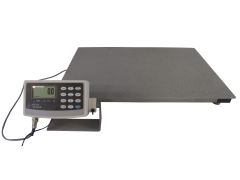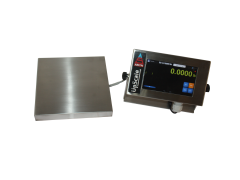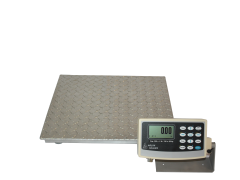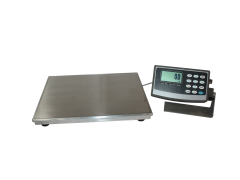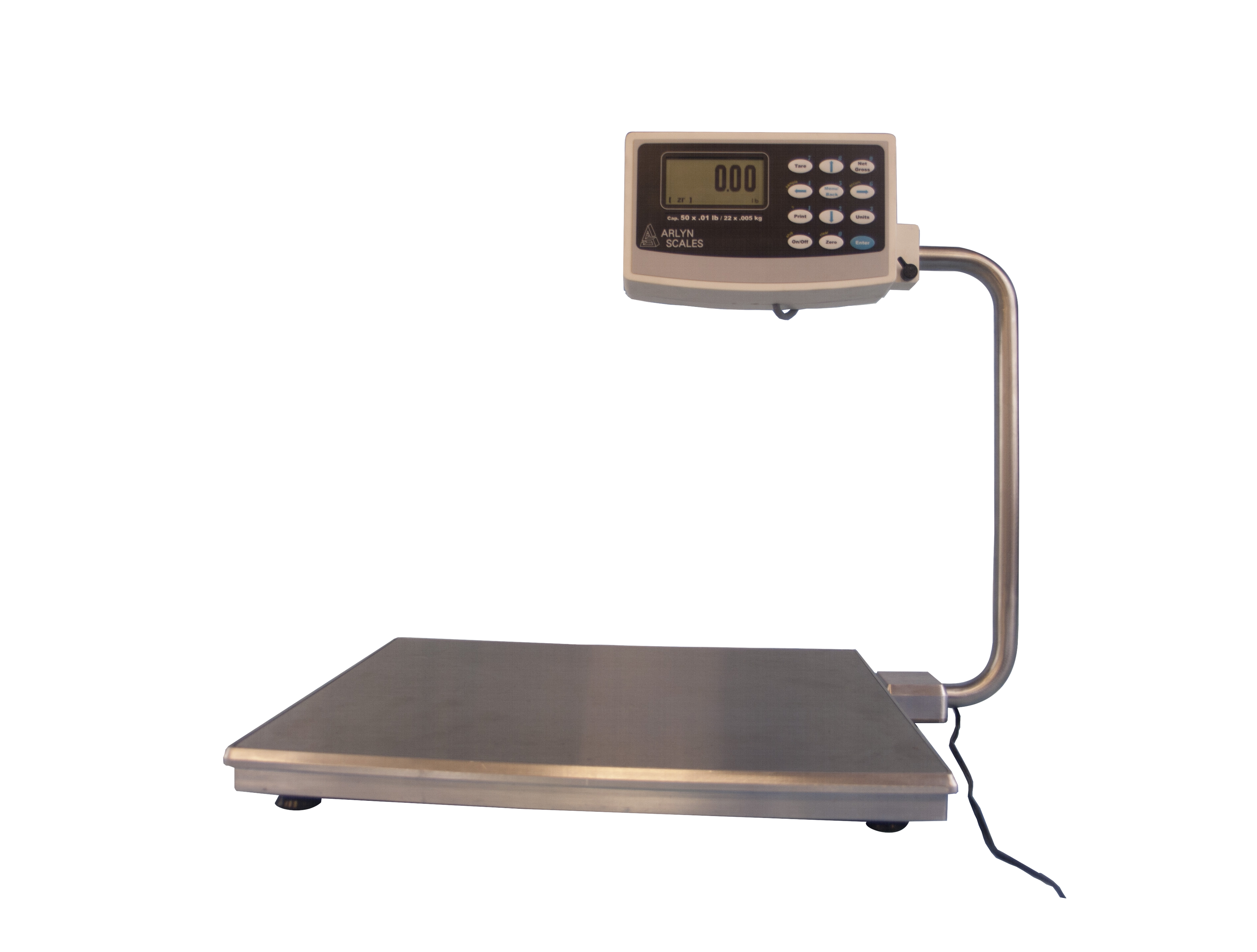
An industrial scale is more than a platform and display. Its capacity, readability, platform dimensions, load-cell construction, environmental protection and communication options must work together in the customer’s actual process. Buying directly from the manufacturer creates a shorter path between the people specifying the scale and the people responsible for designing, assembling and supporting it.
Quick answer: The principal advantages of buying an industrial scale directly from its manufacturer are clearer pricing, fewer communication handoffs, access to technical product knowledge, greater customization potential and direct support after delivery. The most important benefit is not simply a lower purchase price—it is the ability to configure a scale that fits the application without paying for unsuitable equipment or unnecessary features.
Arlyn Scales designs, assembles and supports industrial weighing systems from its Long Island, New York, operation. Customers can purchase standard products or work directly with Arlyn on custom weighing applications, automation, data collection and specialized platform requirements.
What Does Factory Direct Mean for an Industrial Scale Buyer?
A factory-direct purchase allows the customer to work with the scale manufacturer instead of routing every technical question and specification through an independent reseller. This can be especially useful when an application involves unusual dimensions, precise measurement requirements, corrosive materials, hazardous locations or integration with a plant control system.
Buying direct does not automatically guarantee that one product will have the lowest total cost in every situation. Buyers should still compare the complete configuration, warranty, delivery charges, calibration requirements, available support and expected service life. The advantage is that the manufacturer can explain what is included, identify suitable options and quote the system for the actual application.
Factory-Direct Industrial Scale Benefits at a Glance
| Buyer Priority | Factory-Direct Advantage | What the Buyer Should Provide | What to Confirm |
|---|---|---|---|
| Application fit | Direct discussion of capacity, readability, load dimensions and operating conditions | Minimum and maximum loads, container dimensions and process tolerance | Final model, capacity, readability and platform size |
| Pricing | A shorter sales channel can reduce separate reseller markups and make options easier to identify | Required features and optional features listed separately | Freight, calibration, accessories, installation and other quoted charges |
| Customization | Engineering review of platforms, load cells, software, controls and communications | Drawings, dimensional constraints, workflow and environmental information | Scope, testing criteria, cost and expected production schedule |
| Integration | Direct access to information about compatible outputs and communication protocols | PLC, computer, network, database or cloud-system requirements | Interface, protocol, data format and required accessories |
| Delivery planning | Order status and scheduling information can come from the source handling the equipment | Required delivery date and site constraints | Current quoted lead time; custom and standard products may differ |
| Technical support | Questions can be reviewed by personnel familiar with the product and its configuration | Model, serial number, symptoms, settings and application details | Support procedures, warranty coverage and available documentation |
1. Configure the Scale Around the Application
Choosing an industrial scale only by its maximum capacity can result in a poor fit. A customer may receive a scale that holds the load but does not provide the necessary readability, has an undersized platform or lacks the outputs required by the production system.
A direct application review should address:
- The lightest and heaviest items to be weighed
- The tare weight of containers, pallets, carts or fixtures
- The smallest weight change that matters to the process
- The dimensions and center of gravity of the load
- How the scale will be loaded and unloaded
- Temperature, vibration, moisture and chemical exposure
- Data collection, printing, setpoint or automation requirements
- Any legal-for-trade or hazardous-location requirements
Sharing this information with the manufacturer helps narrow the choices to a suitable industrial scale instead of relying on a general catalog description.
2. Understand the Complete Quoted Price
Factory-direct pricing removes a separate dealer layer, but responsible purchasing should focus on total value rather than promises of an “unbeatable” price. Two scales with the same capacity may differ substantially in construction, readability, overload protection, environmental compatibility and included electronics.
A complete comparison may include:
- Base scale and indicator
- Required communication or control options
- Ramps, printers, cables and other accessories
- Calibration or certification requirements
- Freight and delivery conditions
- Installation or integration work
- Warranty and technical-support provisions
- Expected maintenance and replacement costs
A less expensive scale that cannot tolerate the environment or communicate with the required equipment may cost more over its operating life than a correctly configured system.
3. Work Directly on Custom Weighing Requirements
Some weighing applications cannot be solved effectively with an off-the-shelf platform. A load may have unusual dimensions, the scale may need to fit beneath existing equipment or the customer may require multiple platforms to report to one system.
Direct manufacturer involvement can support projects involving:
- Custom platform dimensions and capacities
- Special load-cell or sensor arrangements
- Bench, platform, floor or vessel weighing
- Corrosion-resistant configurations
- Intrinsically safe systems for properly classified hazardous locations
- Automated batching, filling and dispensing
- Parts counting, checkweighing and inventory monitoring
- Custom displays, data fields, software or reporting workflows
Customization does not mean that every request is feasible or available without added cost. The manufacturer should review the requirements and provide a defined scope, price and production schedule before the order is placed.
See examples of custom scale applications or contact Arlyn with a drawing and description of your process.
4. Select Communication and Automation Options Before Ordering
Modern industrial scales are frequently part of a larger information or control system. Weight readings may need to reach a computer, PLC, database, spreadsheet or cloud application. A scale may also control a filling device or activate an alarm when a target is reached.
Depending on the scale and indicator configuration, available options may include:
- USB and serial communication
- Ethernet and Wi-Fi connectivity
- RS-232, RS-422 and RS-485
- Modbus and other industrial protocols
- Analog outputs such as 4–20 mA
- Setpoints and relay control
- USB or network-based data logging
- Custom fields and user-management functions
Not every option is available on every indicator or scale. Review Arlyn’s scale communication and control options, then confirm compatibility with the exact model being quoted.
5. Get Product Knowledge from the Source
An industrial weighing system can involve mechanical, electronic and software components. Direct access to personnel who understand those components can help a buyer determine whether a standard strain-gauge scale is sufficient, whether finer measurement performance is required or whether the environment calls for a specialized configuration.
This technical discussion can also prevent unnecessary upgrades. For example, a touchscreen indicator may improve usability, data handling and connectivity, but it does not automatically improve the underlying accuracy of the weighing platform. Similarly, stainless steel construction may improve corrosion resistance but does not automatically make the entire system suitable for washdown or a classified hazardous location.
6. Simplify Support and Accountability
When a problem occurs, direct communication can reduce the number of parties required to identify the scale, verify its configuration and review the application. The customer should be prepared to provide the model, serial number, settings, displayed messages and a description of the operating conditions.
Direct manufacturer support can be especially valuable when:
- A scale has a custom platform or sensor configuration
- The indicator communicates with a PLC or computer
- Setpoint outputs operate production equipment
- The application has changed since the scale was purchased
- Replacement components must match an existing system
Buyers should still review the written warranty, return policy and support procedures before purchasing. Direct access improves the path to assistance, but the applicable documentation determines the coverage for a particular order.
7. Plan Delivery Using the Current Quoted Lead Time
Lead times depend on product availability, order quantity, options, testing and the amount of custom engineering required. For that reason, an old or general statement such as “ships in one week” should not be used to plan an important installation.
Request the current lead time for the complete configuration and identify any fixed shutdown, commissioning or project dates. Standard products may be available sooner than custom platforms, specialized approvals or integrated systems.
8. Evaluate Manufacturing and Testing Capabilities
Arlyn Scales is headquartered in Long Island, New York, where it develops industrial weighing technology and supports its products. Bringing design, assembly and support functions together can make it easier to evaluate a customer’s application, test a configuration and communicate changes.
For buyers, the relevant question is not simply where a company is located. Ask what the manufacturer designs or produces, how the finished scale is tested, which documentation is supplied and how support will be handled after delivery.
9. Access Advanced Weighing Technology When Needed
Arlyn offers conventional industrial strain-gauge scales as well as Ultra Precision scales using Surface Acoustic Wave technology. Standard industrial scales are suitable for many applications. Ultra Precision technology should be considered when the process requires finer measurement performance at higher capacities than a conventional scale can provide.
Buyers should compare capacity, readability, accuracy, environmental conditions and process tolerance rather than assuming that the most advanced technology is necessary for every application. Explore Ultra Precision SAW scales when finer performance is a documented requirement.
10. Build a Longer-Term Weighing Solution
A scale may remain in service through production changes, new software, revised reporting requirements or expanded automation. Discussing future needs during the original purchase can make it easier to choose an indicator, platform and communication architecture that can support the expected workflow.
Useful questions include:
- Will additional scales eventually report to the same system?
- Could the scale become part of an automated filling process?
- Will weight records need operator names, time stamps or product identifiers?
- Could the platform size or capacity requirement change?
- Will the plant migrate to a different PLC, network or data platform?
Not every system can accommodate every future change, but identifying likely requirements early can reduce unnecessary replacement or rework.
Questions to Ask a Factory-Direct Scale Manufacturer
Before placing an order, ask the manufacturer:
- Which model and configuration fit the stated application?
- What capacity, readability and accuracy specifications apply?
- Which components and accessories are included in the quote?
- Are custom dimensions or configurations available?
- Which communication interfaces work with the selected indicator?
- What environmental and electrical ratings apply?
- What is the current production and delivery estimate?
- How is the finished scale tested?
- What warranty and support documentation will be supplied?
Frequently Asked Questions
Are factory-direct industrial scales always less expensive?
Factory-direct purchasing eliminates a separate dealer layer and may reduce additional markups, but no purchasing model guarantees the lowest total price in every situation. Compare the complete scale configuration, freight, calibration, accessories, support and expected operating life.
Can an industrial scale manufacturer build a custom platform?
Custom platform dimensions and configurations may be available when a standard scale does not fit the load or installation. Provide drawings, capacity requirements, loading methods and environmental details so the manufacturer can evaluate feasibility, pricing and lead time.
Does buying factory direct mean the scale will ship immediately?
No. Delivery depends on current inventory, options, testing, quantity and customization. Request a current written production and delivery estimate for the complete configuration.
Can a factory-direct scale connect to a PLC or computer?
Many Arlyn scales can be configured with communication or control options for computers, PLCs and networks. Available interfaces include USB, serial connections, Ethernet, Wi-Fi, Modbus, analog output and setpoint control, depending on the scale and indicator.
What information is needed for an industrial scale quote?
Provide the minimum and maximum load, required readability, load dimensions, platform size, loading method, operating environment, electrical requirements and any data, printing or automation needs.
When is an Ultra Precision scale necessary?
An Ultra Precision scale may be appropriate when the process requires finer measurement performance than a standard industrial scale can provide at the required capacity. The decision should be based on process tolerance, environmental conditions and complete performance specifications.
Discuss Your Industrial Scale Requirements with Arlyn
Factory-direct purchasing gives customers a direct pathway from application requirements to scale configuration, manufacturing and support. The result should be a weighing system selected for the process—not simply the first scale that matches a capacity number.
Call Arlyn Scales at 800-645-4301 or use the online contact form. Include your capacity, readability, platform dimensions, operating environment and connectivity requirements so the team can evaluate a standard or custom solution.