A low-profile platform scale can make industrial weighing faster, easier, and more economical. A shorter platform reduces the height through which a load must be lifted or rolled. This can simplify material handling, shorten loading cycles, and help employees move containers, packages, and production materials onto the scale more efficiently.
The economic benefit extends beyond the initial purchase price. A properly selected low-profile scale can reduce handling time, limit product spills and equipment impacts, use floor space more efficiently, and provide the durability required for repeated industrial use. The result is a weighing station that supports productivity without adding unnecessary cost or complexity.
Quick answer: Low-profile platform scales are efficient because loads travel a shorter vertical distance and can be rolled onto the platform with a properly installed ramp. They can also be economical because faster handling, durable load cells, factory-direct pricing, and appropriately sized configurations help control both purchase and operating costs.
How a Low Profile Improves Weighing Efficiency
Many platform-scale applications require an employee to place a load on the scale manually or move it with a cart, dolly, pallet-handling device, or other material-handling equipment. The height of the weighing platform directly affects how easily that load can be positioned.
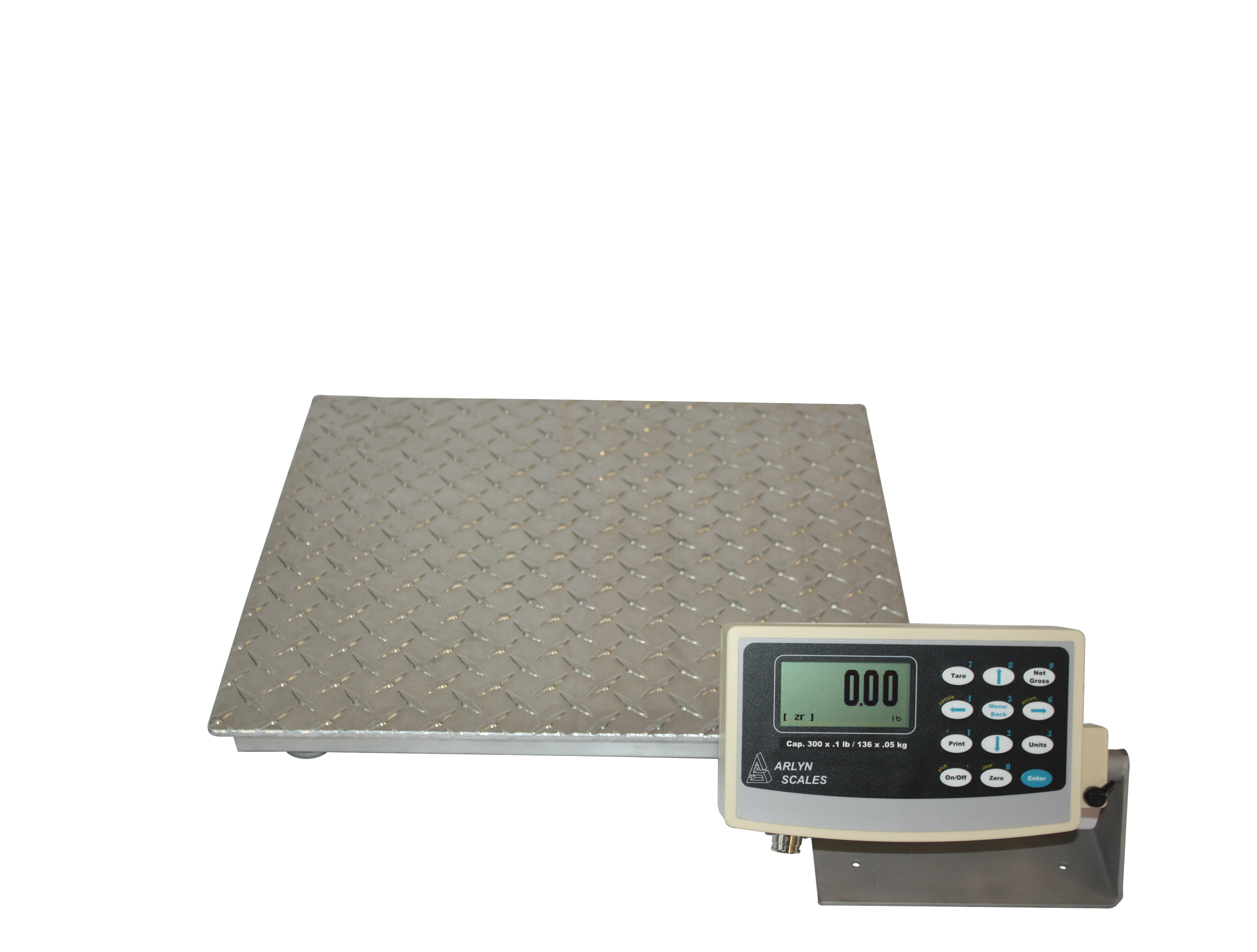
Most standard Arlyn Series 3200 configurations have a platform height of 1 7/8 inches. The 48-inch-square configurations have a height of 2 7/8 inches. Keeping the weighing surface close to the floor can improve the process in several ways:
- Heavy containers require less vertical lifting.
- Wheeled loads can use a shorter, lower-angle ramp.
- Employees can position loads more quickly.
- Containers are less likely to be dropped while being transferred.
- The weighing station can occupy less floor space than a taller scale with a longer ramp.
- A load can be removed quickly so the next weighing cycle can begin.
These advantages are useful in shipping and receiving, manufacturing, food production, commercial laundry, recycling, agricultural operations, and other applications where loads move onto and off the scale repeatedly.
Why an Efficient Platform Scale Can Also Be Economical
An economical scale is not necessarily the scale with the lowest purchase price. It is the scale that satisfies the required capacity, readability, platform size, construction, and workflow needs without forcing the business to pay for unnecessary equipment or absorb avoidable operating costs.
Low-profile platform scales can provide economic value in several areas:
| Design or Feature | Efficiency Benefit | Economic Benefit |
|---|---|---|
| Low platform height | Reduces the distance loads must be lifted or rolled. | Can shorten handling cycles and reduce unnecessary labor. |
| Shorter ramp requirement | Makes it easier to move wheeled containers onto the platform. | Uses less floor space and can simplify the weighing station. |
| Four stainless-steel load cells | Supports stable weighing across a large industrial platform. | Durable construction can help reduce damage, downtime, and premature replacement. |
| Multiple platform sizes | Allows the weighing surface to match the load and available work area. | Avoids paying for a platform that is larger than the application requires. |
| Aluminum or stainless-steel construction | Provides a material choice suited to the environment. | Lets buyers select economical aluminum construction or invest in stainless steel when the environment justifies it. |
| Factory-direct availability | Connects the buyer directly with the manufacturer for configuration support. | Reduces reseller layers while helping the buyer order only the features the application needs. |
| Best overall value | A scale configured around the actual load and workflow | Appropriate performance without unnecessary cost |
Series 3200 Capacity and Platform Choices
The Arlyn Series 3200 provides two standard capacity and readability combinations:
- 320D: 500 lb capacity with 0.1 lb displayed readability
- 320M: 1,000 lb capacity with 0.2 lb displayed readability
Standard platform footprints range from 16 by 18 inches to 48 by 48 inches. Intermediate choices include 20 by 27, 22 by 44, 27 by 60, 30 by 30, and 36 by 36 inches. Aluminum and stainless-steel versions are available, and custom sizes may be possible for specialized applications.
This range supports economical selection. A business weighing compact 300 lb containers does not necessarily need the largest 1,000 lb platform. Conversely, selecting a scale too close to the normal operating load can leave insufficient capacity for containers, carts, fixtures, or occasional heavier products.
Selection tip: Include the weight of the product, container, cart, fixture, and any other item that will rest on the platform. Choose enough capacity for normal operation, but do not buy substantially more capacity than necessary because greater capacity usually comes with coarser readability.
Ramps Improve Access Without Interfering With Weight
A ramp allows drums, carts, bins, and other wheeled loads to be rolled onto the scale. Because the Series 3200 platform is close to the floor, the required ramp can be shorter and occupy less space than the ramp for a taller weighing platform.
The ramp must be installed so it does not touch or press against the live weighing platform. Contact between the ramp and platform can create an external force and affect the displayed weight. Properly installed anchor plates help keep the ramp in position while preserving the required separation from the scale.
The ramp and surrounding floor area should also provide enough room for the operator to approach, position, and remove the load safely. The lowest-profile scale is not efficient if the surrounding layout forces employees to make difficult turns or repeated adjustments.
Durable Construction Protects the Investment
Series 3200 scales use four stainless-steel load cells embedded in a welded frame. Distributing the load across sensors at the corners supports a large, stable weighing surface while allowing the platform to remain low.
Durability contributes directly to economic value. A scale used in production, shipping, or material handling may experience repeated loading, vibration, and occasional impacts. Selecting industrial construction appropriate to the application can help reduce calibration problems, service interruptions, and early replacement.
Durability does not mean the scale should be routinely overloaded or subjected to uncontrolled impacts. Loads should be centered when practical, placed on the platform in a controlled manner, and kept within the rated capacity.
Choose Aluminum or Stainless Steel Based on the Environment
Aluminum platform construction offers an economical option for many general industrial applications. Stainless steel costs more but may provide better value when the scale encounters moisture, cleaning chemicals, corrosive materials, or demanding sanitation procedures.
Purchasing stainless steel where it is not needed can increase the initial cost without improving the weighing process. Choosing aluminum for an aggressive environment can also be a false economy if corrosion shortens the service life. The most economical material is the one that matches the actual operating conditions.
For highly corrosive applications, consider an Arlyn corrosion-resistant scale rather than assuming a standard platform scale will provide sufficient protection.
Indicator Functions Can Reduce Repetitive Work
The standard MKE-5 digital indicator provides one-inch-high graphical LCD digits and a swivel mount that helps position the display for the operator. Available functions include automatic and keyboard tare, zero, net/gross weight, unit conversion, and up to 450 stored tare entries.
Stored tare values can reduce repetitive data entry when the same carts, containers, bins, or fixtures are used throughout the workday. Operators can recall the applicable tare rather than entering it again for every weighing cycle.
Additional communication, printing, data-logging, setpoint-control, battery, and touchscreen options are available. These upgrades can improve an appropriate workflow, but they should be selected according to an identified requirement. Adding every available option does not automatically make the weighing process more efficient or economical.
Examples of Efficient, Economical Platform Weighing
Shipping and Receiving
Packages, containers, and carts can be moved onto the platform for order verification or freight documentation. A low platform and visible display help keep loads moving through the station.
Production and Batching
Ingredients or materials can be weighed in reusable containers. Stored tare values allow operators to subtract the container weight and monitor only the material being added.
Commercial Laundry and Recycling
Wheeled bins can be rolled onto a ramp-equipped platform. Selecting a platform that fits the bin avoids the cost and floor-space requirements of an unnecessarily large scale.
General Manufacturing
Components, raw materials, and finished assemblies can be weighed for inventory, quality checks, or process control. Optional data output may reduce manual transcription when weight records must be transferred to another system.
Find the most economical configuration: Start with the load weight, required readability, load dimensions, material-handling method, environment, and necessary output functions. This helps avoid both an undersized scale and unnecessary upgrades.
Frequently Asked Questions
Why is a low-profile platform scale more efficient?
What makes a platform scale economical?
How low are Arlyn Series 3200 platform scales?
What capacities are available?
Should I choose aluminum or stainless steel?
Can I roll a cart or drum onto the scale?
Do I need every available scale option?
Improve weighing efficiency without paying for unnecessary equipment.
Arlyn Scales can help match the Series 3200 capacity, platform size, construction, ramp, display, and output options to your application.